A New Paper on Deciduous Conifers at Secrest Arboretum

Imagine a world with larch trees in the uplands and dawn redwoods in the flats, and bald cypress trees in the wetlands. This existed in the Eocene (~40 million years ago) when the world was warmer, the treeline was at higher latitudes and altitudes, and carbon dioxide in the atmosphere was more than two times Earth’s preindustrial levels. In fact, in the high Arctic where no trees can survive today, deciduous conifers were as lush in terms of carbon sequestration and bioproductivity as today’s rain forests.  Now, imagine a world that is sliding back into the greenhouse after millions of years of relative icehouse conditions.

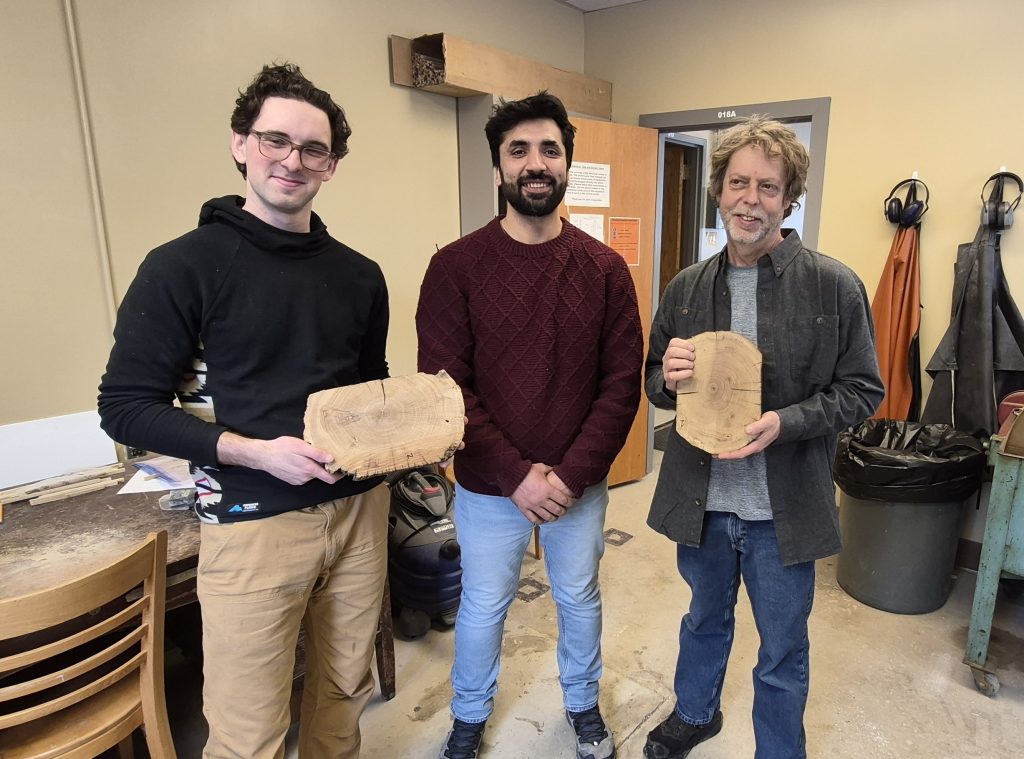
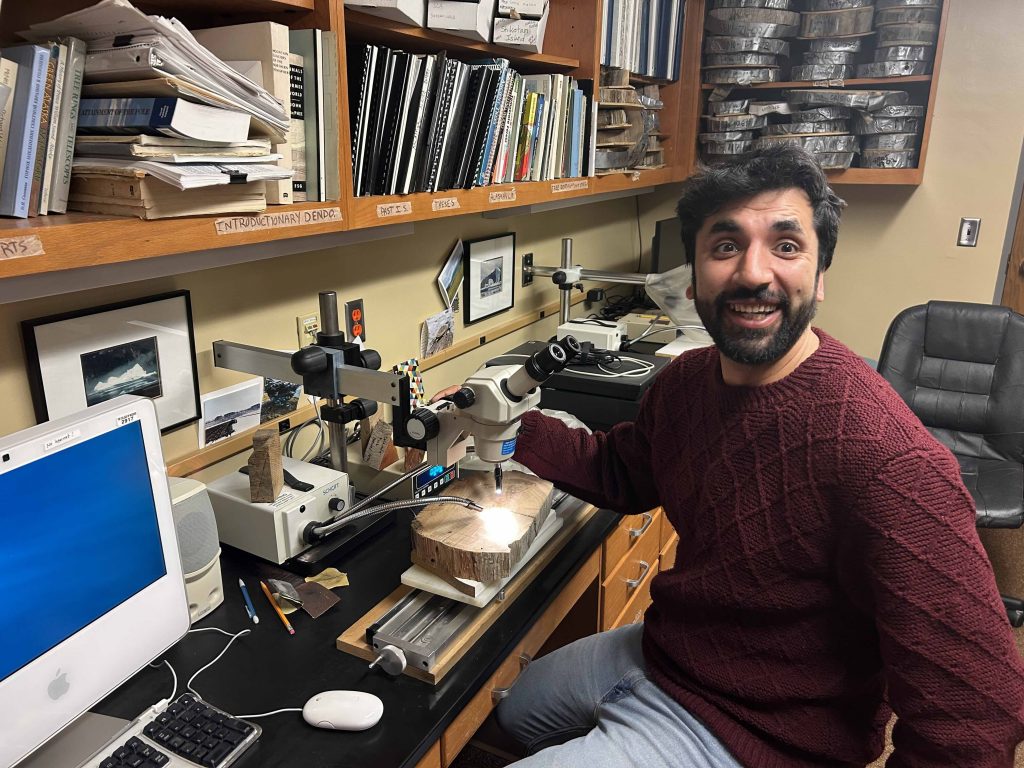
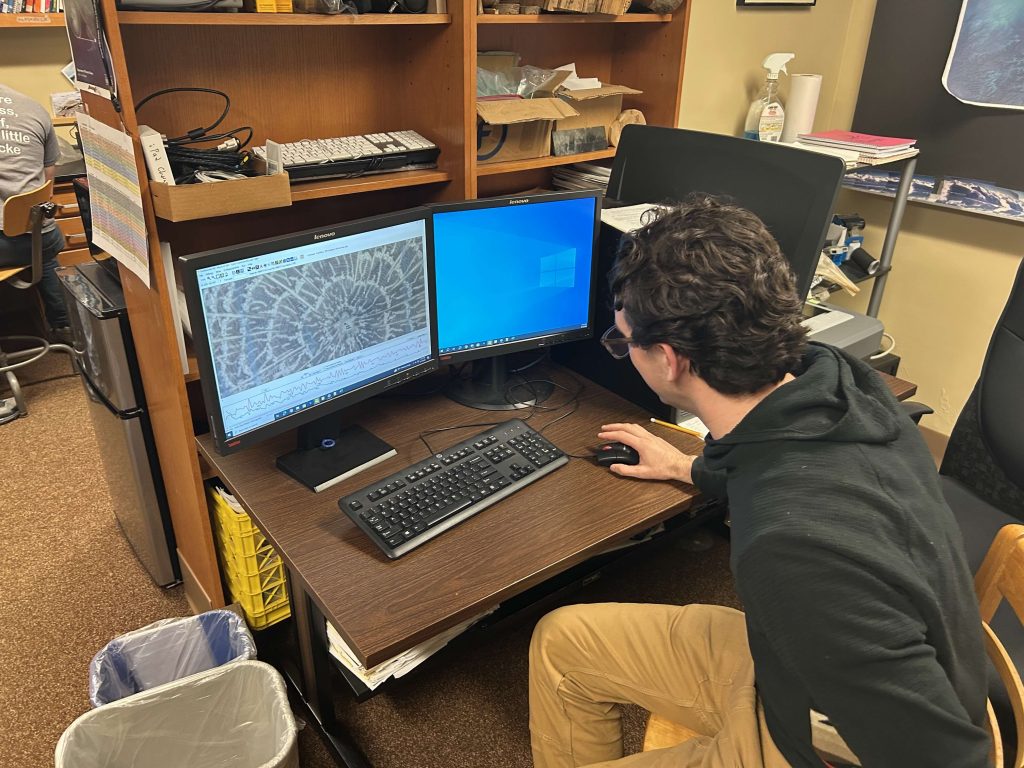
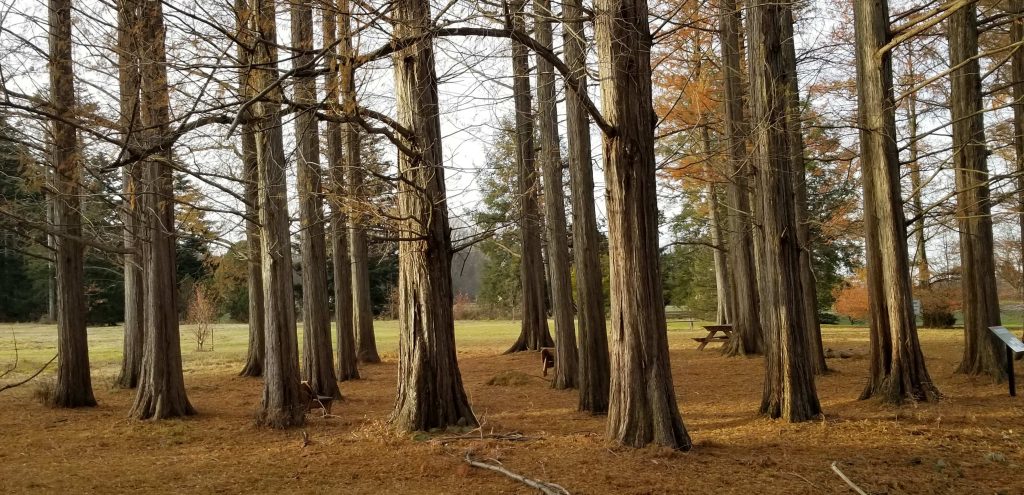
How can we better understand the role of deciduous conifers in the biosphere and their utility in a warmer world. One “natural” experiment is to use dendroclimatology to infer the response of deciduous conifers to a warmer and wetter world. Secrest Arboretum in Wooster, Ohio has two species of larch trees (Siberian and European) as well as bald cypress and dawn redwood trees. These species are all exotic to Ohio and have been growing in the arboretum in some cases for over 100 years. How do they grow in their new homes? This is the subject of a new paper from the Wooster Tree Ring Lab published in Plants People and Planet.Dawn Redwoods from the Arboretum

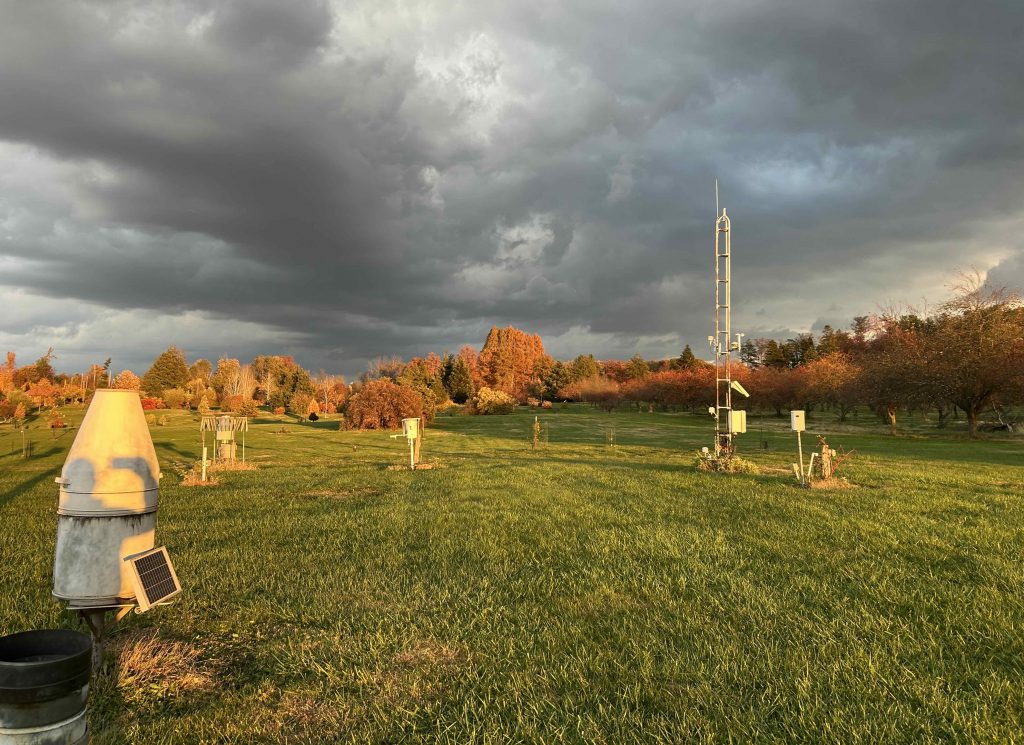
The Weather station active in the Arboretum since the late 1800s provided the monthly climate records.

Here is the upshot of the work: Rising temperatures and wetter conditions in the Midcontinent of North America are influencing climate responses in trees. Dendroclimatological analyses of the four exotic deciduous conifer species from Secrest Arboretum, Northeast Ohio help identify past, present, and future climate-tree interactions. Analyses suggest that two larch species have changed their response to climate, whereas dawn redwoods and bald cypress trees are well suited for the present and future climate. This study elucidates tree responses to climate gleaned from a largely untapped source of tree growth in arboreta that can be more broadly applied at other sites as well as facilitate forest management decisions.

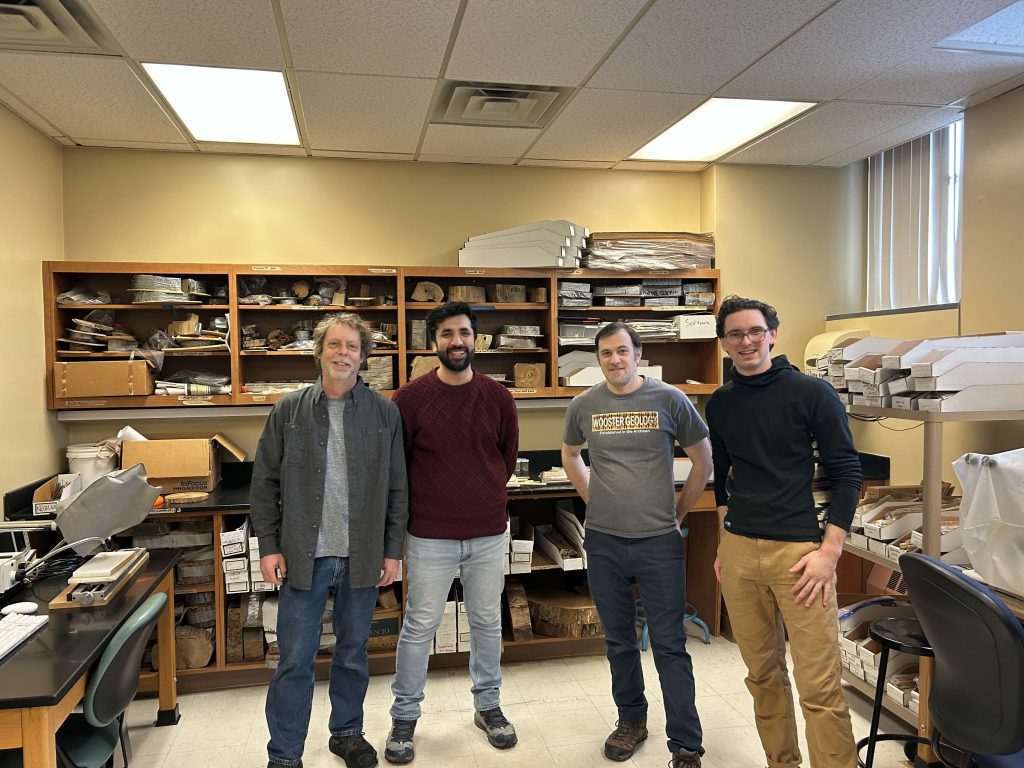
This effort included professors, staff and students at The College of Wooster as well as our collaborator and geo-ecologist Dr. Ben Gaglioti from the University of Alaska – Fairbanks. We thank Jason Veil (the curator of Ohio State University’s Secrest Arboretum) and its staff and volunteers for managing this amazing facility and for allowing us to sample the trees. We also acknowledge support of the National Science Foundation, Division of Earth Sciences, Grant/Award Numbers: EAR 2039939, GP-2023154.

Posted in Uncategorized | 1 Comment

A Blast from the Past: Paleoecology 2025 Visits Cleveland Museum of Natural History

by Claire Elsie and Allie Toombs, with contributions from other Paleoecology students.

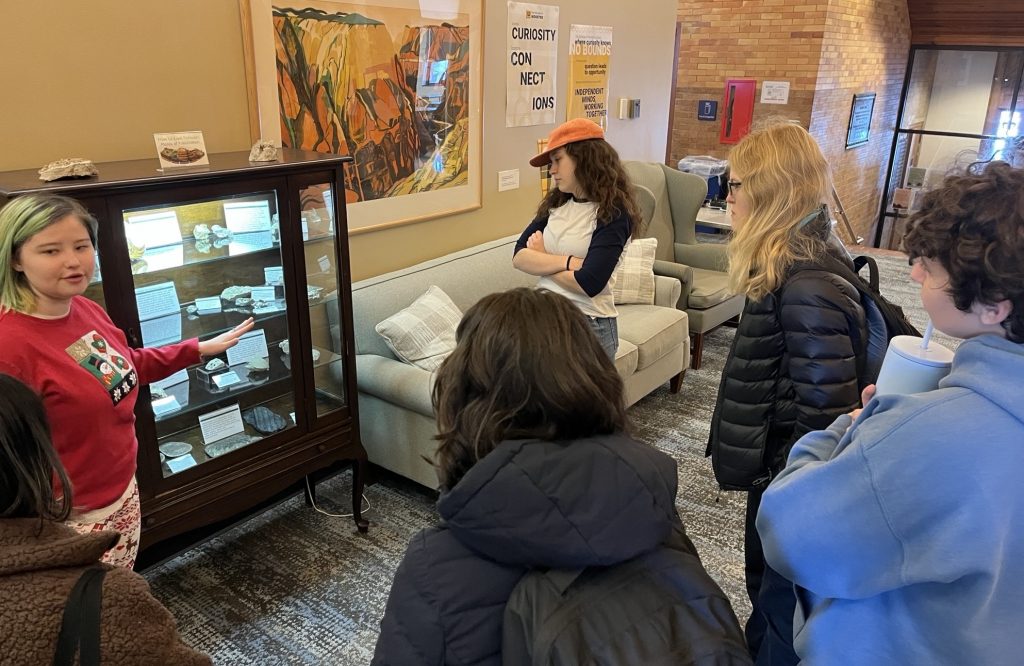
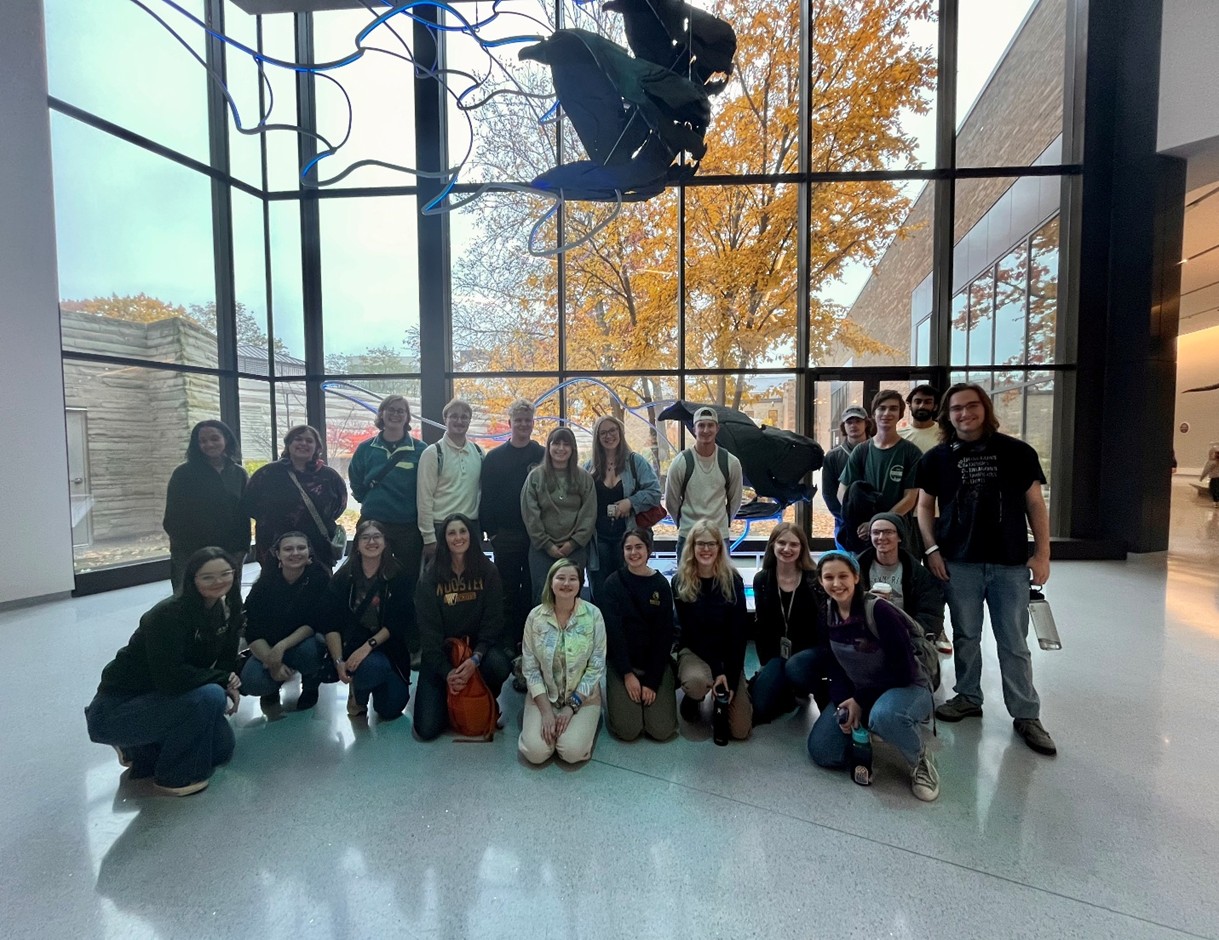
On Saturday, November 8th, Dr. Lyon’s paleoecology class visited the Cleveland Museum of Natural History for inspiration for our own museum project. We explored the exhibits and analyzed their strengths and weaknesses. This allowed us to gain valuable insight into museum design, along with increasing our knowledge of topics we learned in class.

Figure 1.  The 2025 Fall Paleoecology class at the Cleveland Museum of Natural History with Ohio’s famous fossil fish, Dunk (Dunkleosteus)!

Dunk has become a mascot for the class, with its charismatic features and deep Ohio significance.

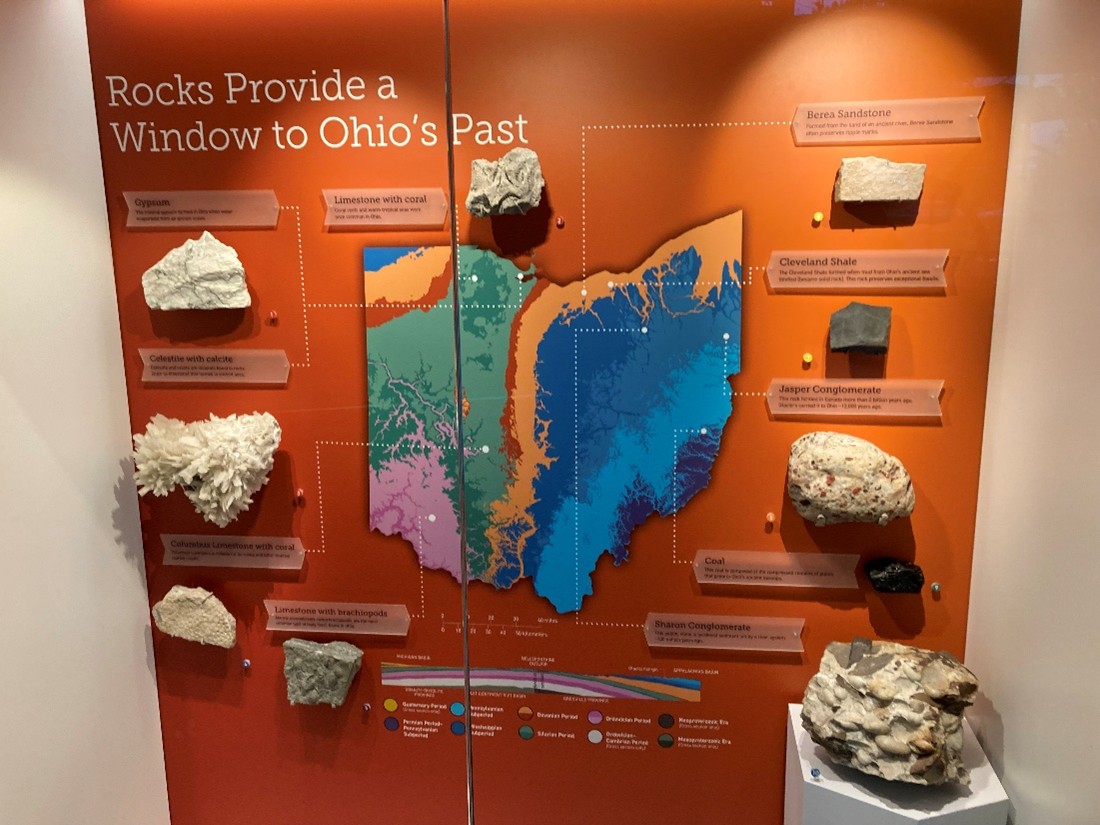
Figure 2. An exhibit describing ancient rocks and fossils of Ohio, with a geologic map.

This exhibit provided details on local paleogeography, and the map specifically allowed viewers to connect with places they are familiar with. The display uses vibrant color and intentionally well-placed labeling which draws people in. This is a great inspiration for our own wall art and display design!

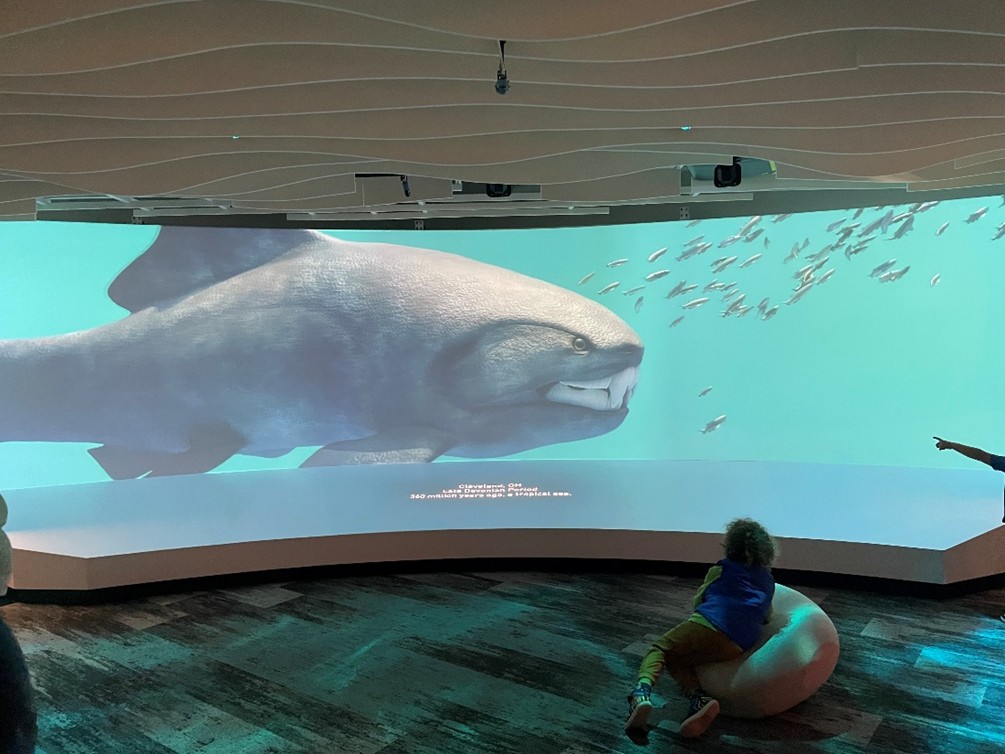
Figure 3. An immersive animated exhibit that brings the prehistoric oceans to life, showcasing ancient predator and prey relationships. It cycles through numerous facts about our favorite fossil fish, Dunkleosteus!

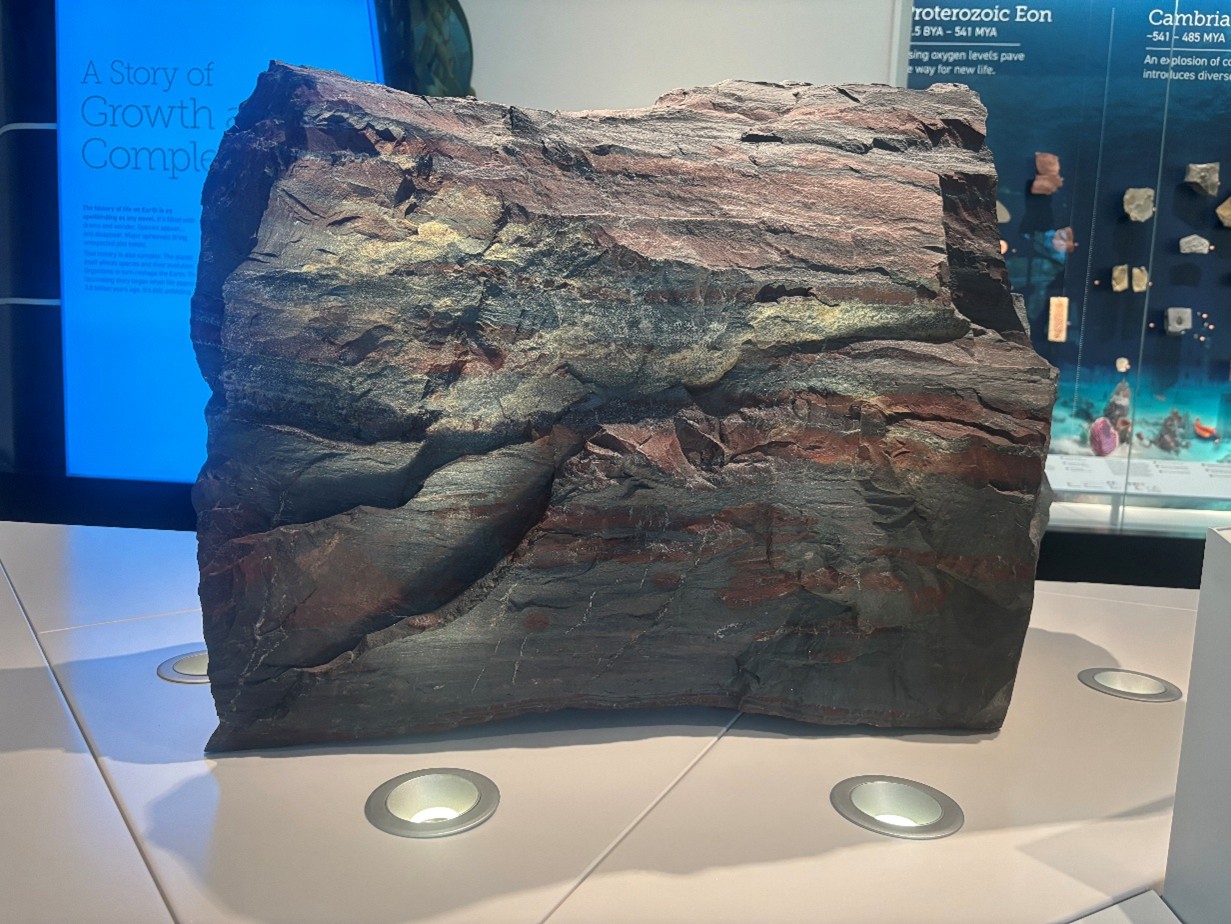
Figure 4. Banded iron formation (BIF) specimen, exemplifying what we learned in class!

Banded iron formations are formed of alternating layers of chert and hematite or magnetite and reflect the presence or absence of free oxygen. As oxygen becomes more abundant in the atmosphere, free iron in the water is oxidized, and BIFs form less.

Figure 5. A display featuring a dinosaur fossil and trace fossil footprints, along with paleoart in the background.

This display does a great job of integrating different display types and sizes, and the paleoart helps bring it to life. This is a wonderful example of a well-designed exhibit and great inspiration for our Scovel display.

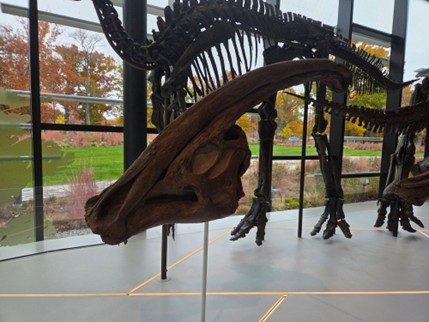
Figure 6. Fossil of the Parasaurolophus, which the class learned about in a case study presented by class TA, Taylor Grant.

Parasaurolophus were herbivorous bipedal dinosaurs that lived in the swamps and dense forests of the last Cretaceous. Fossils have been found in Alberta, Canada, Utah, and Mexico. The crest, as seen in the fossil, is actually an elongated nasal cavity! This was a great learning experience and allowed us to apply topics and ideas learned in class.

Posted in Uncategorized | Tagged , , | 2 Comments

A Tradition Continues: Richmond, Indiana – Paleoecology, Fall 2025

Blog post written by students enrolled in the course, including Madeline Eaton and Lynnsey Delio.

On August 30th, Dr. Lyon’s Paleoecology class took a trip down to Richmond, Indiana to collect fossils for their lab project. The class found many different types of fossils from the Upper Ordovician Whitewater Formation that are 458.2 to 443.1 million years old! During the Ordovician Period, Ohio was covered by shallow seas that were home to many creatures such as brachiopods, horn corals, bryozoans, bivalves, and more. The constant accumulation of sediment during this time made conditions perfect for rapid burial and fossilization of organisms.

Figure 1. The Paleoecology class collecting fossils from the Whitewater Formation. Millions of years ago shallow seas dominated this area, creating the perfect habitat for a host of diverse organisms.

Figure 2. A horn coral from the Ordovician time period, collected from the Whitewater Formation with a student’s hand for scale.

Figure 3. Students searching for fossil specimens.

Figure 4. A bountiful harvest of fossilized taxa from the Whitewater Formation in Richmond, IN. This picture includes different types of corals, bryozoans, and brachiopods.

Lab Work (Post-Field Trip)

Once students returned from their trip, we were ready to get to work! We started by cleaning the samples collected and organizing them by their visual characteristics. Then, they were ready to start their identification process! Students started to recognize fossils they had learned about in class: corals, bryozoans, and brachiopods. The specimens must be correctly identified to the family level for a final class project.

Comment from a student on their experience

“I was climbing around and hunting for fossils until I stumbled upon a good-looking area in the outcrop. I started digging around, and I found some organic matter that looked like an animal dropping. I was a little sketched out, so I started lifting rocks and digging around with my foot. As I began to look deeper, I found some more droppings, but I kept on digging anyway, until some creature came shooting out of a hole directly at me, I screamed and jumped back. It turned out this creature was a MASSIVEmole whose home I had interrupted! I didn’t think any animals would live in this area as it was super dry and rocky, but I guess that goes to show life will find a place even if you don’t think it can.” –Owen Walton ’27

Posted in Uncategorized | Tagged , , | 1 Comment

Muscle scars in tiny conical fossils: A new paper describing the musculature of Devonian tentaculitids from Armenia and what they mean for the biology and evolution of the group

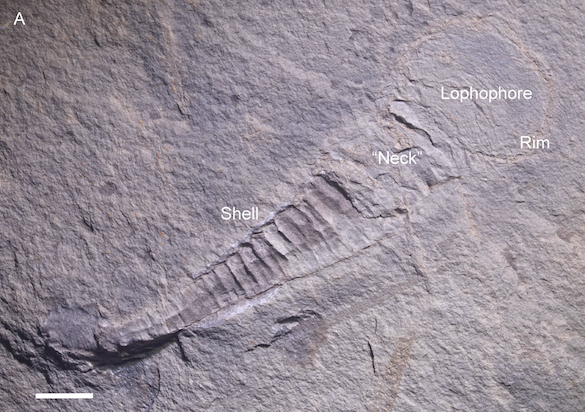
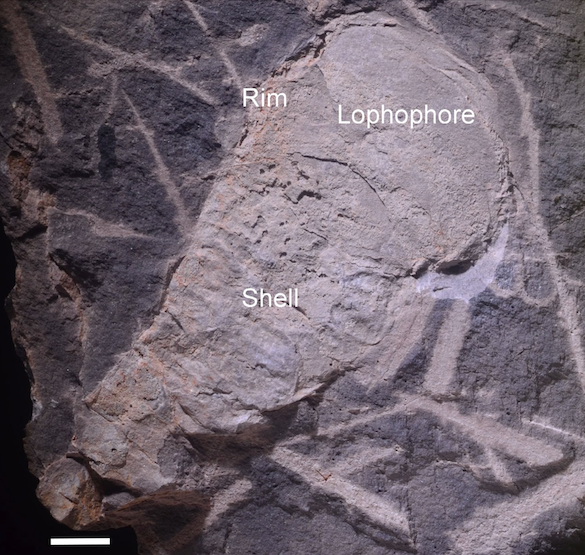
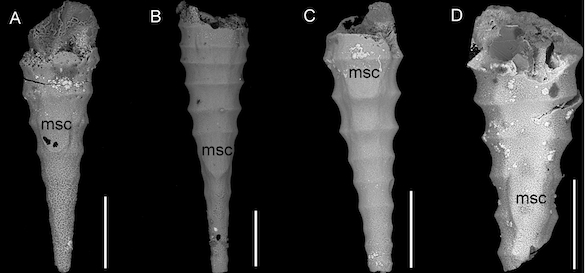
A new paper on tentaculitid paleobiology and evolution has just appeared in its final form in the journal Historical Biology. The authors are headed by my Estonian friend Olev Vinn and include two new Armenian colleagues Tamara Hambardzumyan and Vahram Serobyan, as well as American me. I did not get the opportunity to visit Armenia, alas. The image above shows four internal molds (steinkerns) of the studied Devonian tentaculitids from Armenia. The “msc” refers to muscle scars. (Figure 5 of the new paper.)

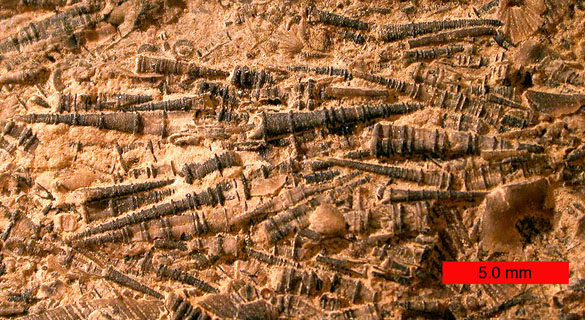
Tentaculitids are curious straight conical calcitic fossils with distinctive concentric ribbed ornamentation. They are found in rocks from the Ordovician through the Devonian. Sometimes they are incredibly abundant. For all their Paleozoic ubiquity, their systematic placement has been controversial. The microstructure of their calcite shells is very similar to that of the lophophorate brachiopods and bryozoans. For this reason and other evidence presented here and elsewhere it appears the tentaculitids are most closely related to bryozoans (Taylor et al., 2010; Vinn and Zatoń, 2012; Vinn et al., 2025a, 2025b). Above are tentaculitid original shells from the Devonian of Maryland (not used in this study).

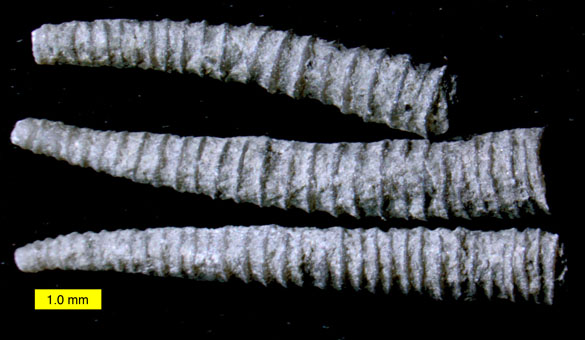
Above are tentaculitid original shells from the Devonian of West Virginia (not used in this study).

Abstract

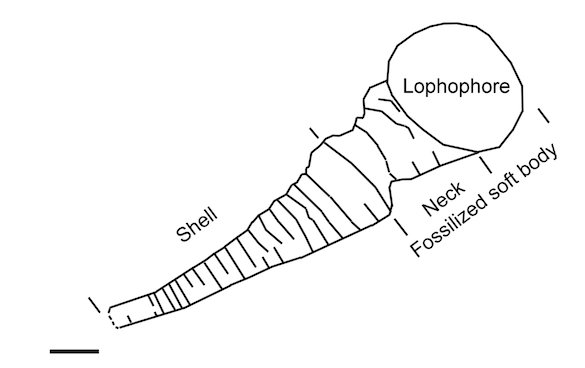
Rare soft body impressions were discovered on phosphatised steinkerns of Devonian tentaculitids from Armenia. The muscle scars occur only in the most apical part of the tentaculitid steinkerns. The morphology of muscle scars varies between different species. There are seven different types of muscle scars in tentaculitids, and six of them are present in the Armenian material. The muscle scars were used for attachment of a well-developed retractor muscle. The muscle attachments in tentaculitids migrated forwards during the growth of the shell like the muscle scars in many brachiopods. The hypothesised architecture of tentaculitid muscle system is most similar to that of bryozoans. Tentaculitids had a defensive mechanism that allowed complete retractability of the animal into the shell. This was achieved by prominent retractor muscles that pulled the soft tissues into the protective body wall. This is opposite the protrusion mechanism that involved body‐wall musculature to increase hydrostatic pressure within the soft body to squeeze out the feeding apparatus of the animal, enabling it to filter‐feed again. This muscle arrangement is strong evidence to confidently place the tentaculitids within the Lophotrochozoa, potentially as ‘lophophorates’.

Reconstruction of tentaculitid musculature (Figure 7 of the new paper). This is very similar to a bryozoan zooid.

References:

Taylor, P.D., Vinn, O. and Wilson, M.A. 2010. Evolution of biomineralization in ‘lophophorates’. Special Papers in Palaeontology 84: 317-333.

Vinn, O., Hambardzumyan, T., Wilson, M.A. and Serobyan, V. 2025a. Palaeobiological and phylogenetic implications of preserved muscle scars in Devonian tentaculitids from Armenia. Historical Biology 37:12, 2612-2620. https://doi.org/10.1080/08912963.2025.2458115

Vinn, O., Hambardzumyan, T., Temereva, E., Grigoryan, A., Tsatryan, M., Harutyunyan, L., Asatryan, K. and Serobyan, V. 2005b. Fossilized soft tissues in tentaculitids from the Upper Devonian of Armenia: Towards solving the mystery of their phylogenetic affinities. Palaeoworld 34, 3: 100888.

Vinn, O. and Zatoń, M. 2012. Phenetic phylogenetics of tentaculitoids – Extinct, problematic calcareous tube-forming organisms. GFF, 134(2), 145–156. https://doi.org/10.1080/11035897.2012.669788


Posted in Uncategorized | Tagged , , | Leave a comment

Possible Linkages Between Climate and Human History in Ohio (the 4.2 yr. ka interval)

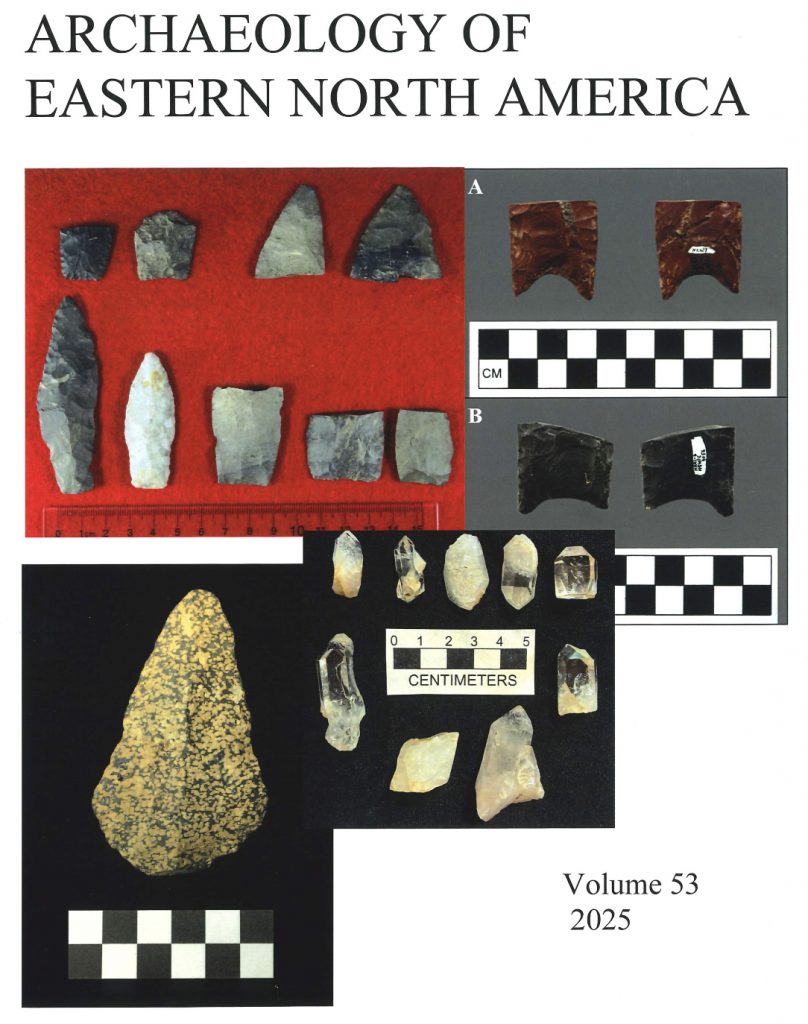
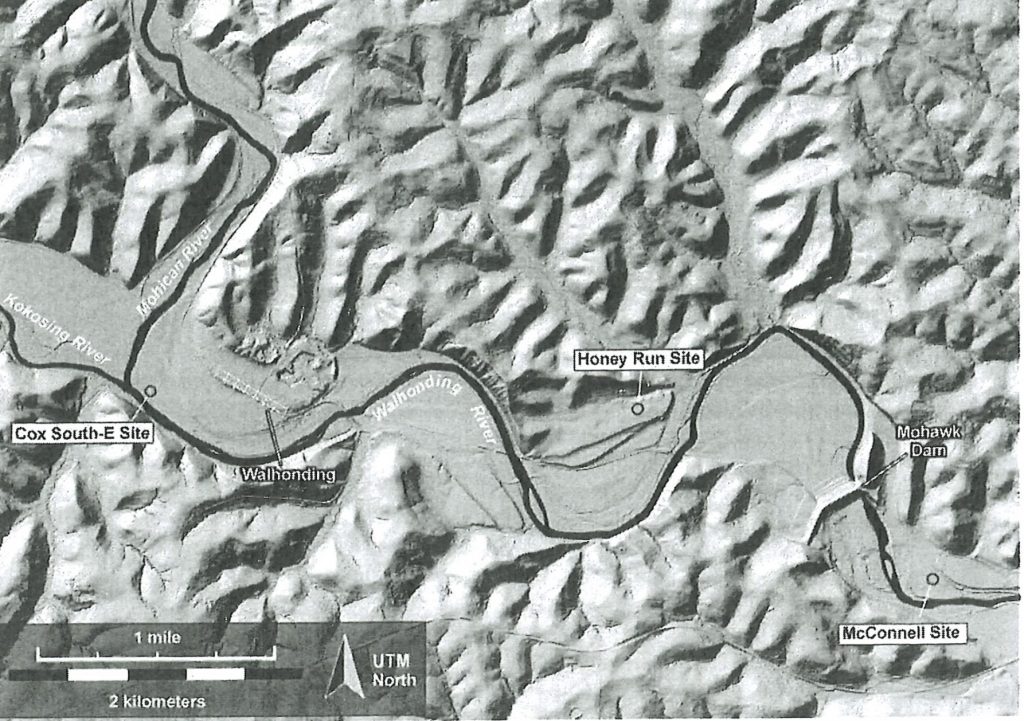
Nigel Brush and colleagues have assembled a record of human history in the Walhonding Valley of Ohio (see map below). Along with Jeffrey Dilyard and others, Brush has worked in the region for decades  examining the history of human occupation throughout the Holocene in this part of Ohio. In this latest contribution Brush and colleagues (2025), along with Wooster geologists, has pieced together a story of hunting point technology, resource use, and climate change. A key question of this work focused on the technology of the lanceolate point (see figure below), which was widely used in the Great Plains for hunting bison early in the Holocene (late Paleoindian interval).  Why this same technology was used later in the Holocene about 4.4 to 4.0 ka (~4,400 to 4,000 years ago) in Ohio is a mystery given that bison were not thought to be plentiful. Perhaps the reason was, that during this time of known climate shifts (ie. the 4.2 ka event) bison migrated east into the region and residents adopted the lanceolate technology to exploit this change in resource. The dry conditions in the central plains during this time and expanded prairies into Ohio might explain the lanceolate workshops in the Walhonding River valley and the need for these points. This is one of the hypotheses that the authors put forth to explain the presence of these points in the Walhonding Valley and an idea that could be tested further.

The cover of the Archaeology of Eastern North America (AENA) – the points on the upper left (red background) pertain to the article showing the manufacture of the lanceolate points.  

Map showing the Walhonding River site at the confluence of the Mohican and Kokosing Rivers. The Cox South E-Site is crucial in this study. Downstream also shown are the Honey Run and McConnell sites, which also have documented lanceolate point workshops.

A next-step in this study might be to investigate the ~4.2 ka interval in lake cores from Northeast Ohio to better understand the environmental changes at this time. A strong candidate would be to recover and study that interval as recorded in the sediments of  Browns Lake in southern Wayne County where the other two other abrupt climate changes that define the Holocene are evident. The Younger Dryas (Shane and Anderson, 1993; Lyon et al., 2025) and the 8.2 ka event (Lutz et al., 2008) are well-documented in the lake, why not then the 4.2 ka event? Perhaps a student in Earth Sciences or Archaeology at Wooster will take this on as their Independent Study.

References:

Brush, N., Dilyard, J., Burks, J., Kardulias, P.N., Wiles, G. and Wiesenberg, N., 2025, The Cox South-E Site (33-CS-986): a Late Archaic Lanceolate Workshop in the Walhonding Valley, Coshocton County,Ohio, Archaeology of North America, 53: 129-162: ISSN 0360-1021.

Lutz, B., Wiles, G.C., Lowell, T.V., and Michaels, J., 2007, The 8200 abrupt climate change in Brown’s Lake, Northeast Ohio: Quaternary Research. 67, 292-296, doi:10.1016/j.yqres.2006.08.007.

Lyon, E. C., Wiles, G. C., Wilson, M. A., Lowell, T. V., & Diefendorf, A. F. A HIGH-RESOLUTION LAKE RECORD OF THE YOUNGER DRYAS FROM NORTHEASTERN OHIO. Geological Society of America Abstracts with Programs, 57(7), Abstract #7848.

Shane, L. C. K., and Anderson, K. H. (1993). Intensity, gradients and reversals in late glacial environmental change in east-central North America. Quaternary Science Reviews, 12(4), 307–320.

Posted in Uncategorized | 1 Comment

A spotty Middle Ordovician trilobite from Estonia: A new paper describing an ancient parasitic infection

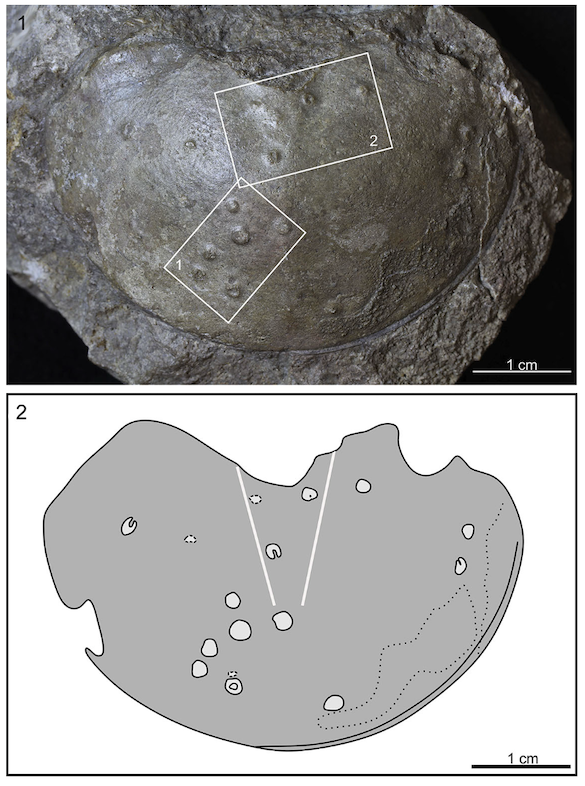
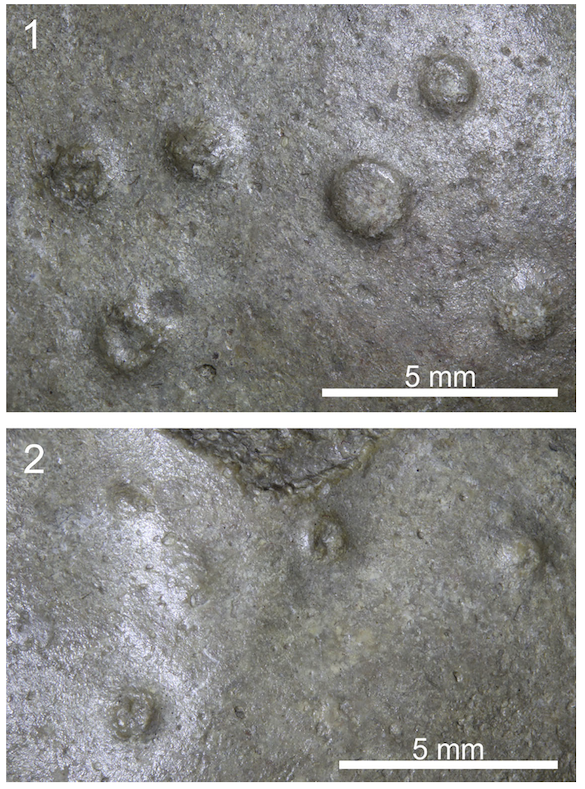
One of the many reasons we need natural history museums is that they can curate large collections of specimens that can be examined for interesting features decades after they were bagged in the field. Recently my Estonian colleagues Olev Vinn and Ursula Toom searched through hundreds of museum specimens of the Middle Ordovician trilobite Illaenus for evidence of parasitism. They found one internal mold of the pygidium (“tail”) that had a constellation of pits, as if the poor creature had smallpox (which it most certainly did not!). It did have an infection of some kind, though — a rare find in the fossil record. The Estonians contacted me, Kenneth De Baets and Russell Bicknell, and the five of us put together a paper that appeared today as an open-access article in the Journal of Paleontology. Here I present the abstract and a couple of figures. This article is free to read at the journal link.

Abstract

Evidence for parasites in the fossil record is rare. As such, any examples present insight into parasitism in deep time. Trilobites have often been used for documenting parasites in the Paleozoic. Here we examine an Illaenus sp. pygidium from the Middle Ordovician of Estonia that displays thirteen small structures with domical to crater-like shapes. These morphologies are consistent with circular depressions on the pygidium inner surface. We propose that these structures formed while the trilobite was alive and record an infestation located within soft tissue. The trace maker seems to have influenced pygidial mineralization and caused a pathological reaction. The symbiont may have been capable of bioerosion, excavating these depressions by dissolving the trilobite’s mineral tissues; however, this scenario is less likely considering comparisons with syndromes and pathologies known in modern arthropods. The parasitic organism may have fed on the trilobite’s tissues or utilized nutrients within the trilobite’s body for growth. These observations are consistent with a parasitic organism.

Figure 1. Internal mold of Illaenus sp. pygidium with traces of parasitic infestation from
Darriwilian of northern Estonia (GIT 437-107); (1) Complete specimens. Rectangle
1 shows location of detailed Fig. 2.1, and rectangle 2 shows location of detailed
Fig. 2.2. (2) Drawing of the pygidium.

Figure 2. Internal mold of Illaenus sp. pygidium with traces of parasitic infestation from
the Darriwilian of northern Estonia (GIT 437-107); (1) Detail view of traces; showing two
simple bumps and four crater-like structures, (2) Detail views of traces; showing two
simple bumps and two crater-like structures.

Reference:

Vinn O., Wilson, M.A., De Baets, K., Bicknell, R., and Toom, U. 2025. Parasitic infestation in a Middle Ordovician Illaenus (Trilobita). Journal of Paleontology, 1–6 https://doi.org/10.1017/jpa.2025.10190


Posted in Uncategorized | Tagged , , | Leave a comment

A new paper on James Parkinson’s neglected 19th century contributions to crinoid paleontology

About three years ago I became curious as to who the “Parkinson” was of Parkinson’s Disease. I found the Wikipedia entry for the man, and its first sentence is: “James Parkinson FGS (11 April 1755 – 21 December 1824) was an English surgeon, apothecary, geologist, palaeontologist, and political activist.”

Wait. What? Palaeontologist? The man who described in detail “the shaking palsy” (Parkinson, 1817) so well that the disease was later named for him was also a paleontologist? Why did I not know this? I looked him up in a few handy histories of paleontology and found nothing until I dug deep into the historical literature. I asked my paleontologist friends if they knew Parkinson was one of ours — no one had a clue. There must be a story here.

Of course, many science historians do know about Parkinson’s career in paleontology, and some have described it in detail. One of the best and most readable accounts is by Cherry Lewis (2017). For some reason, though, Parkinson the Paleontologist has slipped out of sight for several generations of his disciplinary community. Why?

I approached my good friends and colleagues Bill Ausich (Ohio State University) and Caroline Buttler (National Museum of Wales) and we teamed up to address Parkinson’s paleontological contributions. Because Bill is one of the world’s top experts on fossil crinoids, and crinoids were a favorite of Parkinson, we started with this group of echinoderms. Just this week our first paper appeared in the journal Earth Sciences History (Ausich et al., 2025). This is a granular account of Parkinson and crinoids, so it is a bit esoteric to most readers. For a broader view of Parkinson the Paleontologist, please see this blog entry describing a presentation we gave in 2024. Everything below comes from Ausich et al. (2025).

ABSTRACT

James Parkinson (1755–1824) was a late 18th and early 19th century apothecary surgeon. In addition to medicine, he published on other topics such as radical politics and paleontology. His paleontological monographs were important during the transitional period when fossils came to be regarded as the remains of once living organisms and were disentangled from Biblical explanations of their origins and distribution. Parkinson published on plants, invertebrates, and vertebrate fossils. Although his work on crinoids was regarded as significant during the 19th century, it has largely been forgotten in the 21st century. Parkinson’s observations led him to interpret crinoids as animals, which was reflected in his morphological terminology, and he expanded crinoid classification beyond that based solely on columnals and pluricolumnals. However, Parkinson’s morphological terminology, like that of many 19th century students of crinoids, did not reflect homology; and he did not apply a Linnean crinoid taxonomy. Despite what is now regarded as inadequate morphological terminology and an obsolete classification scheme, James Parkinson’s significant contributions to the study of crinoids should not be forgotten.

The title page of the first volume of Parkinson’s best known paleontological work: Organic Remains of a Former World (Parkinson, 1804).

Title page for Outlines of Oryctology. An Introduction to the Study of Fossil Organic Remains (Parkinson, 1821a). Parkinson intended this to be the equivalent of a paleontological textbook for students.

Crinoids illustrated in Parkinson (1808). These plates were remarkably detailed for the time. Note that the crinoid head indicated as b is upside-down.

Crinoids illustrated in Parkinson (1808), with the exception of e and f, which are related stemmed echinoderms now called blastoids.

For the details of this story, please see the original article: Ausich, Wilson and Buttler (2025).


References: (I’ve listed all of Parkinson’s paleontological writing for the record.)

Ausich, W.I., Wilson, M.A. and Buttler, C.J. 2025. The lost legacy of James Parkinson’s work on the Crinoidea (Echinodermata). Earth Sciences History 44: 421-439.

Lewis, C. 2017. The Enlightened Mr. Parkinson: The Pioneering Life of a Forgotten English Surgeon. Icon Books.

Parkinson, J. 1804. Organic Remains of a Former World. An Examination of the Mineralized Remains of the Vegetables and Animals of the Antediluvian World; Generally Termed Extraneous Fossils. Volume 1. London: C. Whittingham.

Parkinson, J. 1808. Organic Remains of a Former World. An Examination of the Mineralized Remains of the Vegetables and Animals of the Antediluvian World; Generally Termed Extraneous Fossils. Volume 2. London: C. Whittingham.

Parkinson, J. 1811a. Organic Remains of a Former World. An Examination of the Mineralized Remains of the Vegetables and Animals of the Antediluvian World; Generally Termed Extraneous Fossils. Volume 3. London: C. Whittingham.

Parkinson, J. 1811b. XIV. Observations on some of the strata in the neighbourhood of London, and on the fossil remains contained in them. Transactions of the Geological Society of London 1(1): 324‒354.

Parkinson, J. 1817. An Essay on the Shaking Palsy. London: Whittingham and Rowland for Sherwood, Neely and Jones, 66 pp.

Parkinson, J. 1821a. Outlines of Oryctology. An Introduction to the Study of Fossil Organic Remains. London: W. Phillips.

Parkinson, J. 1821b. V. Remarks on the fossils collected by Mr. Phillips near Dover and Folkstone. Transactions of the Geological Society of London 5(1): 52‒59.


Posted in Uncategorized | Tagged , | 1 Comment

A New Tree Ring Study from the Kashmir Valley, western Himalaya

The global tree-ring community is racking up the papers investigating the utility of the relatively new proxy using blue intensity of annually-dated tree rings. This latest effort is a blue intensity investigation followup of a recent study on ring widths also led by Dr. Santosh Shah of Birbal Sahni Institute of Palaeosciences in Locknow, India. Blue intensity is a proxy that has added a new dimension to thermal histories across the globe including efforts at the The College of Wooster Tree Ring Lab. Shah et al. (2025) used cores extracted from three sites of the Western Himalayan Fir (Abies pindrow) from the Kashmir Valley.

Map from the study showing the location of the three tree-ring sites and the meteorological station (Srinager). The centrally-located Srinager climate station has records of precipitation and temperature spanning 1901-2024, one of the longest in the region.

A figure from the paper showing the beautiful images of earlywood (above) and latewood (below) blue light reflectance for individual rings from the Western Himalayan Fir (Abies pindrow). 

The upshot of the work is that time series of blue intensity values from the latewood of A.Pindrow are strongly correlated with monthly average and maximum temperature series  from nearby climate station (Srinager).  Ring-width are more strongly correlated with summer precipitation and thus blue intensity with its response to late summer temperatures promises to provide a new proxy for thermal histories for the region. These collaborations with Dr. Shah and colleagues have enriched our efforts at the Wooster Tree Ring Lab and we look forward to future efforts.

Posted in Uncategorized | 1 Comment

A Beautiful Day at the South Wellfield

HYDRO25 the class. On a beautiful fall day the class investigated the South Wellfield – the mission was to take water levels from 15 observation wells and sample the groundwater, surface water and water emanating from the airstrippers. Isotopic analyses of these waters are pending. The photo above is the Falls at Apple Creek aka Effluent from an Airstripper.

HYDRO25 – here is a photo of the hand-picked teams assigned the tasks described above. The team is united by the bucket auger that was used to auger down to the confining layer of the Wooster Aquifer.

The confining layer is that far down – this group made short work of the task and brought up the pristine lake clay that is the confining layer.

Here is the clay brought up by the team. It is organic rich and we really should pick it for organics.  Radiocarbon ages of the organics will help us understand the timing of the lake that existed in the valley – Glacial Lake Killbuck.

Our primary objective was measuring water levels in the confined Wooster Aquifer, however here we are measuring the water table that is a perched aquifer on top of the clay. Just a kilometer aways is a BTEX plume on top of the clay that is actively being remediated.The observation wells are all completed in the confined Wooster aquifer, and here the team is sneaking up on observation well #4. The levees to Apple Creek are in the background.

We also had a team in the Apple Creek measuring discharge and probing the bottom of the stream for the clay confining layer. What a welcoming team of stream gaugers.

The team bailed a few of the wells to sample the water.  We will obtain the stable isotopes of the various waters sampled to investigate the origin of the waters. This was last done by the USGS decades ago.

The airstrippers, installed to remove VOCs from the water, are filled with these “wiffle balls” designed to atomize the waters which are then “stripped” of contaminants via compressed air blowing through the column.

One last shot of the Auger team under a big Wooster sky with their feet firmly planted in a recently harvested no-till soybean field with the water treatment plant and its anaerobic digested in the far background.

Special thanks to our bus driver Bud and to the Water plant for permission to enact this lab for HYDRO25.

Posted in Uncategorized | 1 Comment

GSA – San Antonio 2025

At the alumni reception – a reunion.

Elliot Miller (Wooster) presenting his IS work on geochemical analyses of palagonite and potential applications to Martian exploration.

Mary Palmieri (Wooster) investigates the linkages of tree rings and cloudiness in Northeast US.

Lynnsey Delio (Wooster) is investigating the linkages between coastal Alaskan tree-ring records and the monthly Lake Huron and Michigan levels.

Lauren Segura (Wooster) presents her work using crystal size distributions to help determine the origin of extrusive rocks in Iceland.

Ihaja Metz (Wooster) is working on using the XRF at Wooster in determining water chemistry in natural groundwaters.

In addition to the presentations by Wooster students and faculty – four Keck Geology Consortium students who worked at Wooster in the summer of 2025 presented results. Here Dexter Pakula (Carlton College) presents his study linking modes of climate variability in the Indian Ocean to climate variability in Alaska.

Lev Sugerman-Brozan (Colorado College) explains the results of his work comparing tree-ring reconstructions Gulf of Alaska temperature variability and model simulations focusing on intervals of strong volcanic forcing.

Landon Vaughan (Trinity University) explored the record of volcanic cooling of the late 1690s volcanic event(s) their signature in the rings of yellow cedar trees and linkages with Tlingit oral histories.

Izzy Held worked on the feasibility of using costal tree-ring records from the Gulf of Alaska to reconstruct Mendenhall River flow from Juneau Alaska.

We are grateful to the many alumni for their support and their contributions that helped to fund the travel and stay in San Antonio.


Posted in Uncategorized | 1 Comment