


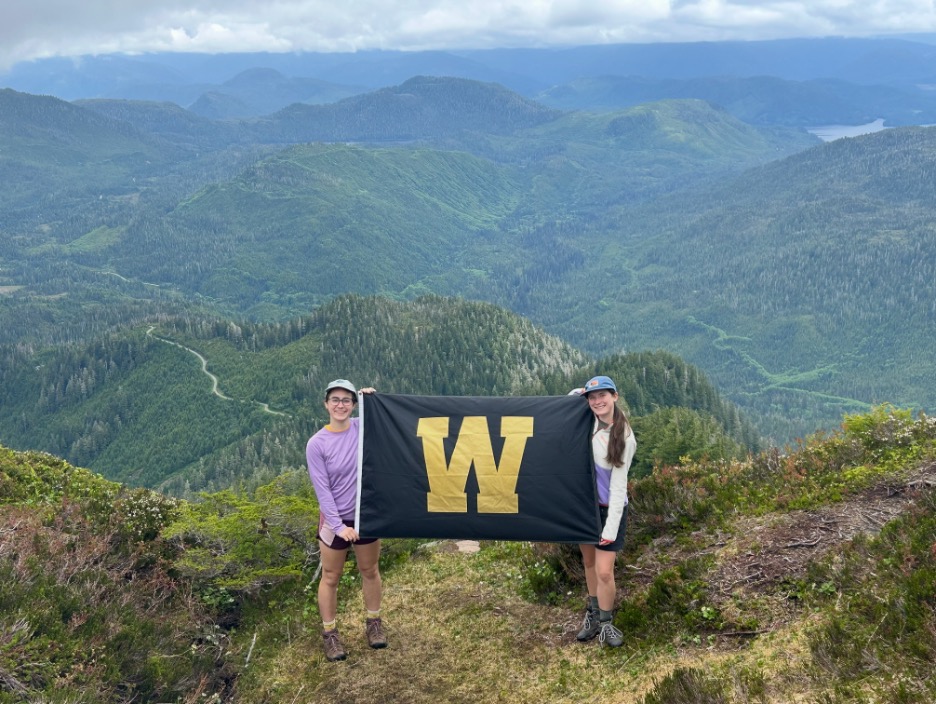
 A couple of dudes on Dude Mountain
Guest bloggers – Cheyenne Wentz and Anika Knowles: Day 1 (June 23rd): We arrived in Ketchikan and took the ferry across the fjord from the airport to Revillagigedo Island (where the town of Ketchikan is located). After picking up our rental car, we drove to Rotary Beach and explored the tide pools for a few hours. We saw lots of life, including mussels, sea snails, kelp, crabs, and 51 sea stars. We also were introduced to salmon berries, and we picked and ate an abundance of the red-orange fruit. After a dinner of pasta, we caught the end of sunset over the water.
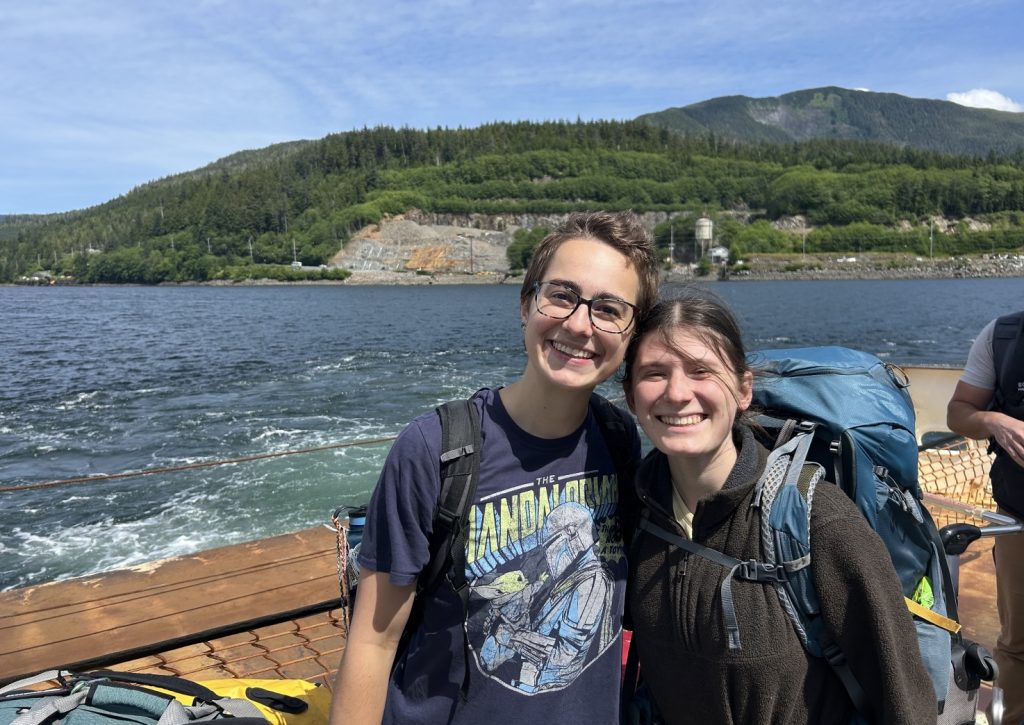
Ferry ride from the airport to Ketchikan.
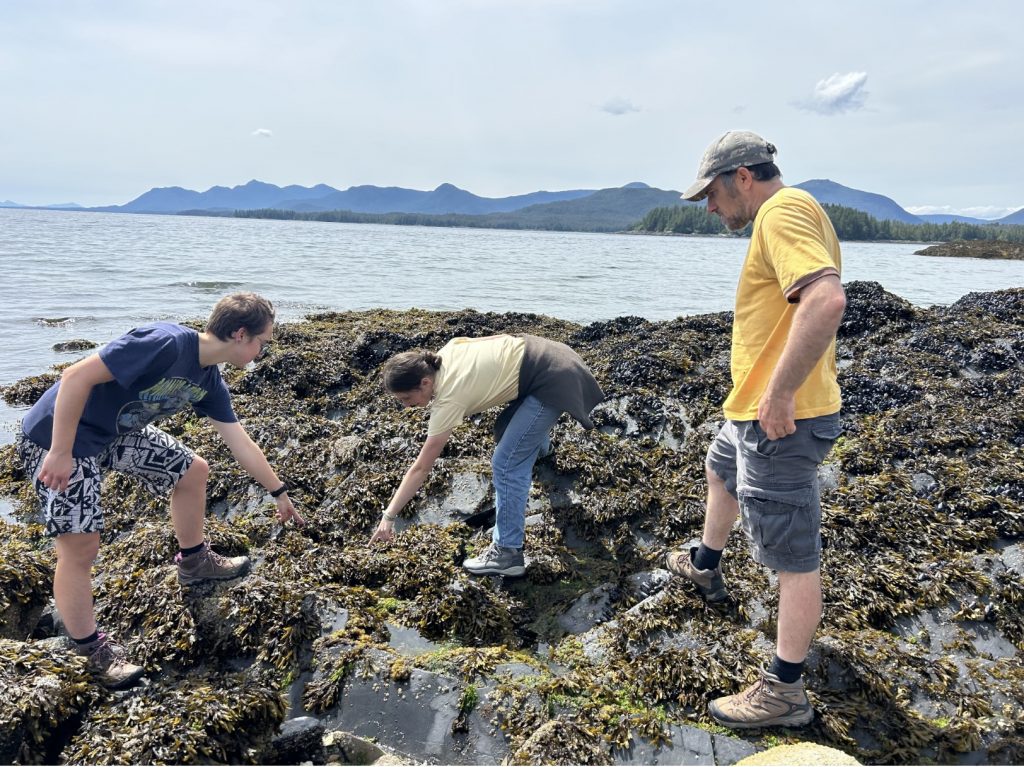
Pointing out sea stars at Rotary Beach tide pools.
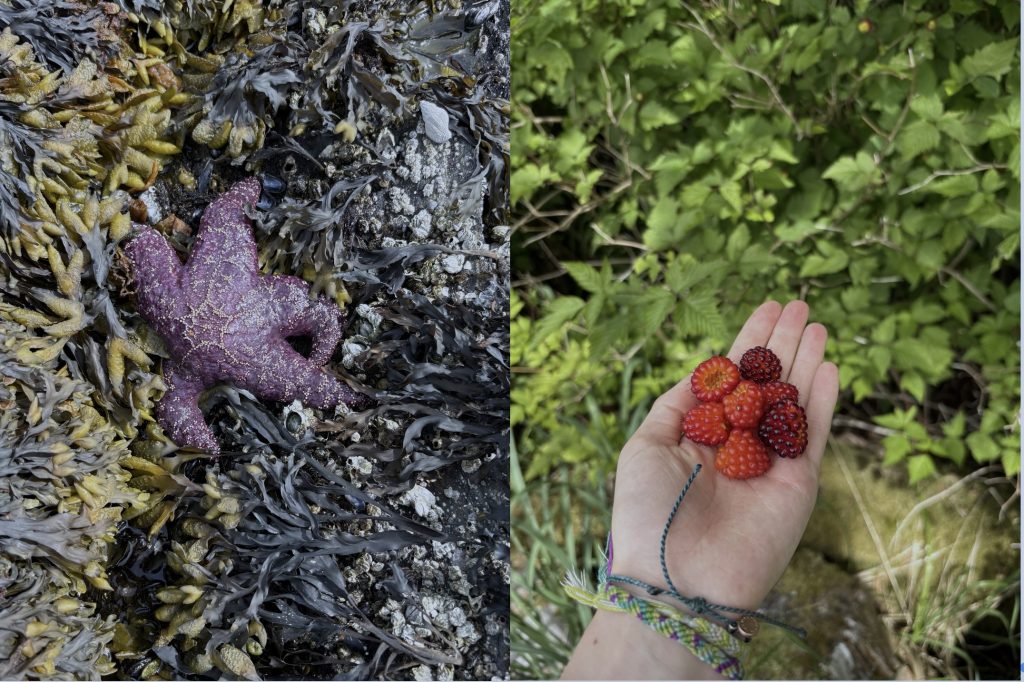
Ochre Sea Star (left) and salmon berries (right)
Day 2 (June 24th): For our first day in the field, we went to Perseverance Lake and hiked around, learning the difference between red cedar and yellow cedar while marveling at all the other flora and fauna including banana slugs, sundew, alder trees, and many different ferns. We also learned to identify devil’s club and cow parsnip, both plants that you don’t want to touch. We had lunch on some logs overlooking the lake, then began coring trees and preserving them in straws.
Red cedar – less dense foliage, sweeter smelling, flatter needles
Yellow cedar – more dense foliage, kind of citrus smelling, rounder needles, more droopy
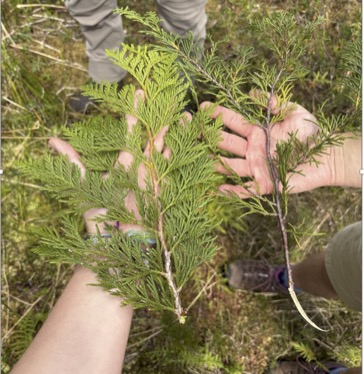 Yellow cedar (left) and redcedar (right)
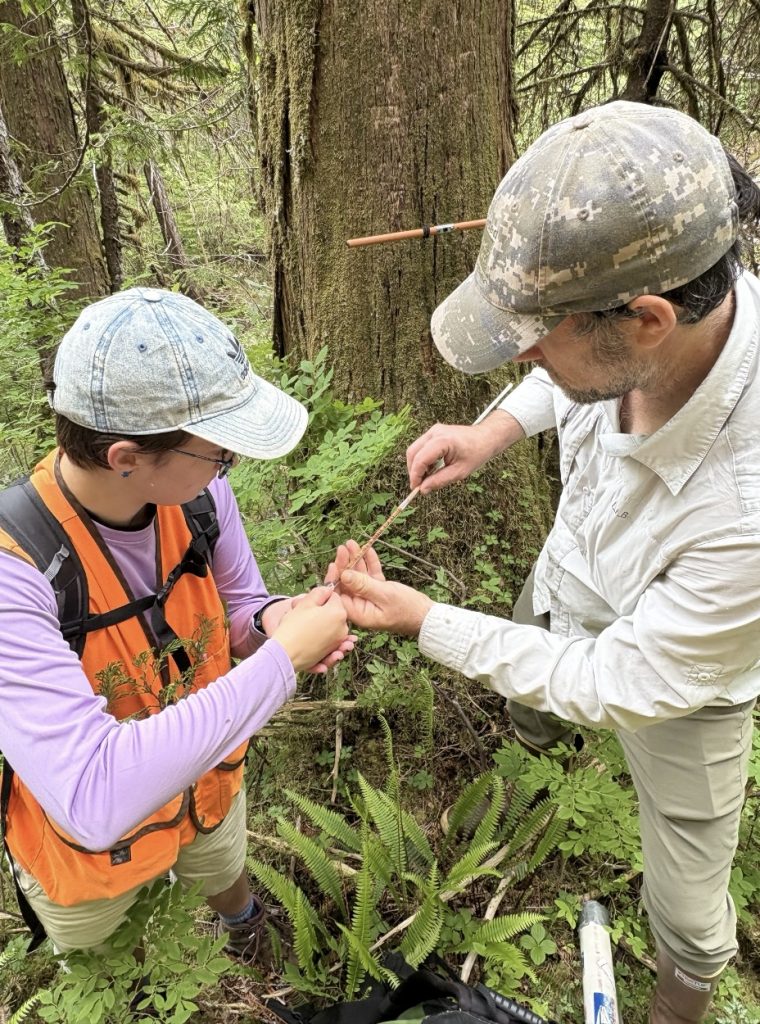
Cheyenne and Nick extracting a redcedar core.
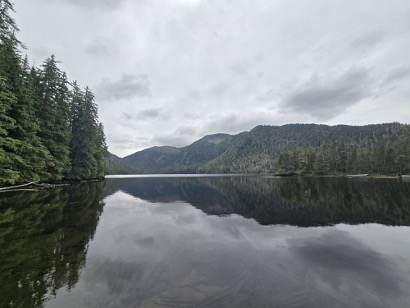 Perseverance Lake.
Day 3 (June 25th): In the morning, we had some local coffee along with our breakfast before heading back to the Perseverance trail to continue coring redcedar and complete that site’s chronology. It was raining almost the whole day, so we sported our fashionable yellow raincoats. We saw LOTS of skunk cabbage and devil’s club, along with a few more banana slugs, on our way to the trees. For coring, we tried to choose trees that weren’t leaning at a big angle, didn’t have visible rot, and were decently large. We noticed that the redcedar is much easier to core than the yellow cedar, which our triceps thanked us for. We had lunch on a mossy knoll and then traversed to a lake with no name where we saw some trees that had been stripped, a traditional practice of the Tlingit and Haida indigenous peoples. After the day’s work, we stopped at Connell Dam and Totem Bight State Park where we learned a little bit more about the Tlingit and Haida culture and history. We finished the day with taco Thursday complete with bean juice and cinnamon tortillas (shoutout WOODs club!).
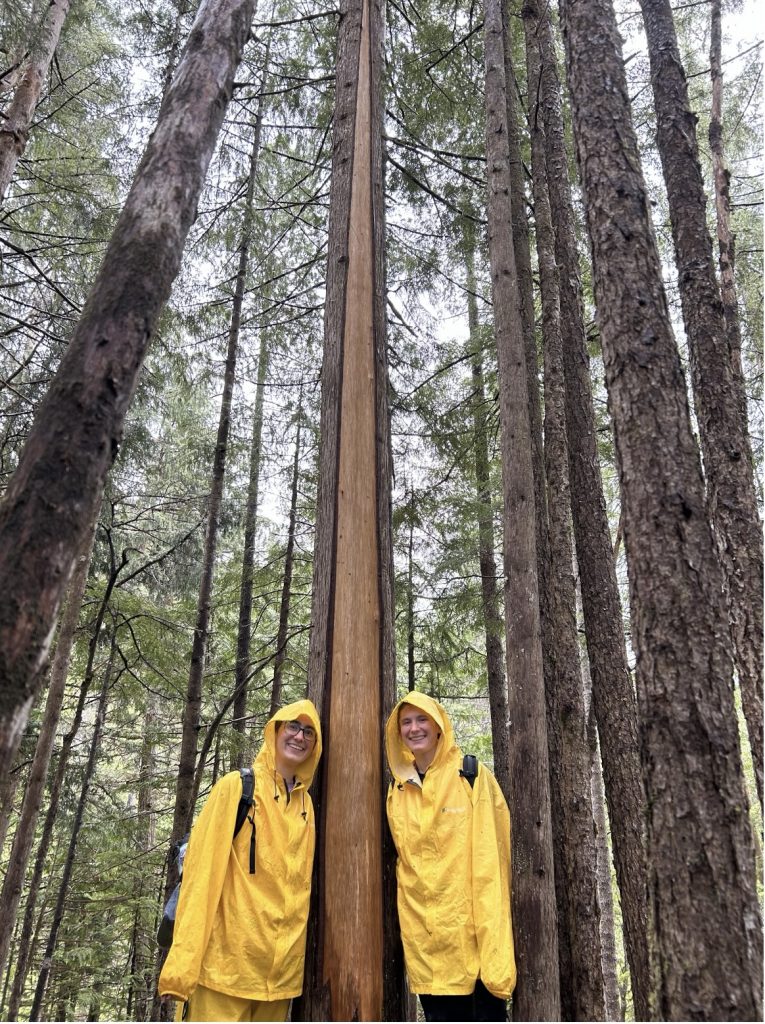
Cheyenne and Anika standing by a stripped redcedar.
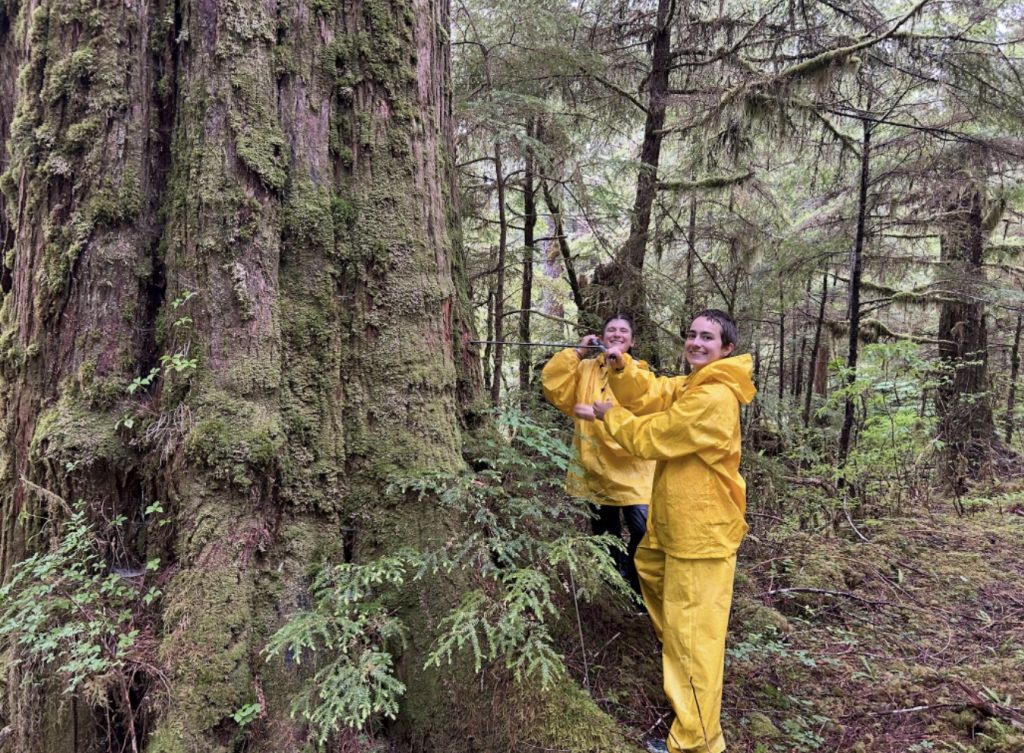
Anika and Cheyenne coring a redcedar.
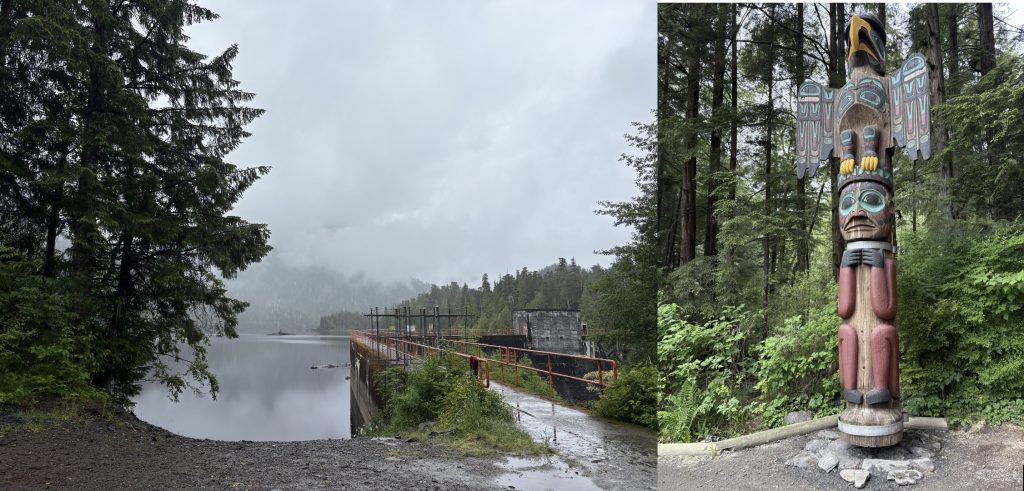
Connell Dam (left) and Totem Bight State Park (right).
Day 4 (June 26th): We continued on to our second site—Lunch Creek Trail. We explored the trail to scope out where the best redcedars were to core, then stopped for lunch at a bear-frequented spot where we set up a hammock. As we cored trees, we found some ripe wild blueberries and talked to some friendly hikers. After the day’s work, we hiked down to Settler’s Cove to sit and watch the water for a bit.
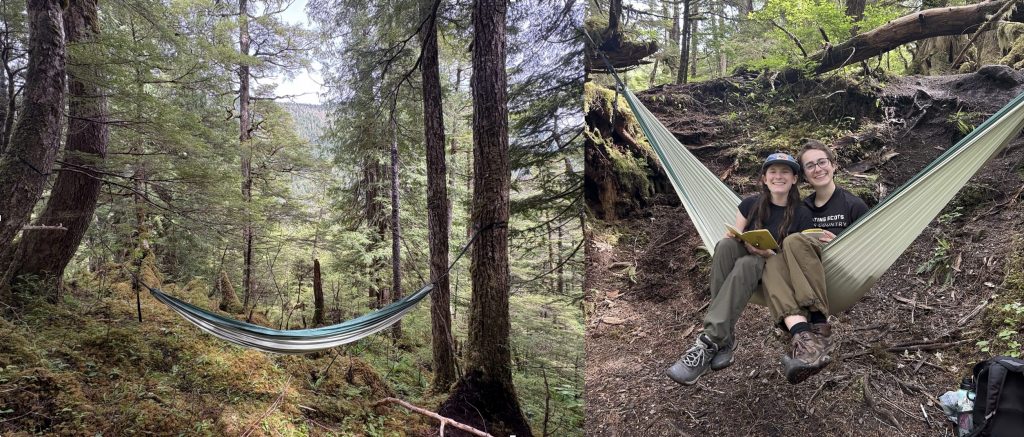
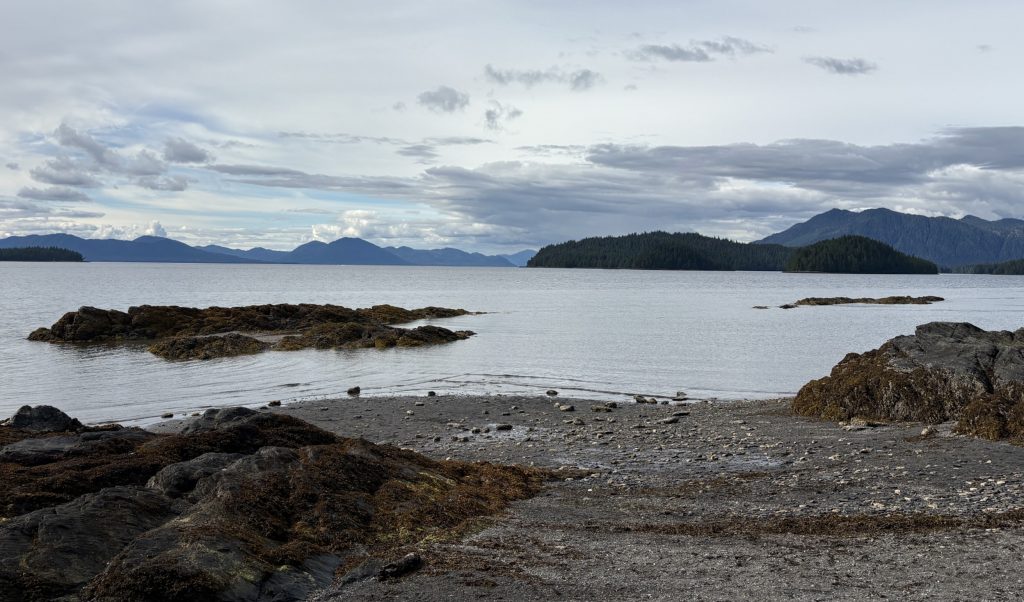
Settler’s Cove
Day 5: After three days of hard work, we had a chance to explore around Ketchikan and rest a little. We spent a few hours at the Southeast Alaska Discovery Center where we learned some more about the natural history of the area. Fun fact, Tongass National Forest is the largest national forest in the country! We also heard from one of the retired loggers and his experience in the timber and wood pulp industry.
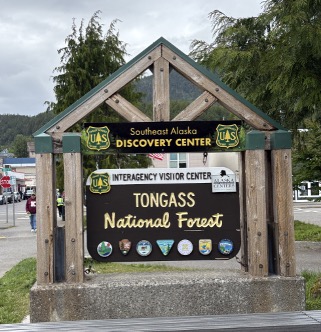
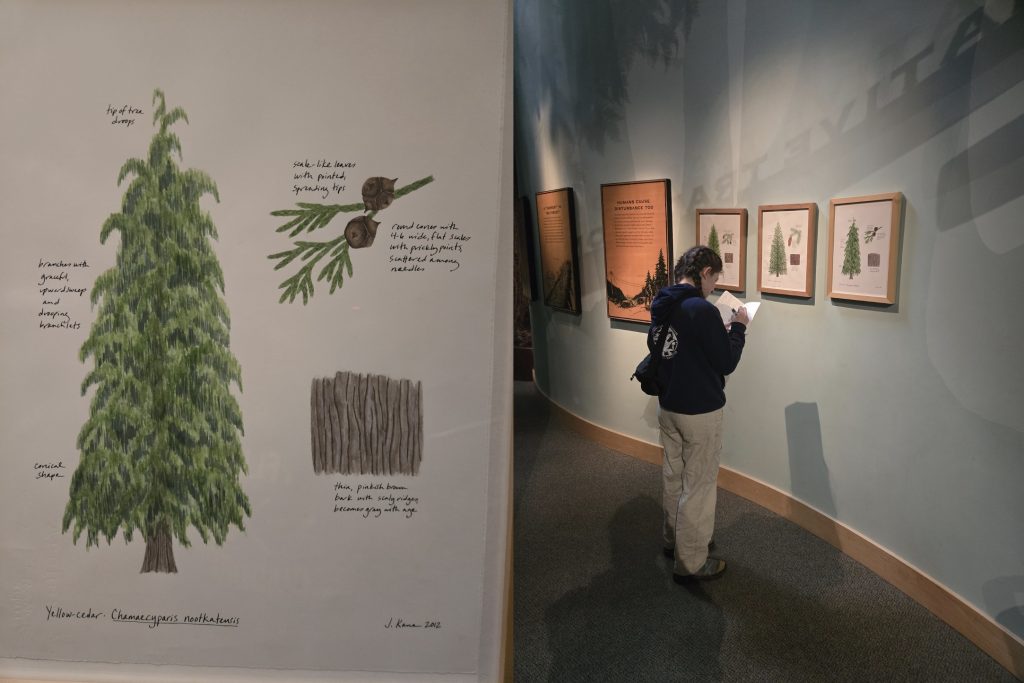
Yellow cedar drawing (left) and Anika taking notes (right).
Day 6: We drove to Dude Mountain Trail and hiked to the summit which was very foggy but we got some good views as the clouds moved. We had lunch up at the summit then cored mountain hemlocks and yellow cedars on the way down, trying not to eat any of the bugs that were swarming us. There was a sweet spot in the middle where the most reliable trees to core were. We also learned the difference between mountain hemlock and western hemlock. Hemlocks are a hard wood, compared to the cedars which are a soft wood, so it was a lot harder to core the hemlocks. We also found some core holes from the previous Wooster trip to Ketchikan (shoutout Amanda and Proto).
Mountain hemlock – needles all the way around the branch
Western hemlock – needles two-dimensional/parallel
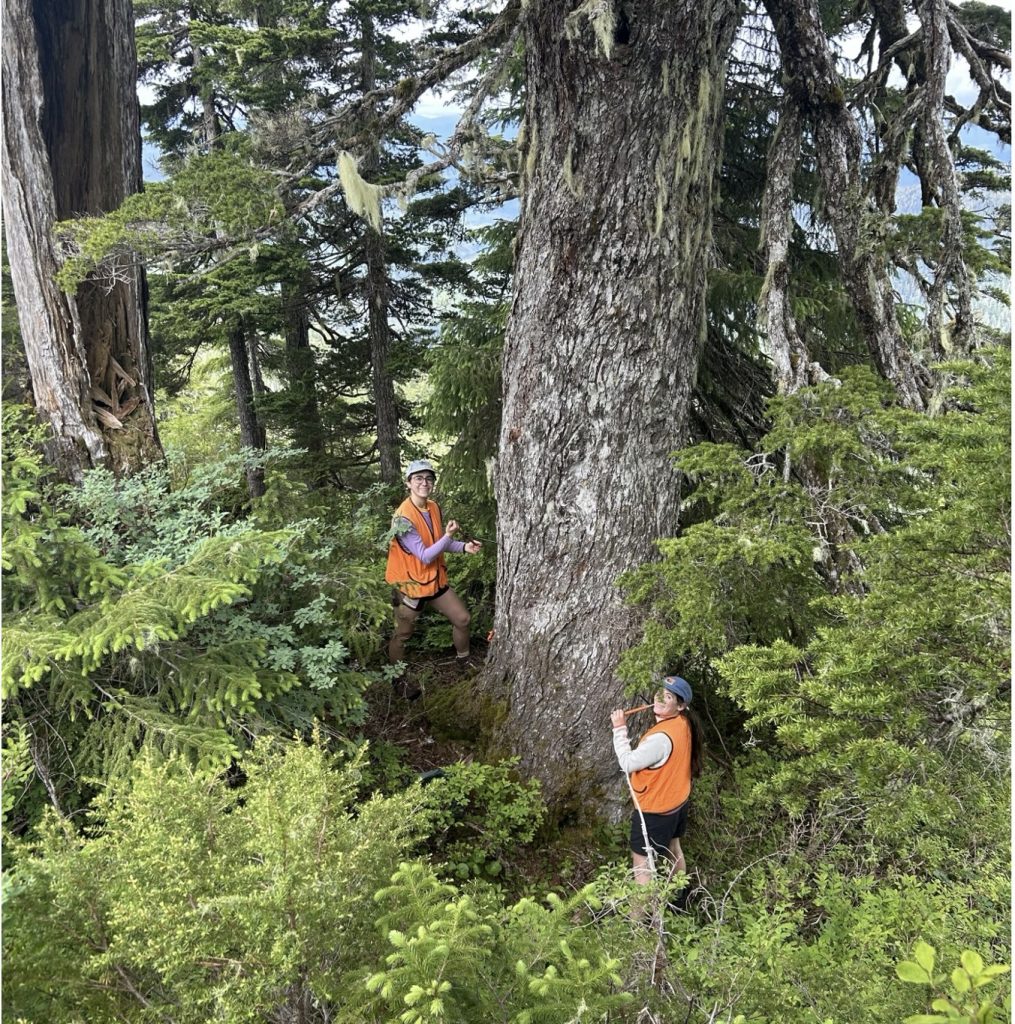
Cheyenne and Anika coring a Mountain Hemlock.
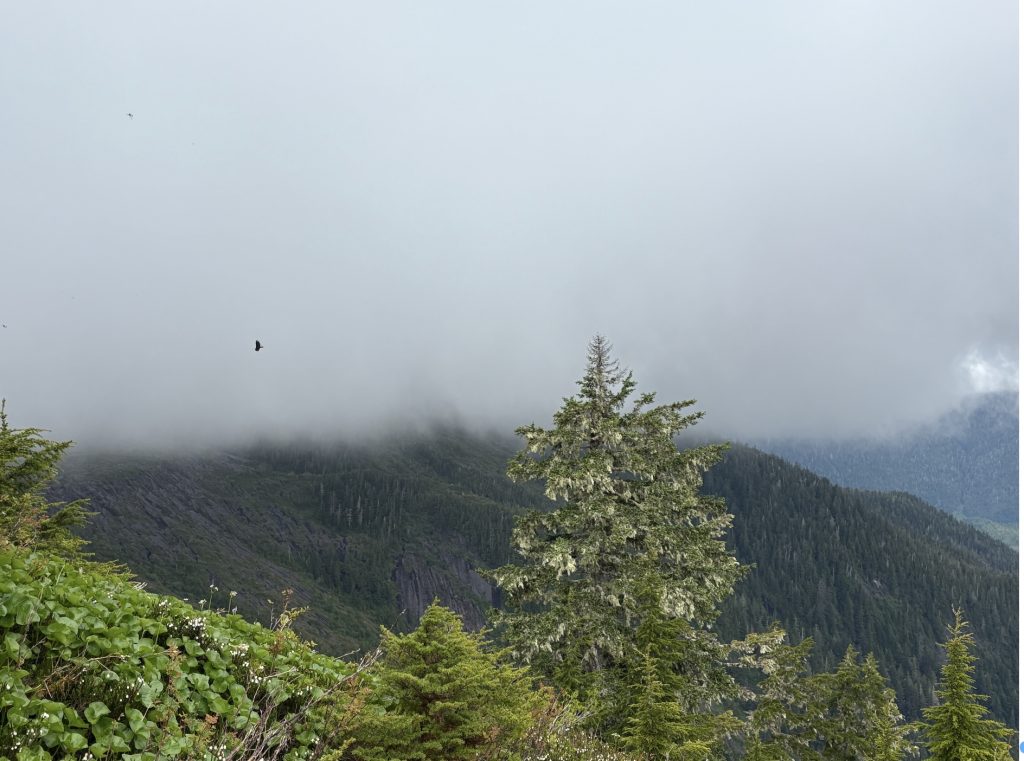
Fog on Dude Mountain.
One more day of sampling and then a trip to Misty Fiords before returning to Wooster for data processing.
What a beautiful and informative post, Cheyenne and Anika! You will long return to this blog entry to remember how exotic and fun your research expedition was. Good luck to Team Alaska 2026!