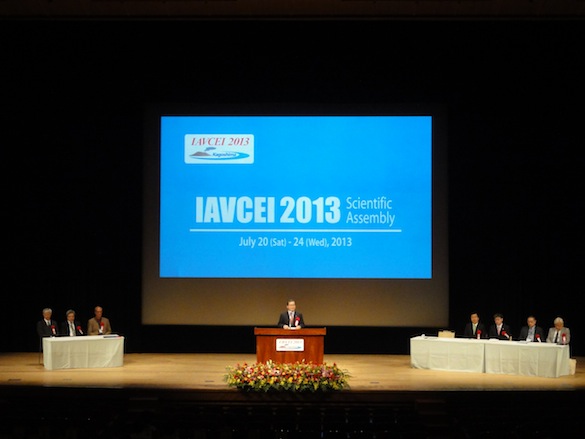
KAGOSHIMA, JAPAN – It was as if the IAVCEI 2013 organizers planned it. Shortly after arriving at the Arimura lookout on the mid-conference field trip, Sakurajima began erupting.
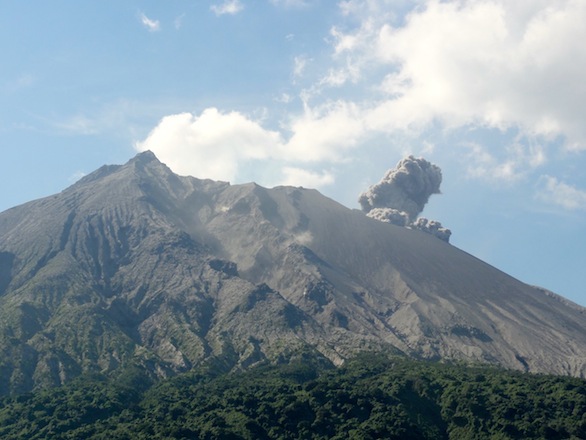
The start of the 22 July eruption.
The ash cloud rose from Showa crater, located just beyond the summit as viewed from the lookout. Part of the ash cloud ascended into the atmosphere while some of the cloud flowed along the surface in a pyroclastic density current. A pyroclastic density current is a gravity-driven movement of hot gas and volcanic material. (See this interesting twitter conversation about the difference between the terms pyroclastic density current, pyroclastic flow, and pyroclastic surge). The video below shows the initial eruption cloud as it developed.
The eruption column continued to grow as multiple pulses of ash were emitted from the crater. It wasn’t long before the cloud was carried downwind and started depositing ash.

Up until this point, the eruption was relatively quiet. Most of the sounds were caused by rockfalls and explosively ejected bombs. Then the volcano made an eerie rumbling noise as the flank began to move downslope.
You can hear the collective oohs and aahs as the volcanologists observe the eruption with reverence and awe.
At this point, we thought the show was over.
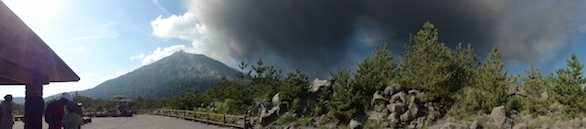
The initial eruption cloud migrating away from Sakurajima, depositing ash downwind from the volcano.
Soon after the initial pulse, the deep rumbling sounds began again, and we were treated to a second, larger blast. The ash cloud was much darker and we could see large bombs raining down near the base.
The second column reached higher in the atmosphere, up to about 3 km is what I heard from one of the volcanologists on the field trip. The volcano continued emitting pulses of black pyroclastic material and was still erupting by the time I had to leave the lookout.

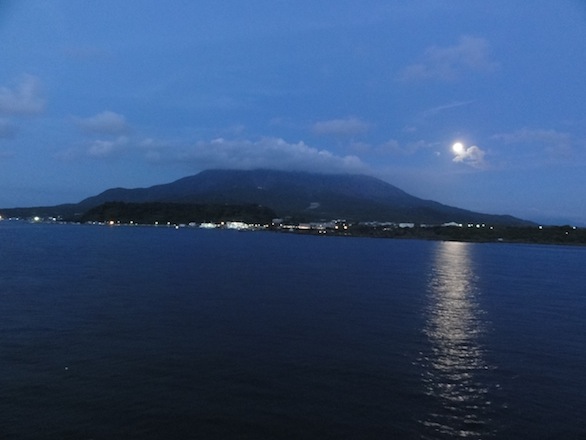
A quiet Sakurajima is illuminated by the moon in our view from the post-trip gala on the ferry. (I heard there was another explosion during the party that I missed.)
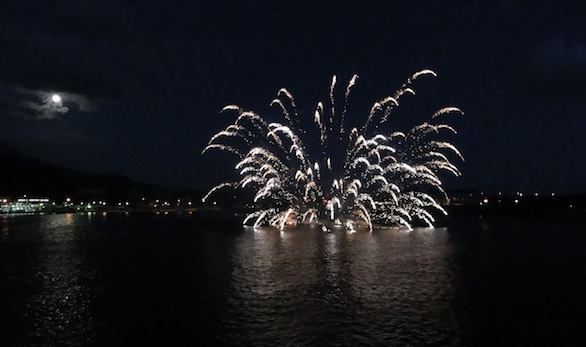
The gala ended with a brilliant display of fireworks against the Sakurajima backdrop. Although the fireworks were truly spectacular, I think most of the volcanologists agreed that Sakurajima’s fireworks were the highlight of the day.
If you’re interested in seeing more photos and videos of the eruption, please check out my Google+ album or my YouTube page. Have an eruption story of your own to share? Please comment!







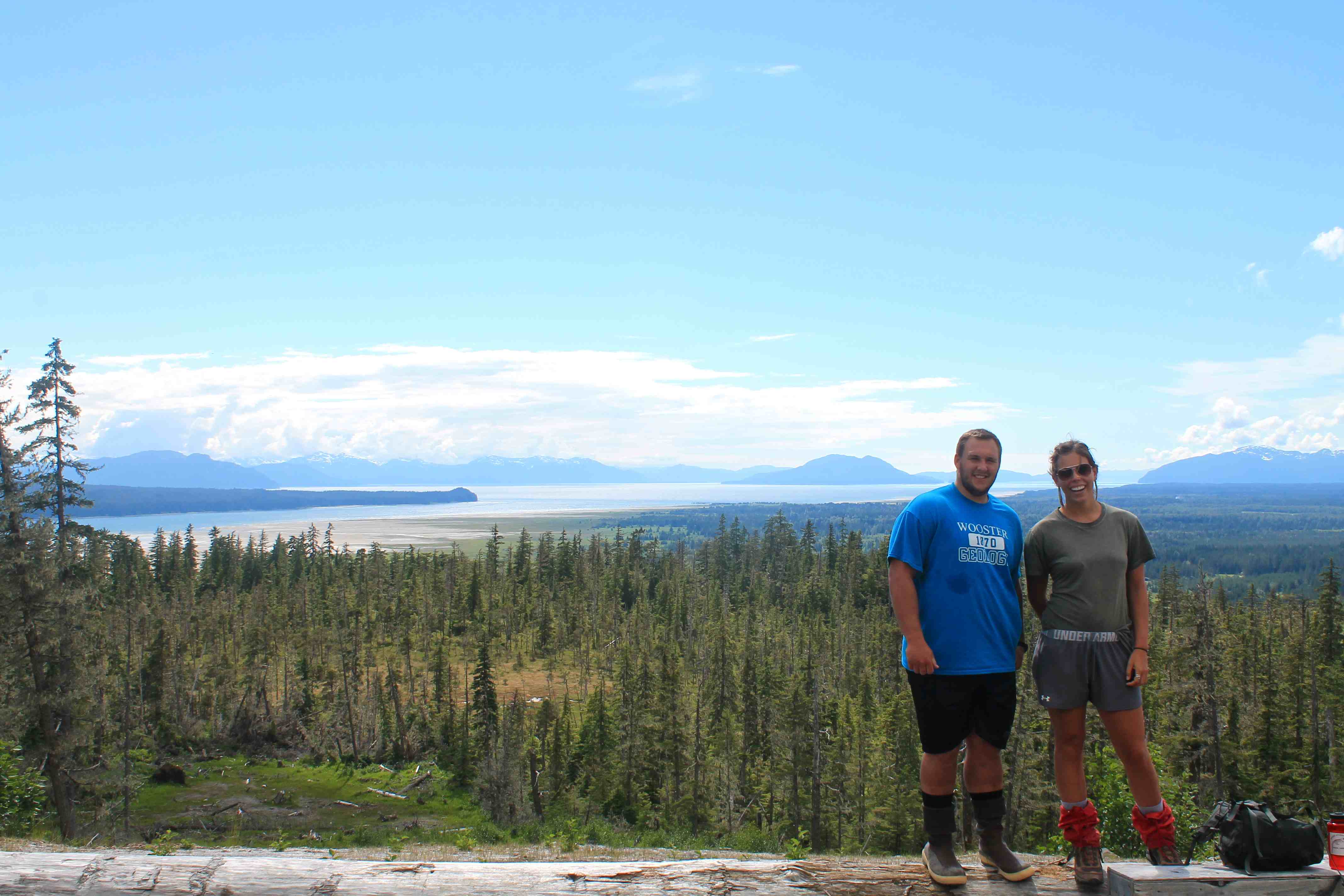


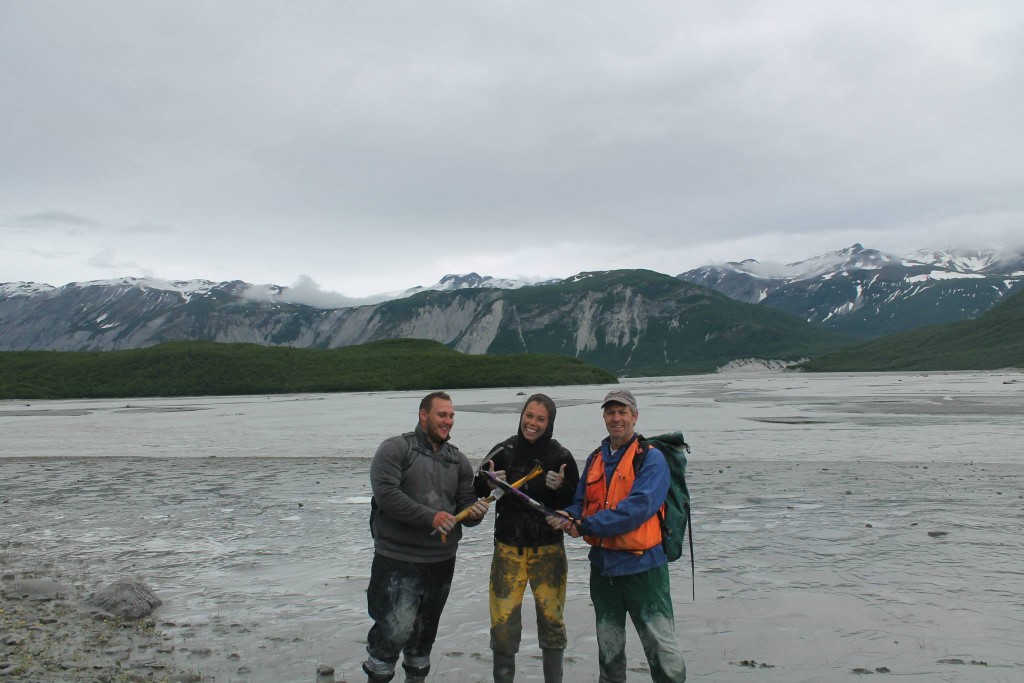
 Team Alaska on a rainy day at the gateway to Glacier Bay National Park and Preserve.