Fieldwork in the Golan Heights

I finally got out into the field today. My Israeli colleagues and I left Jerusalem early in the morning and arrived about noon in the Druze village of Majdal Shams on the slopes of Mount Hermon. It is a lovely place with steep hillsides and extraordinary views over green valleys filled with cherry and apple orchards. (I’ll write another post sometime about the complicated politics here, including a long lunchtime lecture I tolerantly received from a Druze man about all the problems in the world coming from “America and the West”. It may have been a good thing that I didn’t quite understand what he was saying until it was explained to me later!)
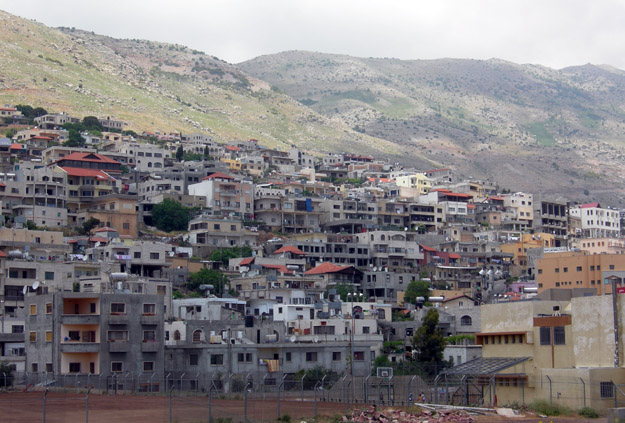
Part of Majdal Shams seen from the town center and facing Mount Hermon.
Part of Majdal Shams seen from the town center and facing Mount Hermon.

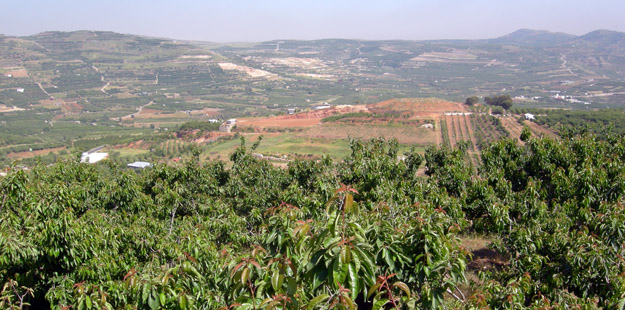
One of the cultivated valleys near Majdal Shams.

One of the cultivated valleys near Majdal Shams.

Our goal today was to examine three marine Jurassic formations (from bottom to top in the geological fashion): the Zohar (mostly limestone), Kidod (mostly shale), and Beersheva (mostly limestone). I had two primary questions: What indications can we find in these rocks of the water depth when they were deposited? What was the intensity of bioerosion of the corals and sponges in these units? Both questions are part of larger studies placing these rocks in context with the rest of the known Jurassic world. This region was on the equator when these units were formed, so we have an unusual opportunity to study Jurassic equatorial ecological conditions.

As is often the case in paleontology, we found some of the best fossils at the boundaries between formations. The top of the Zohar and bottom of the Kidod have wonderful ammonites, belemnites, bivalves, and brachiopods, some appearing to show patterns of microbioerosion. The top of the Beersheva has massive corals and sponges which are thoroughly bored by bivalves, some of which are still in the crypts they excavated for themselves.
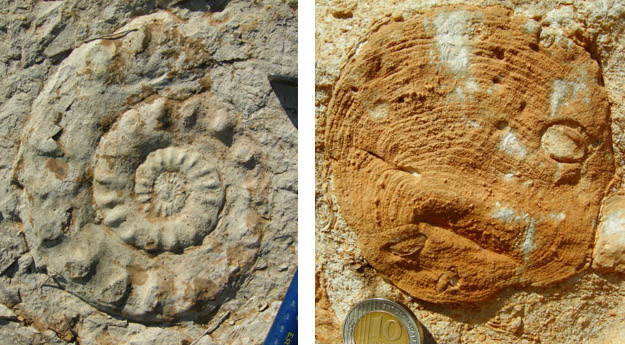
On the left is a very large ammonite we found in the top of the Zohar Formation.  Note the hammer for scale.  On the right is a closer view of a partially silicified coral from the top of the Beersheva with holes drilled in it by bivalves, some of which are still in place.

On the left is a very large ammonite we found in the top of the Zohar Formation. Note the hammer for scale. On the right is a closer view of a partially silicified coral from the top of the Beersheva with holes drilled in it by bivalves, some of which are still in place.

All the indications we could find showed that the limestone units were clearly shallow water deposits. The thick shales of the Kidod were laid down in deeper waters well below wave base. Much more work is required, though, before we can come to any conclusions. This is a reconnaissance trip to sort out potential projects for Wooster Senior Independent Study students and my own research. I now see many opportunities here.

Posted in Uncategorized | Tagged , , , , , , | 2 Comments

Geological Survey of Israel Headquarters

The campus of the Geological Survey of Israel (GSI) may not look like much from the outside, but it is a world class scientific institution. It has about 100 employees, most of whom are Earth scientists. The buildings and grounds of the headquarters are understated in part because they are a section of an old Mandate-era British military base, and also because they are embedded within an ultra-orthodox neighborhood one block away from Mea Shearim. (I would have included a photograph of a street scene, but I learned my lesson earlier when I was observed removing a camera from my pocket and was very much chastised.)

combinedsignbuildings052409

Our preparations for this week’s fieldwork include using Geographical Information Systems (GIS) software and hardware to create custom maps. We selected the best aerial imagery available and superimposed on it the known geological information, especially the contacts between stratigraphic units.

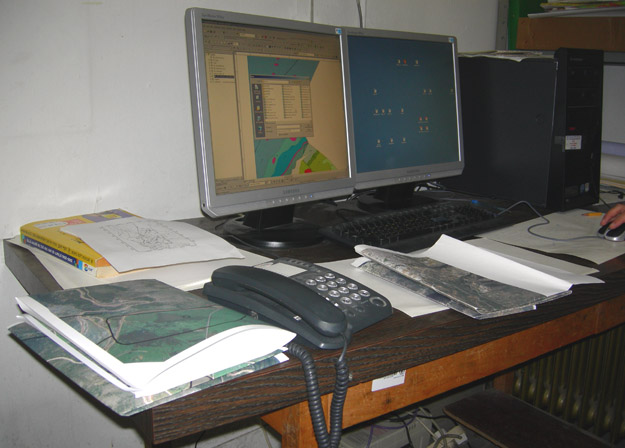
A GIS station in the GSI offices.  (I know: GIS, GSI ...)  On the left-hand corner of the table is our growing pile of printed orthophotos with superimposed geological information.

A GIS station in the GSI offices. (I know: GIS, GSI ...) On the left-hand corner of the table is our growing pile of printed orthophotos with superimposed geological information.

Finally, in case anyone wonders if I’m eating well enough, you can see from this last image that I’m doing just fine.

jerusalemmcdonalds052409

Posted in Uncategorized | Tagged , , | 2 Comments

Walls in Jerusalem

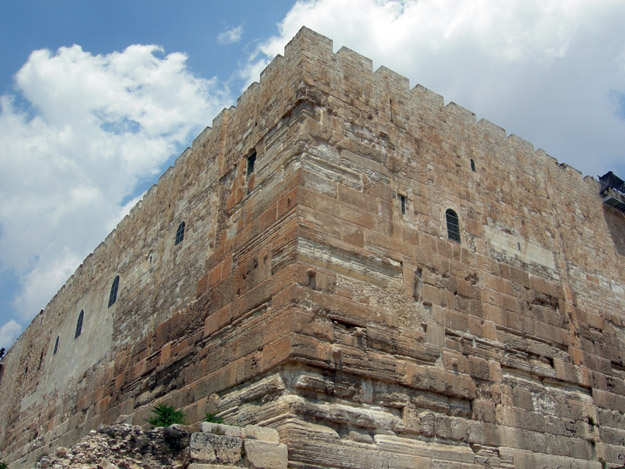
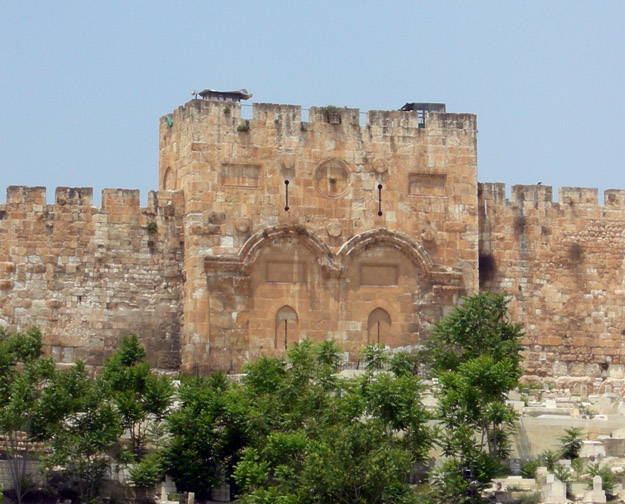
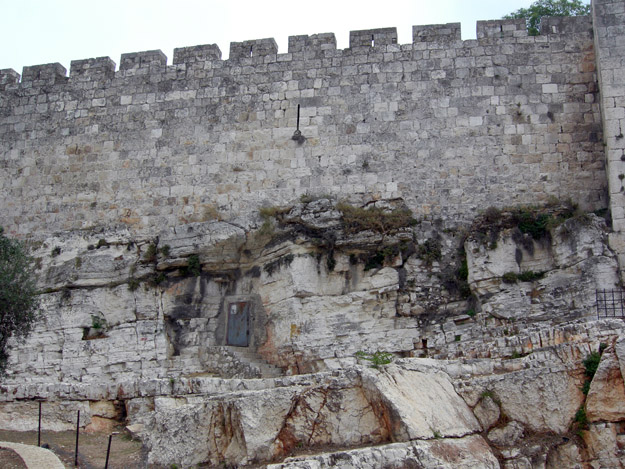
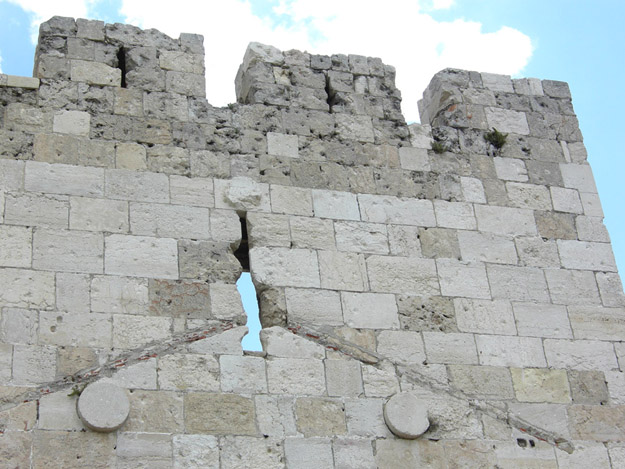
Our faculty colleagues on the Hales Fund trip to China have posted on their blog a wonderful photographic blog essay of their encounter with the Great Wall of China. It gives me an excuse to show some cool walls I’ve encountered lately on this trip. All of these structures are made from one of the limestone varieties of Jerusalem Stone.

Southwest corner of the retaining wall for the Temple Mount.  The massive lower blocks were carved and emplaced during the reign of King Herod the Great (37 - 4 BCE).

Southeast corner of the retaining wall for the Temple Mount. The massive lower blocks were carved and emplaced during the reign of King Herod the Great (37 - 4 BCE).

Golden Gate (Bab el-Rahma) in the eastern city wall.  Jewish tradition is that the Messiah will pass through this gate into Jerusalem.  Possibly for that reason the Muslim rulers in the 7th Century closed it up and placed a graveyard in fron of it.

Golden Gate (Bab el-Rahma) in the eastern city wall, another construction during Herod the Great's reign. Jewish tradition is that the Messiah will pass through this gate into Jerusalem. Possibly for that reason the Muslim rulers in the 7th Century closed it up and placed a graveyard in front of it.

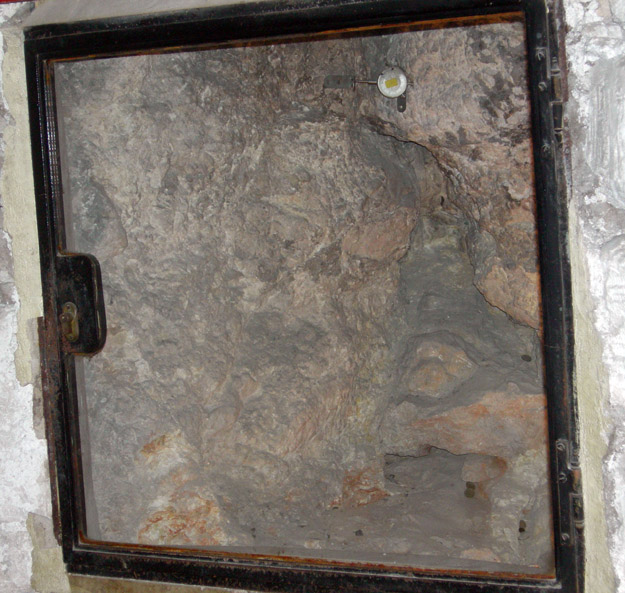
Middle of the north city wall.  This is the side of the walled city most vulnerable to invaders, so the height of the wall was enhanced by quarrying out the limestone beneath it.  The door leads into one of many subsurface quarries underneath this part of the Old City.

Middle of the north city wall. This is the side of the walled city most vulnerable to invaders, so the height of the wall was enhanced by quarrying out the limestone beneath it. The door leads into one of many subsurface quarries underneath this part of the Old City.

The stones atop Jaffa Gate on the western side of the city walls shows bullet and shell scarring from the 1948 War of Independence.  Jordanian troops held the Old City and the Israelis were desperate to relieve the Jewish Quarter inside.

The stones atop Jaffa Gate on the western side of the city walls show bullet and shell scarring from the 1948 War of Independence. Jordanian troops held the Old City and the Israelis were desperate to relieve the Jewish Quarter inside.

A bit of limestone wall exposed in the Chapel of Adam inside the Church of the Holy Sepulchre.  Christian tradition is that this is the burial place of Adam, which was supposed to be directly below the crucifixion site of Golgotha.  The crack you see in the rock was believed by early Christians to have been formed during the earthquake upon the death of Jesus.  Archaeologists suggest that it was a pre-existing crack in an old quarry.  What I found interesting was that someone has placed a strain meter across the crack!  Any movement of the rock here will not be good news for the Church of the Holy Sepulchre.

A bit of limestone wall exposed in the Chapel of Adam inside the Church of the Holy Sepulchre. Christian tradition is that this is the burial place of Adam, which was supposed to be directly below the crucifixion site of Golgotha. The crack you see in the rock was believed by early Christians to have been formed during the earthquake upon the death of Jesus. Archaeologists suggest that it was a pre-existing crack in an old quarry. What I found interesting was that someone has placed a strain meter across the crack! Any movement of the rock here will not be good news for the Church of the Holy Sepulchre.

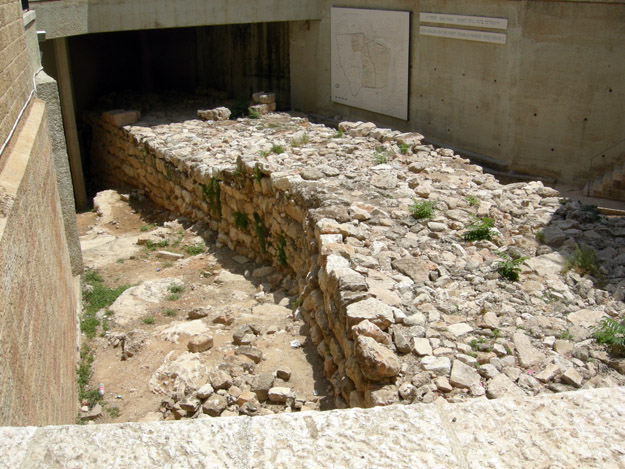
The "broad wall" is a remnant of an 8th Century BCE fortification built by King Hezekiah to expand the size of Jerusalem.  It was uncovered while Israeli engineers were clearing the debris in the Jewish Quarter after it was liberated in 1967.

The "broad wall" is a remnant of an 8th Century BCE fortification built by King Hezekiah to expand the size of Jerusalem. It was uncovered while Israeli engineers were clearing the debris in the Jewish Quarter after it was liberated in 1967.

Posted in Uncategorized | Tagged , , | 2 Comments

Jerusalem Stone

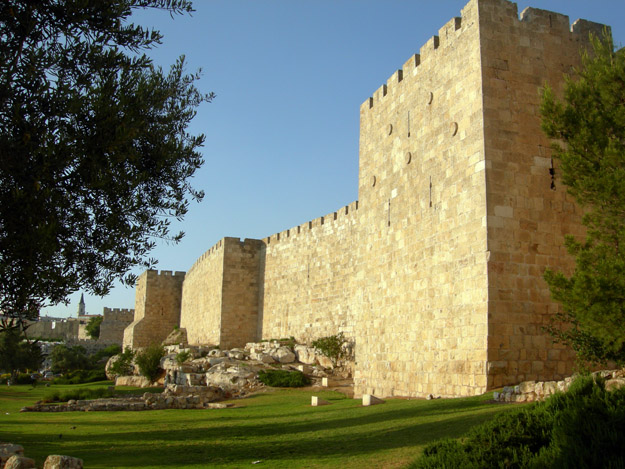
Jerusalem is indeed the “city of gold” when the sun rises or sets on it. The slanting rays give the beautiful stonework on the facings of its buildings a golden glow. Since the British captured the city in World War I, it has been the law that all buildings must be faced with Jerusalem Stone, which is a mix of Late Cretaceous limestones and dolomites quarried in this part of the Judean Hills.

City wall near the Jaffa Gate lit by the setting sun.

City wall near the Jaffa Gate lit by the setting sun.

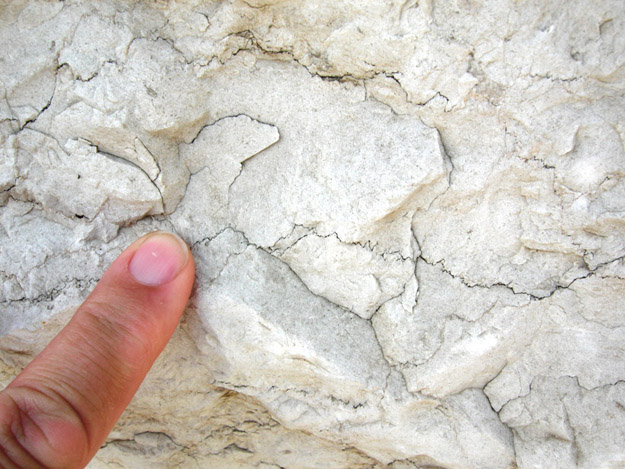
The most beautiful and durable of the stone types is called meleke. It is a Turonian (Late Cretaceous) biomicrite with numerous stylolites (jagged lines showing internal pressure dissolution), some trace fossils, and occasionally numerous molds of fossil mollusks.

Close-up of the meleke variety of Jerusalem Stone.

Close-up of the meleke variety of Jerusalem Stone. Finger is on a small stylolite.

The local stone can be easily seen in outcrops on the north side of the Old City where the walls were built directly atop old quarry sides. The present quarries are now mostly in the West Bank and are very busy supplying stone for new construction throughout Jerusalem.

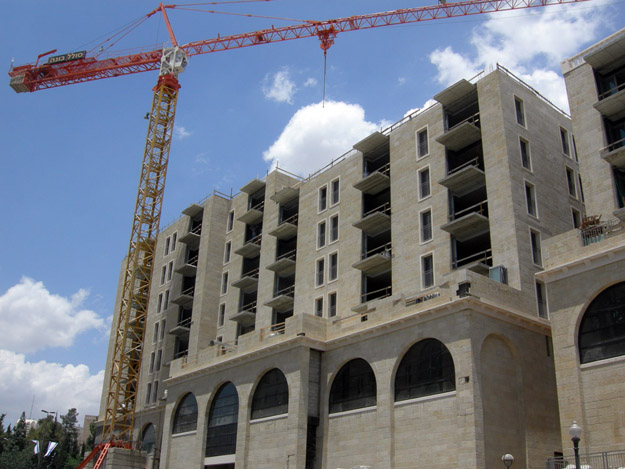
New construction in western Jerusalem using Jerusalem Stone.

New construction in western Jerusalem using Jerusalem Stone.

Posted in Uncategorized | Tagged , , | 2 Comments

More Jerusalem Sounds

Here is a Muslim call-to-prayer recorded at noon in the Old City. There are several muzzeins calling at the same time from various minarets.

Posted in Uncategorized | Tagged , , | Leave a comment

Some Israeli Street Music

It is not the highest quality, but here is a-bit-of-israeli-street-music! It is from this evening’s city-wide (and loud) party. Meagen requested it, and I’m doing my best to post it in the way she did hers.

Posted in Uncategorized | Tagged , , | 1 Comment

A Wooster Geologist in Jerusalem

I arrived this afternoon in Jerusalem to begin the latest round of geological study of the Jurassic System in Israel. It was a tedious ten-hour flight from Newark, New Jersey, to Tel Aviv (although not nearly as long in the air as our Wooster colleagues spent on the Hales Fund China Trip, which is still in progress and has a great blog), followed by an hour’s ride in a mini bus up into the Judean Hills to Jerusalem. The weather is perfect in all respects — sunny, warm and dry with a light breeze. I love geology in climates like this.

I’m staying in the Three Arches Hotel outside the Old City. It is a convenient location for walking to the Geological Survey of Israel headquarters and for seeing the fascinating cultural and historic sites inside those old city walls.

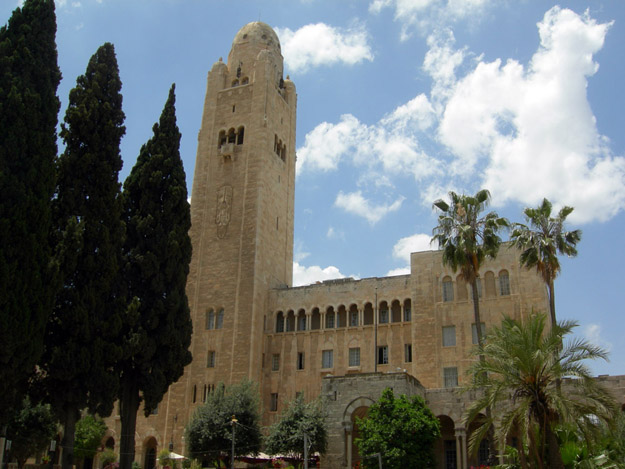
The Three Arches Hotel in Jerusalem

The Three Arches Hotel in Jerusalem

The first thing I did this afternoon to fight jet lag and try to stay awake was to walk into the Old City and visit the place with the most diverse collection of humanity on Earth: the Church of the Holy Sepulchre. The mix of people and tongues is extraordinary in this dark, rambling stone building filled with shrines. In all the chaos I could immediately recognize my people (the Americans) with their baseball caps and tour group name badges.

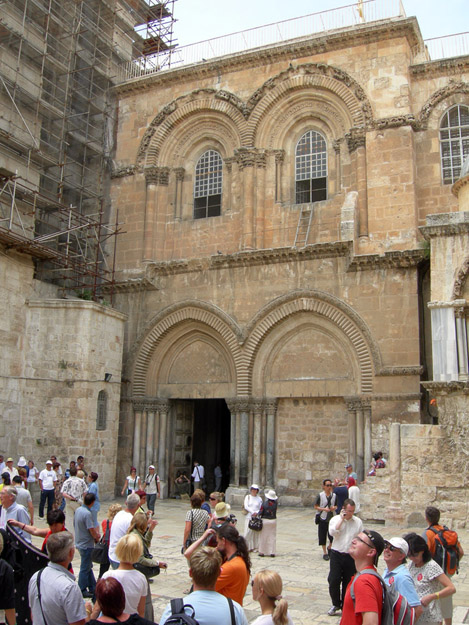
Church of the Holy Sepulchre in the Old City

Church of the Holy Sepulchre in the Old City. Through the doorway are hundreds of people packed into dark passageways and rooms.

Note the small ladder on the ledge below the upper window on the right. It has been in that exact position since at least 1852 because none of the competing Christian clergy who maintain the church have the authority to move it!

Today is Yom Yerushalayim (Jerusalem Day), an Israeli national celebration of the reunification of Jerusalem in the 1967 war. I’ll be watching the light shows and listening to the street music this evening (if I can stay awake).

Posted in Uncategorized | Tagged , | 5 Comments

Wooster Geologists Go Global

If you like to travel, geology could be the career-choice for you. Look at all of the places our students and faculty have worked! And this map only shows the classes of 2009 and 2010! Stay tuned for updates from the field…

Wooster Geologists

Posted in Uncategorized | Tagged , , | Leave a comment

Fieldwork Audio Post

Speaking of fieldwork, check out my audio podcast on a typical day of fieldwork in Iceland. I learned how to make this (and do a lot of other neat stuff) in the Instructional Technology Fellows Workshop.

Posted in Uncategorized | Tagged , , , | 2 Comments

Preparing for a Geological Expedition

The challenge of preparing for a geological expedition is to be ready for anything and yet also be as mobile as possible. We will be measuring, collecting, mapping, drilling, digging, and photographing, all while making certain the team is well fed, watered and safe. Yet all our equipment has to be packaging in a way that enables us to move quickly through an airport and quickly into a jeep or bus. Fortunately electronic gear has diminished in size and weight (and become way cool) as packs and bags have increased in strength and number of pockets.

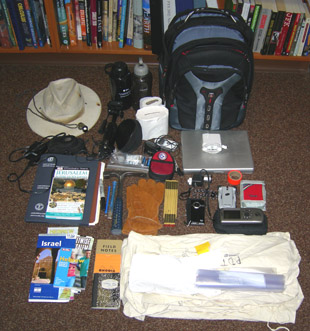
Field gear for Summer 2009 trip to Israel

Field gear for the Summer 2009 trip to Israel

I leave on Wednesday for fieldwork in northern Israel with my colleague Amihai Sneh from the Geological Survey of Israel. With luck my next post will be from Jerusalem on Thursday or Friday. Meagen Pollock will be leading an expedition to Iceland later this summer; Greg Wiles is going to Alaska; Shelley Judge will be off to Utah. Soon we will all be posting blogs from these various places. Travel is one of the many joys of being a geologist.

Posted in Uncategorized | Tagged , , | 2 Comments