


 I am very pleased to announce that Lena Cole, Bill Ausich, and I have a new article that appeared (on a dramatic election day in the USA!) in Papers in Palaeontology: “A Hirnantian holdover from the Late Ordovician Mass Extinction: Phylogeny and biogeography of a new anthracocrinid crinoid from Estonia.” Lena was our leader and did a fantastic job with the description and analysis. In fact, it was the easiest peer review process I’ve ever seen. Above you meet the star specimen, the calyx of Tallinnicrinus toomae gen. et sp. nov., an anthracocrinid diplobathrid crinoid. The new genus is named after Tallinn, the beautiful capital of Estonia. The species is named after our excellent Estonian colleague Ursula Toom.
The abstract: Relatively few Hirnantian (Late Ordovician) crinoids are known, and none has been previously described from the palaeocontinent of Baltica. This has impaired our ability to understand the patterns of extinction and biogeographic dispersal surrounding the Late Ordovician mass extinction, which triggered a major turnover in crinoid faunas. Here, we describe Tallinnicrinus toomae gen. et sp. nov., an anthracocrinid diplobathrid from the Hirnantian of northern Estonia. Tallinnicrinus is the youngest member of the Anthracocrinidae and the first representative of the family to occur in Baltica. Morphologically, Tallinnicrinus is unusual in that the radial and basal plates are in a single circlet of 10 plates, similar to the anthracocrinid Rheocrinus Haugh, 1979 from the Katian of Laurentia. Phylogenetic analysis further confirms a close relationship between Tallinnicrinus and Laurentian anthracocrinids, suggesting biogeographic dispersal of the lineage from Laurentia to Baltica during the late Katian or early Hirnantian. The occurrence of this new taxon establishes that the family Anthracocrinidae survived the first pulse of the Late Ordovician mass extinction. However, the lineage remained a ‘dead clade walking’ because it failed to diversify in the wake of the end-Katian extinction and ultimately went extinct itself by the end of the Ordovician.
 Above is Bill Ausich talking to Ursula during our visit to Tallinn in August 2018. We are in the collections of the Department of Geology, Tallinn University of Technology.
The College of Wooster and The Ohio State University geology programs have had an excellent relationship with Estonian geologists for many years, for which we thank Olev Vinn, who invited me to his lovely country many years ago. Many Wooster and OSU students have done field and laboratory work there, and we now have numerous joint publications. We look forward to visiting again once the COVID-19 pandemic abates.
Reference:
Cole, S.R., Ausich, W.I., and Wilson, M.A. 2020. A Hirnantian holdover from the Late Ordovician Mass Extinction: Phylogeny and biogeography of a new anthracocrinid crinoid from Estonia. Papers in Palaeontology (early view)

 The slump from above. Note the arcuate scarp that marks the upper reaches of the slump block – a series of grabens and scarps stair-step their way into the valley.


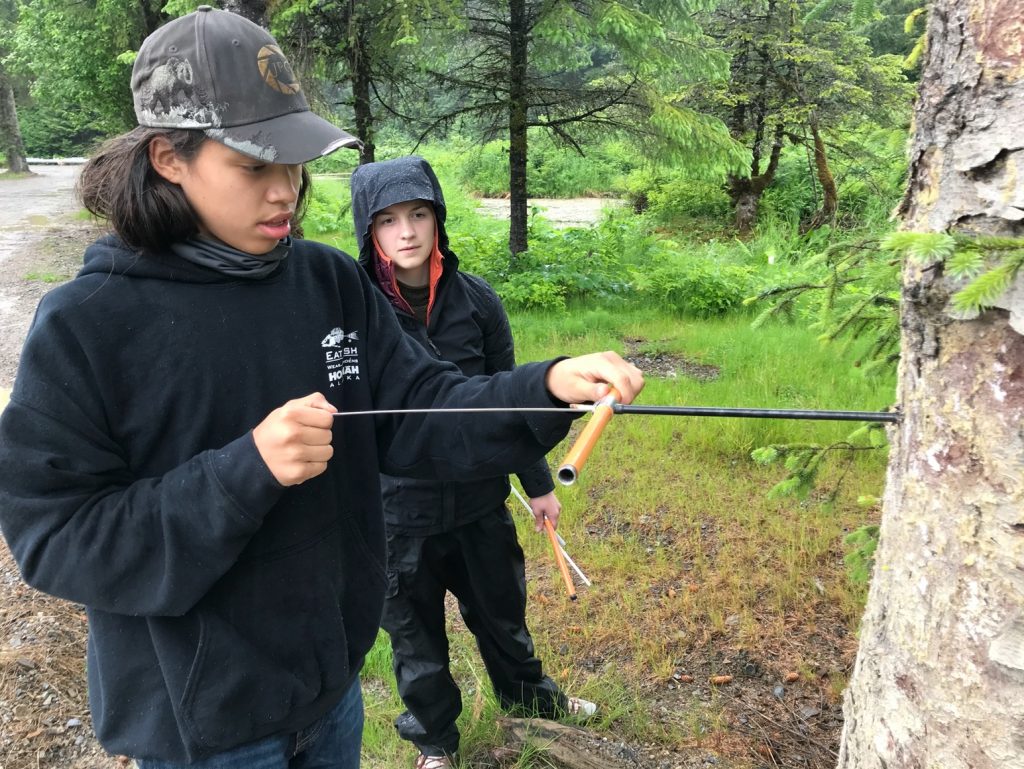 The group shown coring a Sika spruce just outside of town.
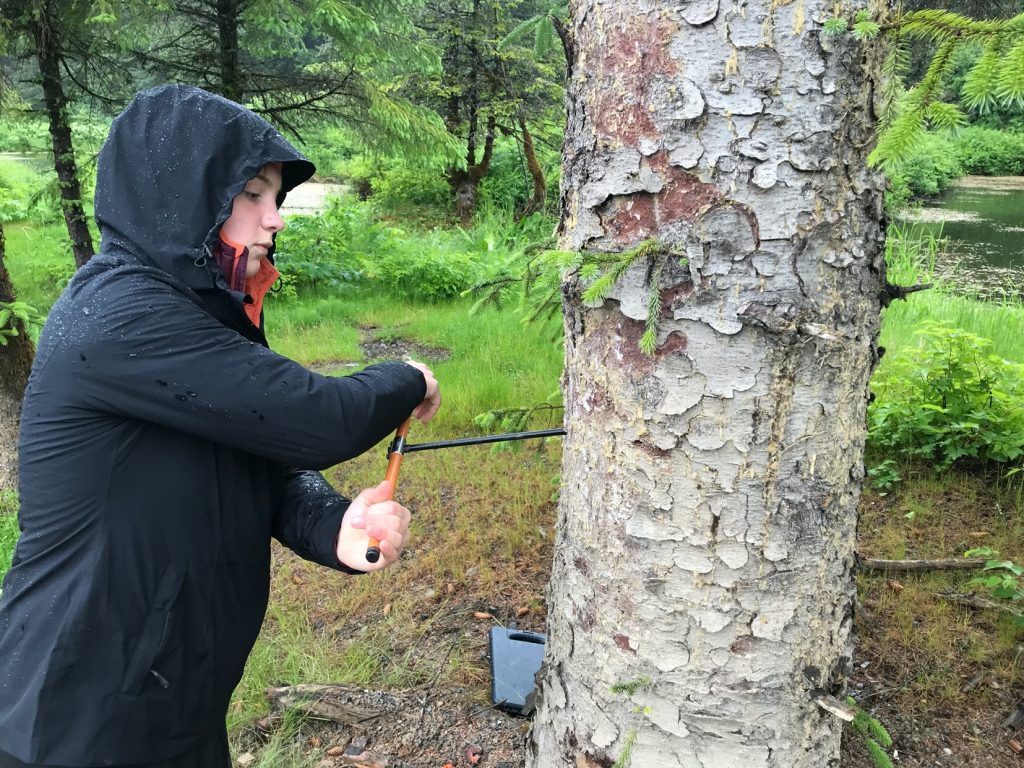 More coring – this time in the rain.
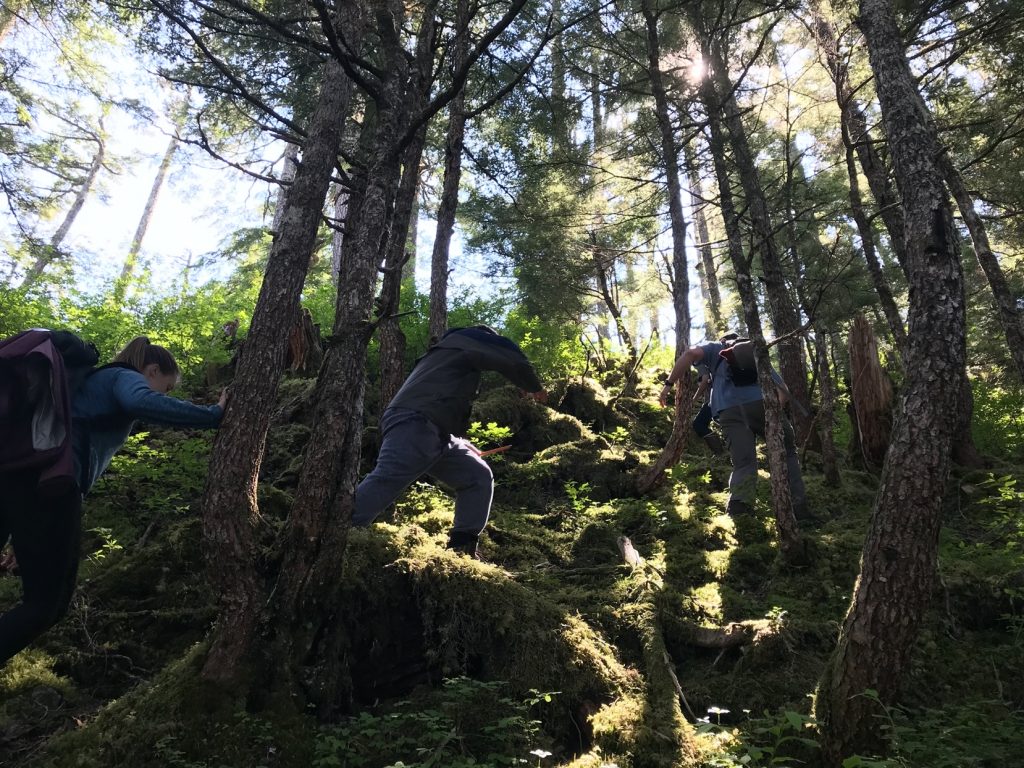 The steep climb up the flank of Ear Mountain to find the old Mountain Hemlocks.
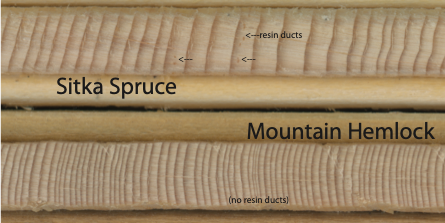 Comparisons of the fast growing Sitka Spruce and the slow growth of the higher elevation Mountain Hemlock.
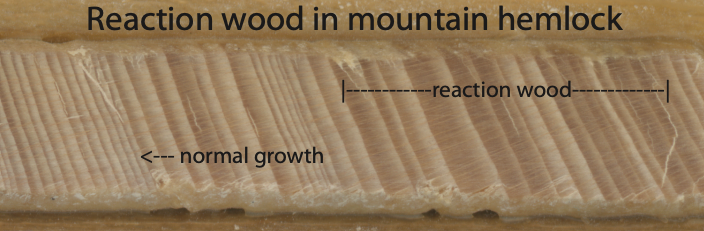 The cores from the hemlock some over 400 years old show lots of stress , clinging to the mountain side and battered by storms. They are also showing a possible drop in ring-width over time
 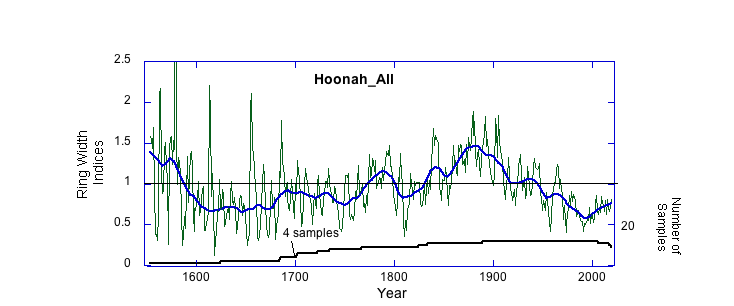 So we measured the ring-widths (Nick Wiesenberg and Melita Wiles did) and then we compiled the ring-width data into a chronology above. This chronology is the full record going back into the 16th century
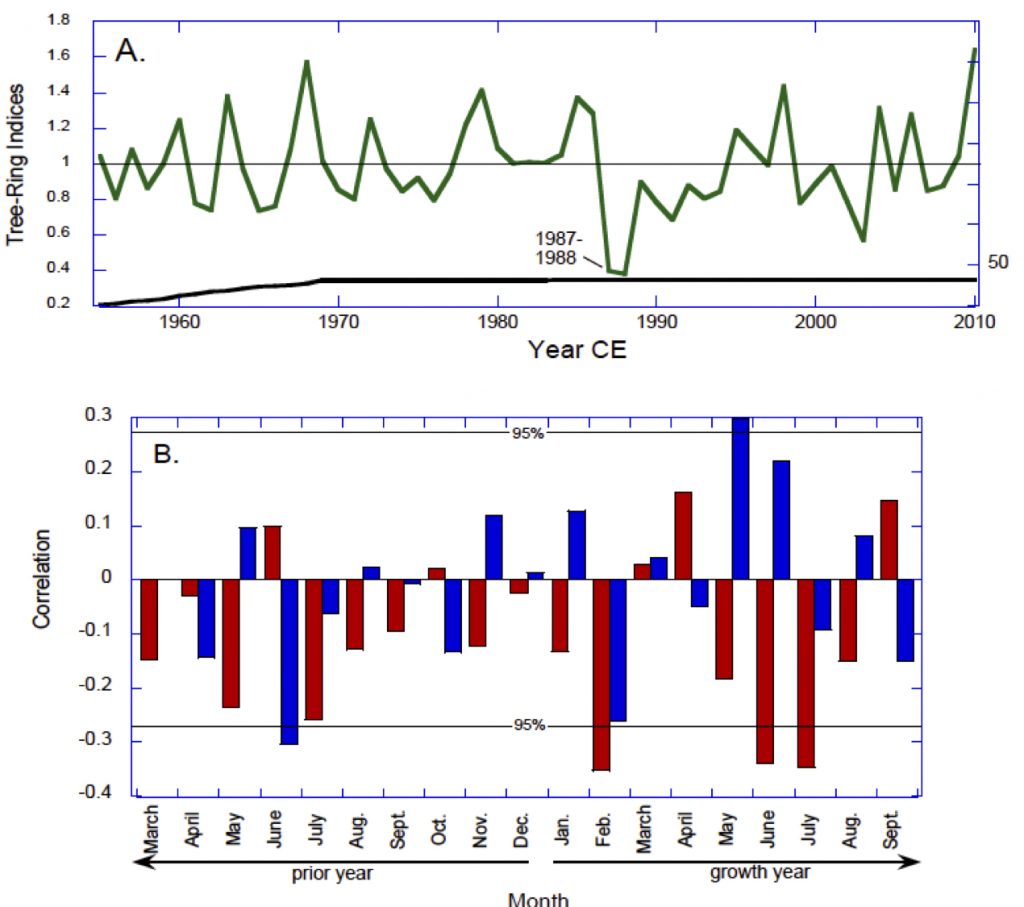
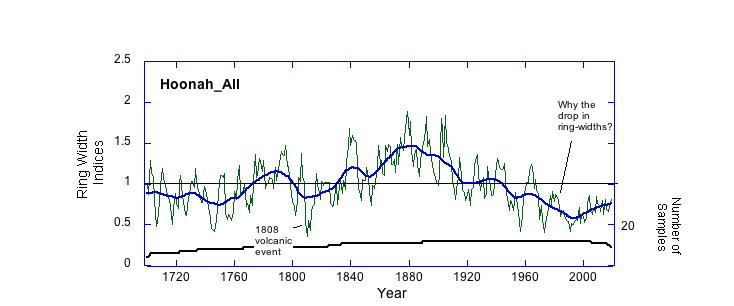 This chronology is truncated at 1720 or so when we had at least 4 samples. The most narrow rings follow the 1808 unknown eruption that cooled much of the region – it is unknown as no one knows where the volcano that erupted is located – it is recognized in ice cores. The other intriguing feature is the relatively recent (last 50 year) drop in ring widths. It may be due to increased evapotranspiration demands with increasing summer minimum temperatures. There is a correlation of -0.39 (p<0.04) between tree growth and average April-August minimum temperatures. Other studies have shown that warming night time temperatures lead to increased respiration at night and along with possible greater ET demand or increased cloudiness during the day there may be a decrease in photosynthesis leading to decreased carbon uptake (Sullivan et al., 2015). Interestingly, tthe work of Mazvita Chikomo done this summer as part of the AMRE project, discovered some pretty strong negative correlations between Mt. Hemlock growth and minimum monthly temperature records in Prince William Sound – perhaps there is a link? This is a promising line of research to further investigate the health of Mt. Hemlock in the region and it is something we plan to pursue with more samples in the future.


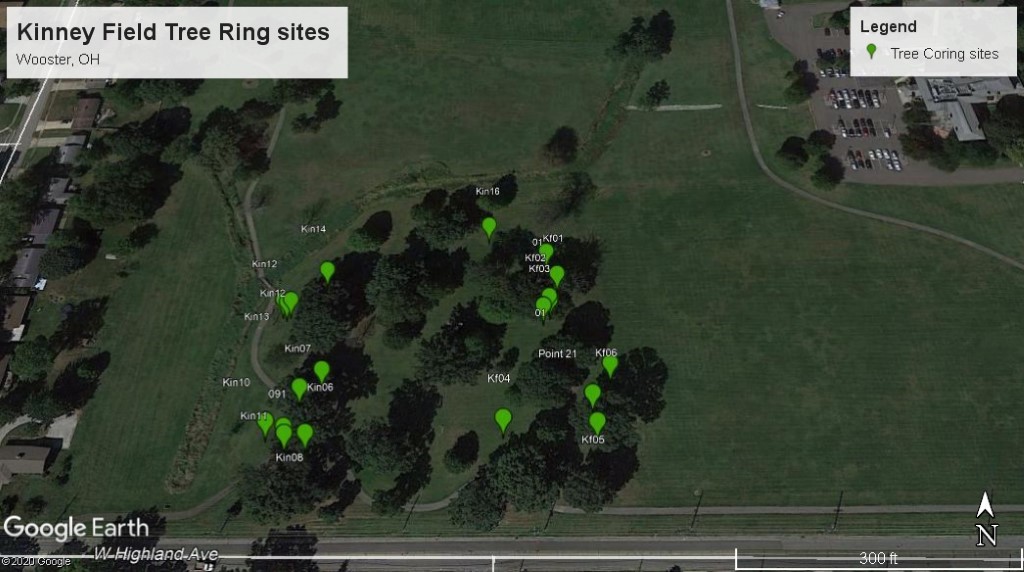
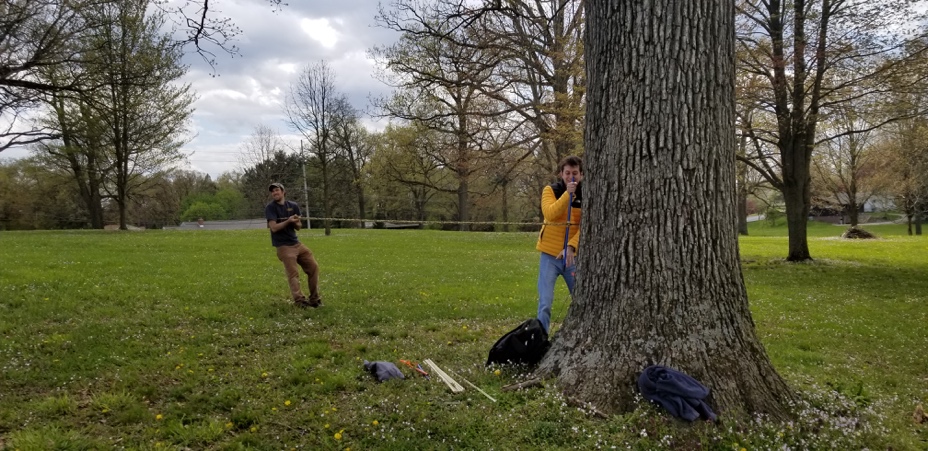 The team coring a White Oak.
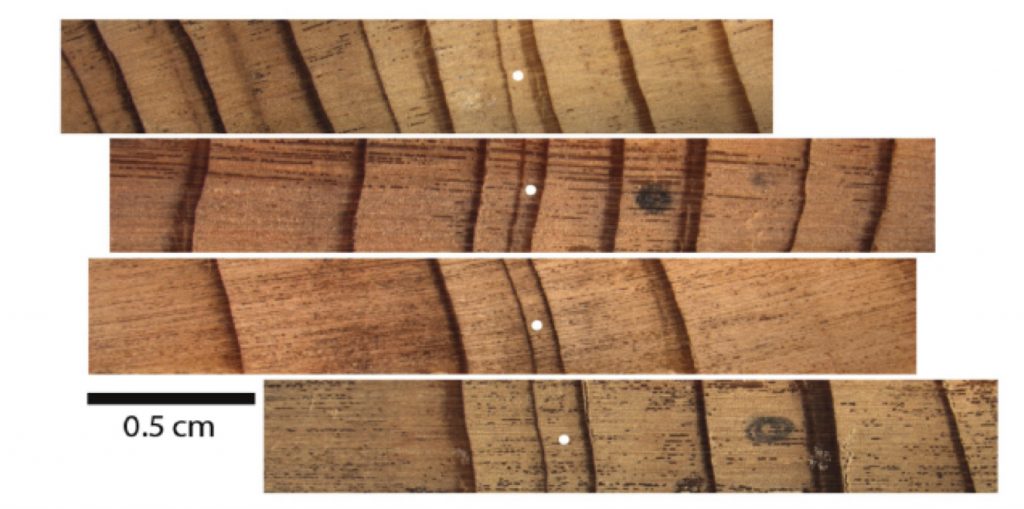
 Measuring tree cores from Kinney Field in the Lab.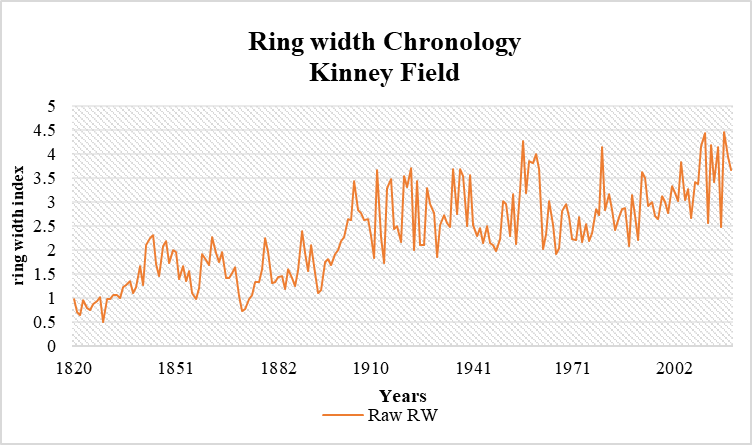
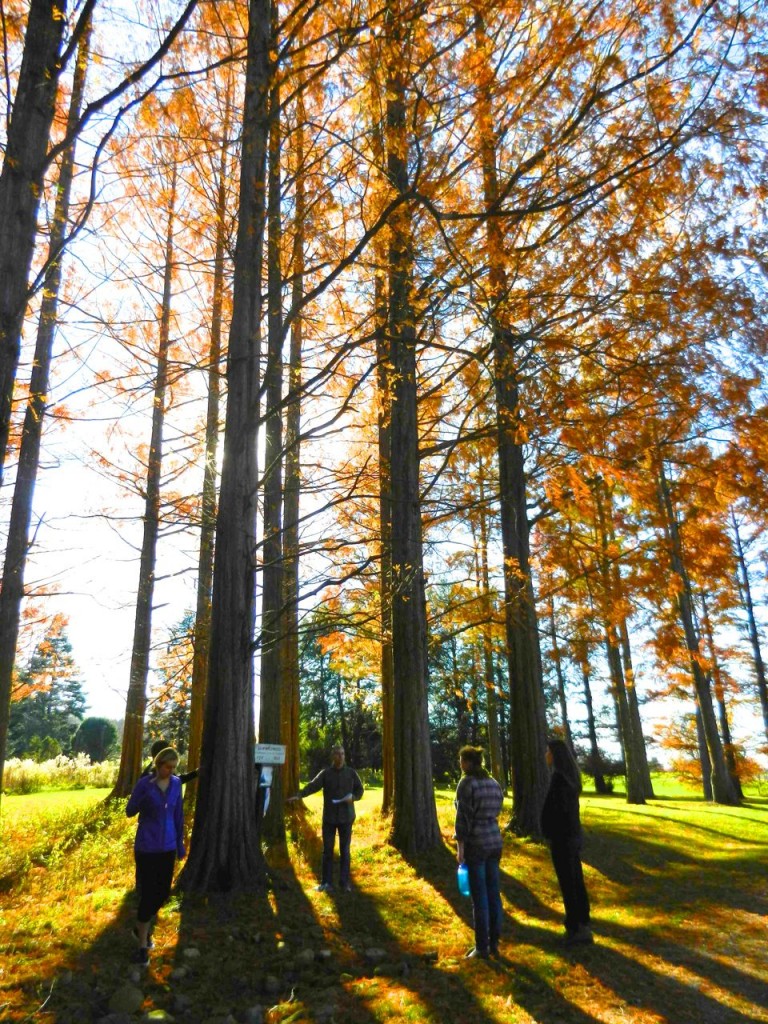 The College of Wooster Paleoclimate class mulls around the Dawn Redwood stand.
 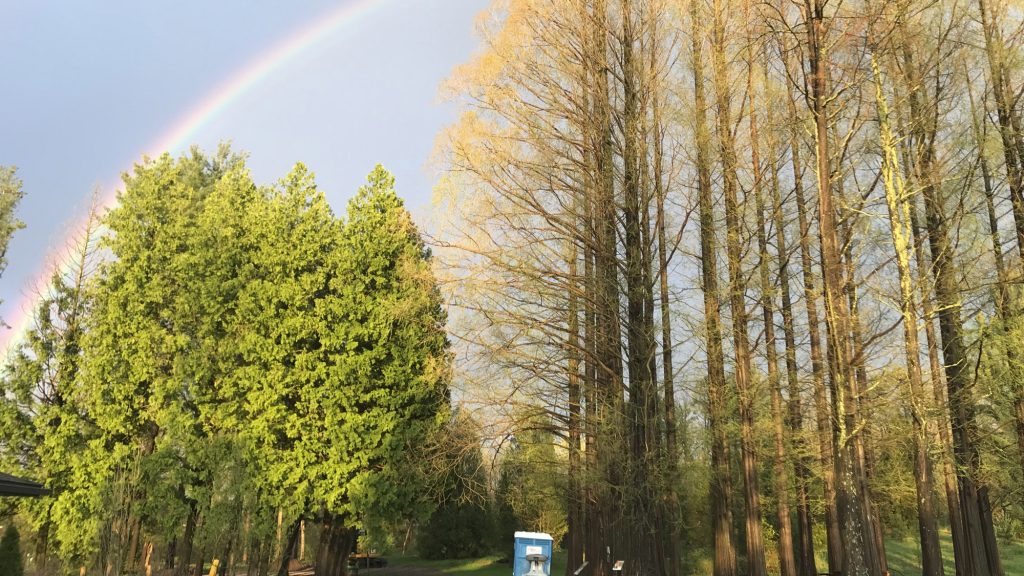 Another great photo of Dawn Redwoods – they are deciduous conifers so this photo in the early spring before growth.

