Yet another Wooster geologist in Utah

LOGAN, UTAH–I’m here to spend a few days with my parents who are “summer citizens” on the Utah State University campus. Logan is in the far northeastern corner of Utah near Idaho.  Like all of the state, it has fascinating geology. Only California can match Utah for geological diversity and splendor. There is a reason why so many geologists find themselves coming back often to Utah.

This evening we walked to the eastern edge of the USU campus and looked at the Bear River Range a few kilometers away. It is a very complex packet of rocks, part of the Logan-Huntsville Allochthon (an allochthon is a set of Paleozoic rocks pushed out of place by tectonic activity). The East Cache Fault Zone separates the valley which contains Logan from the mountains.  Some geologists believe it represents the boundary between the Basin and Range Province to the west and the Middle Rocky Mountains Province to the east.  In the image below you can see that the zone is primarily a set of normal faults. In the Logan area it shows movement during the Holocene, and it is still active today.

Looking east at the Bear River Range from Logan, Utah. The East Cache Fault Zone is in the foreground. Note the faceted spurs on the flanks of the mountains.

Tomorrow we explore Logan Canyon, which cuts perpendicularly through the Bear River Range, and look at the exposed carbonate rocks in detail. I can smell the fossils from here.
Posted in Uncategorized | Tagged , | Leave a comment

The Golden Circle Tour

Guest Blogger: Becky Alcorn

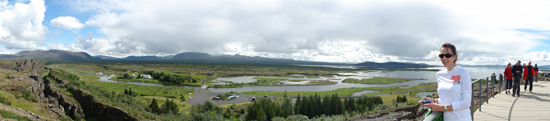
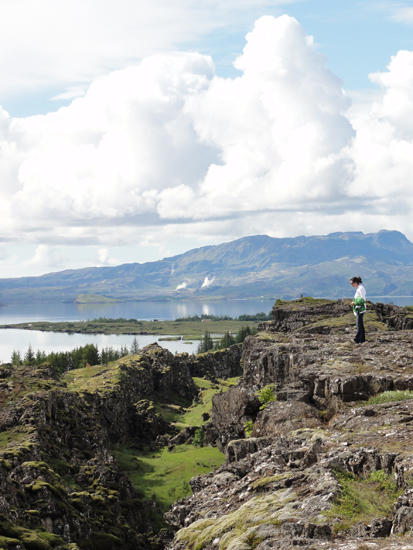
Today we took the Golden Circle tour in Iceland. I think I saw more amazing geologic sites on this one tour than I’ve ever seen before. Our tour began at Thingvellir in the rift valley where we hiked along the Mid-Atlantic Ridge and spent a good deal of time trying to calculate the spreading rate. We then drove to Geysir where I saw my first geyser! (and enjoyed the wonderful smell of sulfur). I also got to enjoy my first taste of hamburger sauce at the visitor center there. Our tour ended with a stop at Gullfoss, an incredible waterfall with only a small rope in some places to prevent you from falling in (take your kids at your own risk, I guess).

A panoramic view of Thingvellir

Standing on the edge at Thingvellir

The original Geysir

Strokkur geyser at Geysir

The Gullfoss (Golden Waterfall)

As you can see you can get as close to the water at Gullfoss as you'd like

Posted in Uncategorized | Tagged , , | 1 Comment

Mishaps with Hammers

Today was definitely another adventure in the field. Although we didn’t travel far from our home base in Ephraim (less than 1 mile from home), there was plenty of excitement. We tackled the Green River Formation at Gal Hill, which provided a 60 foot strat column of wonderful carbonates (and a 4 foot tuff bed).

Above is a scenic photo of Gal Hill.  The thick, massive bed about 8-10 feet off the road is a air fall tuff.  The stromatolite layer that we targeted is immediately below the tuff.  Poor stromatolites...they never had a chance!!

Above is a scenic photo of Gal Hill. The thick, massive bed about 8-10 feet off the road is a air fall tuff. The stromatolite layer that we targeted is immediately below the tuff. Poor stromatolites...they never had a chance!!

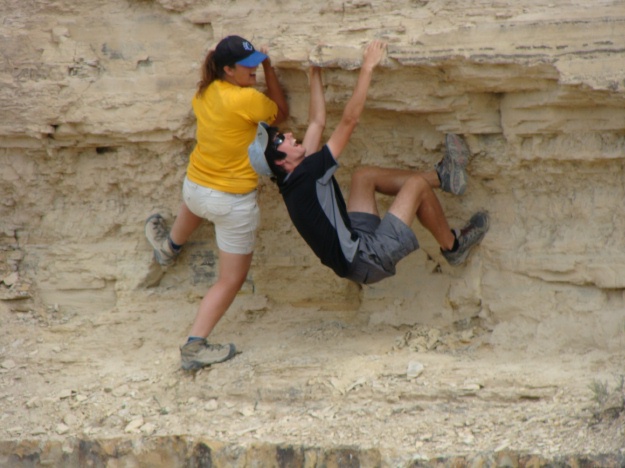
Of course, stratigraphy is all serious business, as Elizabeth and Jesse prove in the photo below:

Wooster's rock climbing team hard at work.

Wooster's rock climbing team hard at work.

We had to bring out “The Big Dog”, Jesse’s mega sledge hammer for some of our work today, as we needed to sample a continuous silicified stromatolite layer exposed along Gal Hill.

Elizabeth shows her enthusiasm for the silicified stromatolite layer, which is at hand level in this photo.

Elizabeth shows her enthusiasm for the silicified stromatolite layer, which is at hand level in this photo.

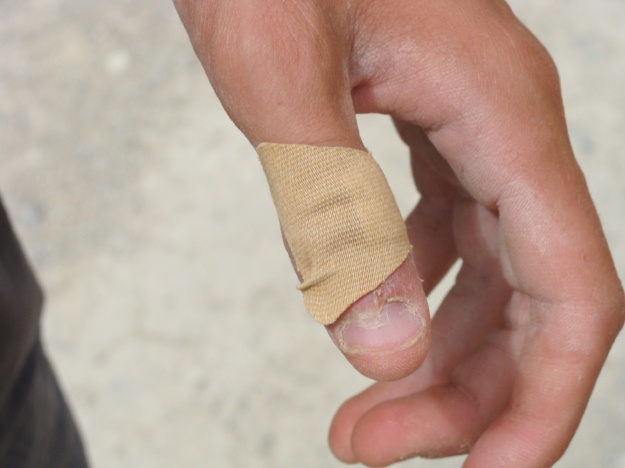
Throughout the morning, Jesse used the mega sledge hammer, chisels, and regular rock hammers to extricate a number of beautiful laterally linked and small domal stromatolites that we were measuring. In the end, though, I’m not too sure who came out on top: Jesse or the stromatolites.

Our motto of the day:  No pain, no gain!!

Our motto of the day: No pain, no gain!!

Posted in Uncategorized | Tagged , | 2 Comments

Ohio, Some Fun, A Little Bit of Geology, and Back

Guest Blogger: Jesse Davenport

We always hear about how all geologists have the opportunity to go to fantastic places in far away lands. Or at least that was what I thought, while I envied my professors from afar. However, this summer I have had the opportunity to travel across the United States, on a road trip no less. From conquering Grays Peak, Torreys Peak, and Pikes Peak in Colorado to backpacking 83 miles in 10 days in the New Mexico backcountry (not to mention being attacked by a black bear) to spending a few days in the Sawtooth National Forest, to climbing Mt St. Helens and Mt. Rainier, and back to central Utah. And yet my trip isn’t even halfway complete. After assisting Dr. Judge and Elizabeth in her I.S. fieldwork, I will then head to southwestern Montana to begin my fieldwork in the Tobacco Root Mountains, where I will be working with Archean metamorphic and igneous rocks, some of the oldest you can find in North America. Being able to drive everywhere also has had a number of exciting perks. I have visited Colorado School of Mines and University of Utah, two schools I have looked at and am very interested in for graduate school for a Mining Engineering degree. I will also have the opportunity to visit the Bingham Canyon Cooper mine near Provo, Utah with the OSU folks. Hopefully I will be able to send out another update once I begin my work in Montana!

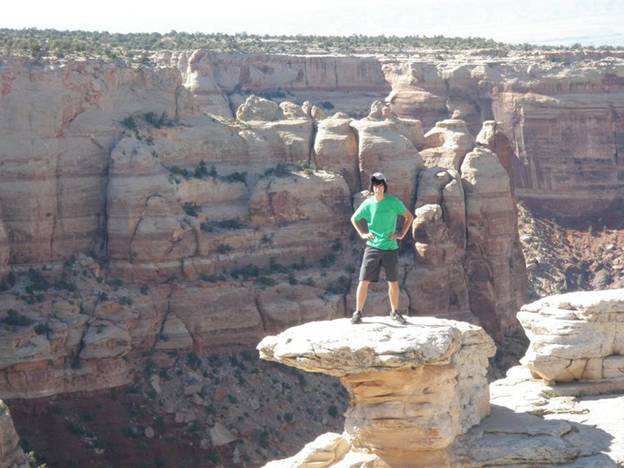
Jesse on top of the Colorado National Monument at 6,106 feet near Fruita, Colorado.

Jesse on top of the Colorado National Monument at 6,106 feet near Fruita, Colorado.

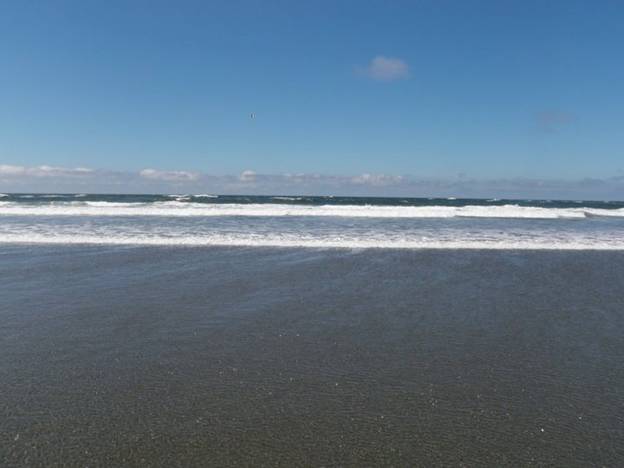
From Ohio to the west coast. A view of the Pacific Ocean near Ocean Shores, Washington.

From Ohio to the west coast. A view of the Pacific Ocean near Ocean Shores, Washington.

Posted in Uncategorized | Tagged , , | 4 Comments

Wooster geologist in New Zealand!

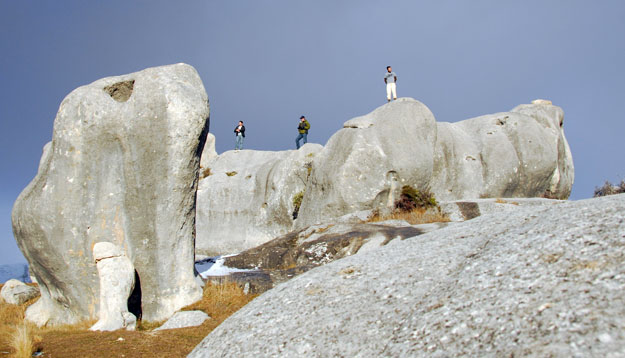
CHRISTCHURCH, NEW ZEALAND–And it’s not me! Wooster geology student Andrew Collins is in a study abroad program on the South Island of New Zealand.  He has promised to share with us his geological experiences now and then. Andrew recently traveled to a town called Springfield near Christchurch and visited some amazing Paleogene limestone exposures on Castle Hill. This is an extreme example of karstic weathering.

Paleogene limestone on Castle Hill, South Island, New Zealand. Photograph by Andrew Collins.

Beautiful, eh? Andrew will share more New Zealand geology with us through this blog and his own.

This summer we’ve had Wooster geologists in Alaska, the southern USA, Ohio, Israel, Iceland and Utah … and we’re only halfway through our field season. Gotta love it!

Posted in Uncategorized | Tagged , , | 1 Comment

Kveðja frá Íslandi! (Greetings from Iceland!)

Guest Blogger: Becky Alcorn

Meagen og ég kynntist í Boston í gær og hafði tiltölulega viðburðasnauður flug til Íslands. Við komum á hostelið okkar í kringum miðnætti og komst hversu frábær hún var sannarlega. Ekki aðeins var flugvellinum skutla strætó þeirra brotinn niður, en svo var internetið, lykill á herbergi, og hitari í herbergið okkar. Til allrar hamingju þeir gáfu okkur í næsta herbergi sem var ekki heitt. Því miður en ekki var fortjaldið í herbergið okkar og það er aldrei raunverulega gets myrkur. Óþarfur að segja, að leita okkur að öðrum húsnæði í dag. Eftir að við að finna nýjan stað til að vera, tók við ferð upp til Reykjavíkur til að kanna borgina, sem var falleg … og fengum dýrindis Taílenska matur!

(As you can see, in the short time that I’ve been here, I’ve become fluent in Icelandic. See below for the English version.)

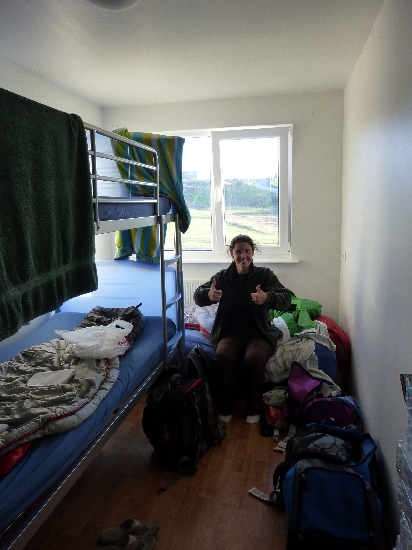
Meagen and I met in Boston yesterday afternoon and had a relatively uneventful flight to Iceland. We arrived at our hostel around midnight and discovered how fantastic it truly was. Not only was their airport shuttle bus broken down, but so was the internet, key to our room, and the heater in our room. Luckily they gave us the next room that wasn’t sweltering hot. Unfortunately though there was no curtain in our room and it never really gets dark. Needless to say, we searched for other accommodations today. After we found a new place to stay, we took a trip up to Reykjavik to explore the city, which was beautiful…and we got delicious Thai food!

Our tiny room in the hostel.

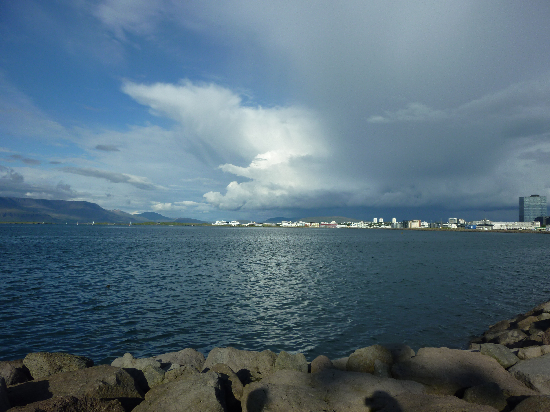
The harbor in Reykjavik.

Enjoying the sun in Reykjavik.

Reykjavik - the best city for its basalt columnar joints in the street and no dogs.

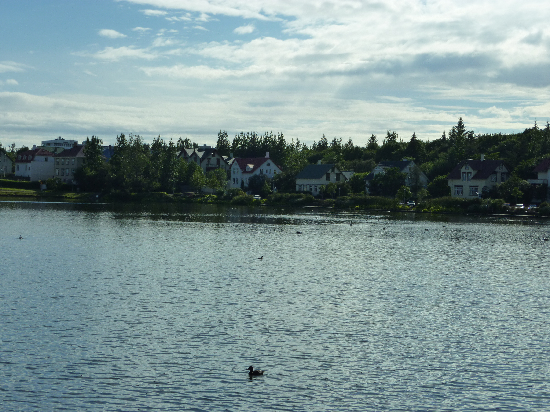
Houses by Tjornin Lake in Reykjavik.

Posted in Uncategorized | Tagged , | 3 Comments

A New Way to do Stratigraphy / Paleontology

Elizabeth is completely fixated with stromatolites, and the obsession became even stronger today when we found ~200 feet of stromatolites within the massive Quarry Bed at Temple Hill. As Elizabeth and I oohed and awed over each stromatolite on the bedding plane at the top of the Quarry Bed, Jesse began leaping and bounding over quarry rubble, looking for additional “outcrops”.

We decided to forgo “conventional” stratigraphy and paleontology for a short while, and most anything in the quarry became our outcrop.

Elizabeth is working on one of our fabulous outcrops. As you can see, the stratigraphy is shown perfectly.

This blog would not be complete without some pictures of our “finds”. The top photo below is an example of one of our stromatolites in cross-section, while the bottom photo is a collection of …???…

Posted in Uncategorized | Tagged , , | Leave a comment

Green River Stratigraphy at Temple Hill

On Sunday, we traveled a short way down the road to Manti to work on Temple Hill, home of the Manti Temple. Our goal was to learn about the stratigraphy of the Green River Formation at this locality, and we accomplished that through measuring a strat column through the upper “member” of the Green River and the overlying Crazy Hollow Formation. We had a great day in the field, producing a 120 foot strat column and just beating the storm clouds as they rolled in later in the afternoon.

Take a look at the photo below, which is a view of a small portion of the massive “Quarry Bed”. Used as a building stone in the Sanpete Valley, this bed is 8-9 feet in places and is filled with (often silicified) ooids, pellets, and ostracodes — a dream for a carbonate lover!!”

Here you can see that we have nearly completed our strat column. We are through the Green River Formation and nearly done measuring the overlying Crazy Hollow. Elizabeth is hard at work with her Jacob's Staff, while Jesse is...posing for his photo shoot for outdoor clothing and equipment on top of the Crazy Hollow.

Posted in Uncategorized | Tagged , , | 3 Comments

Professor Greg Wiles is Wooster’s newest Shoolroy Chair of Natural Resources

Professor Greg Wiles in the now iconic photograph published in The Guardian on May 14, 2009.

WOOSTER, OHIO–We are very pleased to announce that Greg Wiles has been promoted to Full Professor and named the Shoolroy Chair of Natural Resources at The College of Wooster.  Greg has been at Wooster since 1998 and is our geomorphologist-dendrochronologist-paleoclimatologist (and hydrogeologist, for that matter).  He earned his BA in geology from Beloit College, his masters from Binghamton University (The State University of New York), and his PhD from the University at Buffalo (The State University of New York).  Greg has many publications in first-rate journals, a large number of them with Wooster students.  He is an Adjunct Associate Research Scientist at the Lamont-Doherty Earth Observatory (Columbia University), and an Adjunct Research Associate at the Byrd Polar Research Center (The Ohio State University).  Greg founded and manages the Wooster Tree Ring Lab which not only has put Wooster on the map for climate studies, but has been a place where many of our students have their first professional research experiences as interns and assistants.  Greg is a treasured teacher in Wooster’s Department of Geology, where he is also the chair.  Reader of this blog know that Greg does much summer research with his students in Alaska and locally.  He is also our media star!

Congratulations to Greg on this promotion and appointment!  We are very fortunate to have a scientist and teacher of his caliber and dedication in our community.

Posted in Uncategorized | Tagged , | 2 Comments

Field Camp in Utah – A Woo Reunion

Hello from Ephraim, Utah!! I just finished teaching my three week portion of Ohio State’s field camp with David Elliot (OSU, igneous petrology). To my surprise this year, field camp became a mini Wooster reunion, because Elyssa Krivicich (’09) was enrolled in field camp as a student. Elyssa moved on from Woo to OSU’s School of Earth Sciences, where she is focusing on paleontology under Bill Ausich, a colleague of Mark Wilson from their Estonia days (and a good friend of mine from my time at OSU).

Field camp this year has been just as great as usual. What possibly could be bad about spending each day in the Utah sun mapping? Yes, the days can be long and sometimes tiring (especially when you are grading), but the time mapping makes up for everything. Most of the mapping thus far was in Paleogene strata of the Sanpete Valley, but we did venture off for a camping trip to Marysvale, one of Utah’s volcanic provinces.

Because field camp is over, I can now turn my attention to field work with my I.S. students. Elizabeth Deering arrived in Utah on Saturday and is working with me here in Utah on the Green River Formation stromatolite lithofacies. I’m looking forward to days of fossil collecting in carbonates with Elizabeth. My other I.S. student, Jesse Davenport, is also here with us in Ephraim, assisting with field work. However, he will leave near the end of July to work in the Tobacco Root Mountain region of Montana on a Keck project. So, he’ll have to switch gears from Paleogene lacustrine strata to Archean metamorphics. Please stay tuned for more on our adventures in Utah, as we just completed our first day in the field!!

Elyssa Krivicich ('09) is hard at work during field camp, studying the packstone intervals in the Green River Formation on White Hill (Ephraim, Utah).

Posted in Uncategorized | Tagged , , | 1 Comment