


Guest Bloggers: Amelia Behm, Anika Knowles, Anna Lundquist, Anneke Smeenk, Charlotte Helm, Cheyenne Wentz, Isobel Yasenchak, Leo Casalini, Mia Bauman, Michael Schnabel, and Shay Johnson.
ESCI-299: Cave Geology was offered for the second time this fall and provides an opportunity for students to learn about caves and cave formations. Aside from learning in the classroom, hands-on experience in the form of a field trip to the cave systems of West Virginia was incorporated into the class schedule to allow students the chance to both supplement and apply their new knowledge. While staying at the West Virginia Association for Cave Studies (WVACS), we visited three separate sites: Lost World Caverns, Boar Hole Cave, and Buckeye Creek Cave.
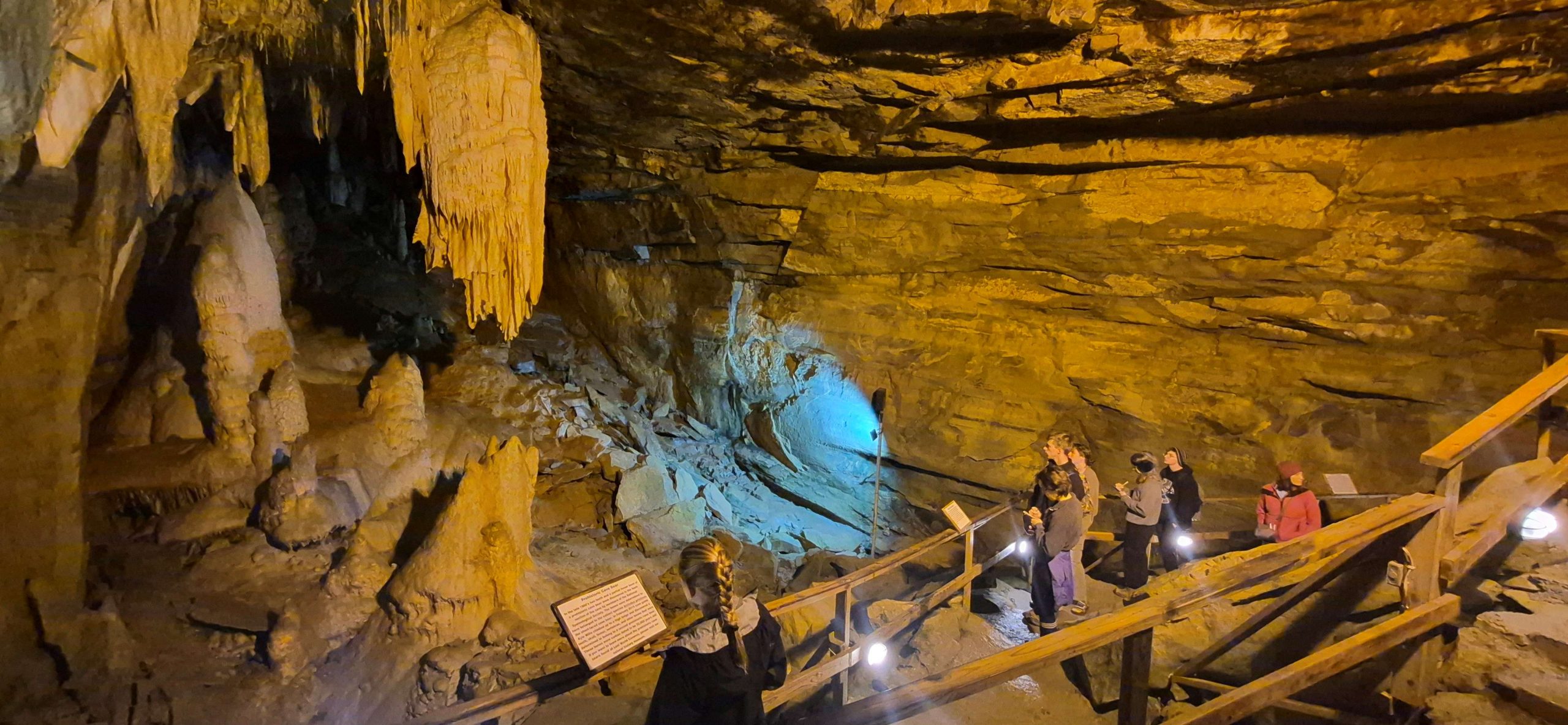
Figure 1. Cave Geology students explore Lost World Caverns. Photo Credit: Nick.
The Caves Visited
During our stay in West Virginia, we visited three local caves. The first, named Lost World Caverns, was a slightly more commercialized cave than the other two. Ushered through a door which opened onto a wide downward sloping passage, we followed it down until we reached the cavern below. An apt descriptor, the ceiling seemed to melt away as the vastness of the place came into view. Long, pointing stalactites reached eagerly toward our heads from far above while wide, grandiose stalagmites stretched upward with slow laziness to meet their downward moving counterparts. The seemingly endless opening underground resembled in many ways the room of a palace belonging to the earth; the grandeur accentuated by the dramatic lighting which lit the walls with dazzling colors.
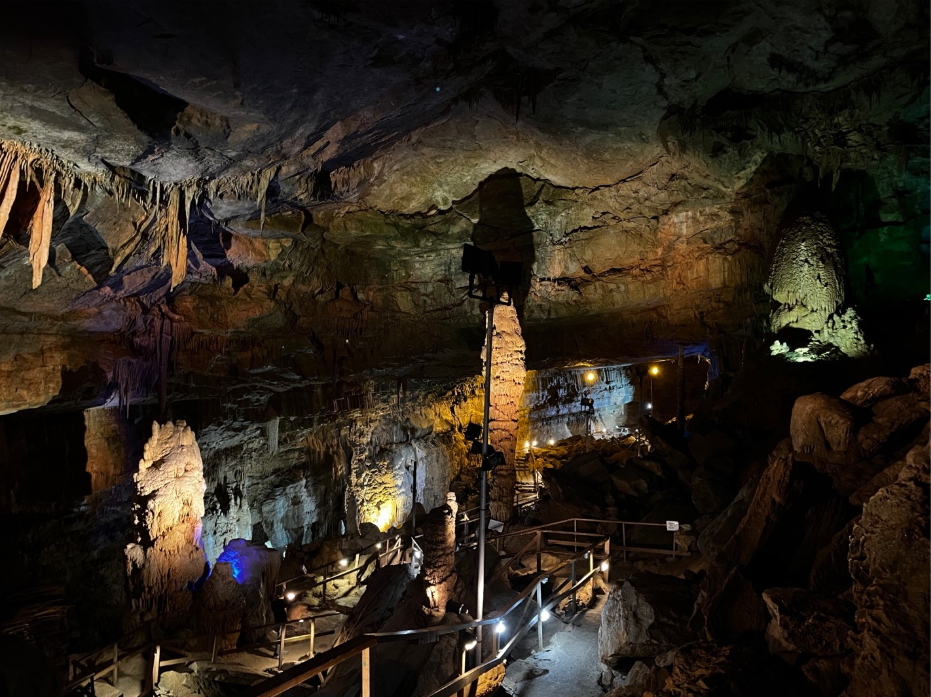
Figure 2. A picture of the Lost World Caverns brought to life in bright detail by colored lights. Photo Credit: Leo
The second cave we visited was called Boar Hole. The reasoning behind the name became clear as our short hike up a cliffside from the road led us to gather around a corrugated drainage pipe (Image 3). The pipe extended vertically a few feet out of the ground and was just big enough to admit a person through. Climbing down into the depths below aided by a ladder, we began our first real exploration of the hidden, sunless world which runs parallel but distinctly separate from the surface we call our home. Our passage was marked by uneven terrain, much scrambling over boulders, and the all-encompassing presence of clay. It was a thoroughly delightful time, and to the great pleasure of the group there was a seemingly endless number of side nooks and crannies leading off the main path to explore. It was particularly wonderful to be doing such exploring by the light of only a handful of headlamps, lending an air of mystery and heightened adventure to the whole ordeal. The all-pervasive darkness could be driven away to expose a speleothem formation or a small fossil trapped within the cave wall before being blanketed in darkness once more as curiosity drove the wearer onward. Perched on a side of the cave wall high above the rest of the group it was great fun to turn one’s own lamp off and simply watch the rest flit in and out of passages and around the cave, each in their own world even as we were all banded together as a larger group. Along this same vein, perhaps one of the most memorable experiences while in this second cave was the decision to sit or lay down where we were, turn off our lights, and delve into a minute of collective silence. As our eyes became useless and our other senses were released to explore the cave around us, the boundary of rock surrounding us seemed to melt away to a black void which fed our ears with the loudness of a nothingness so extreme it seemed to carry the weight of a strange sort of sentience behind it. Reminiscing on that moment gives one pause for thought as they come to consider the abundance of the unknown which thrives in these places still connected yet so removed from our everyday lives.
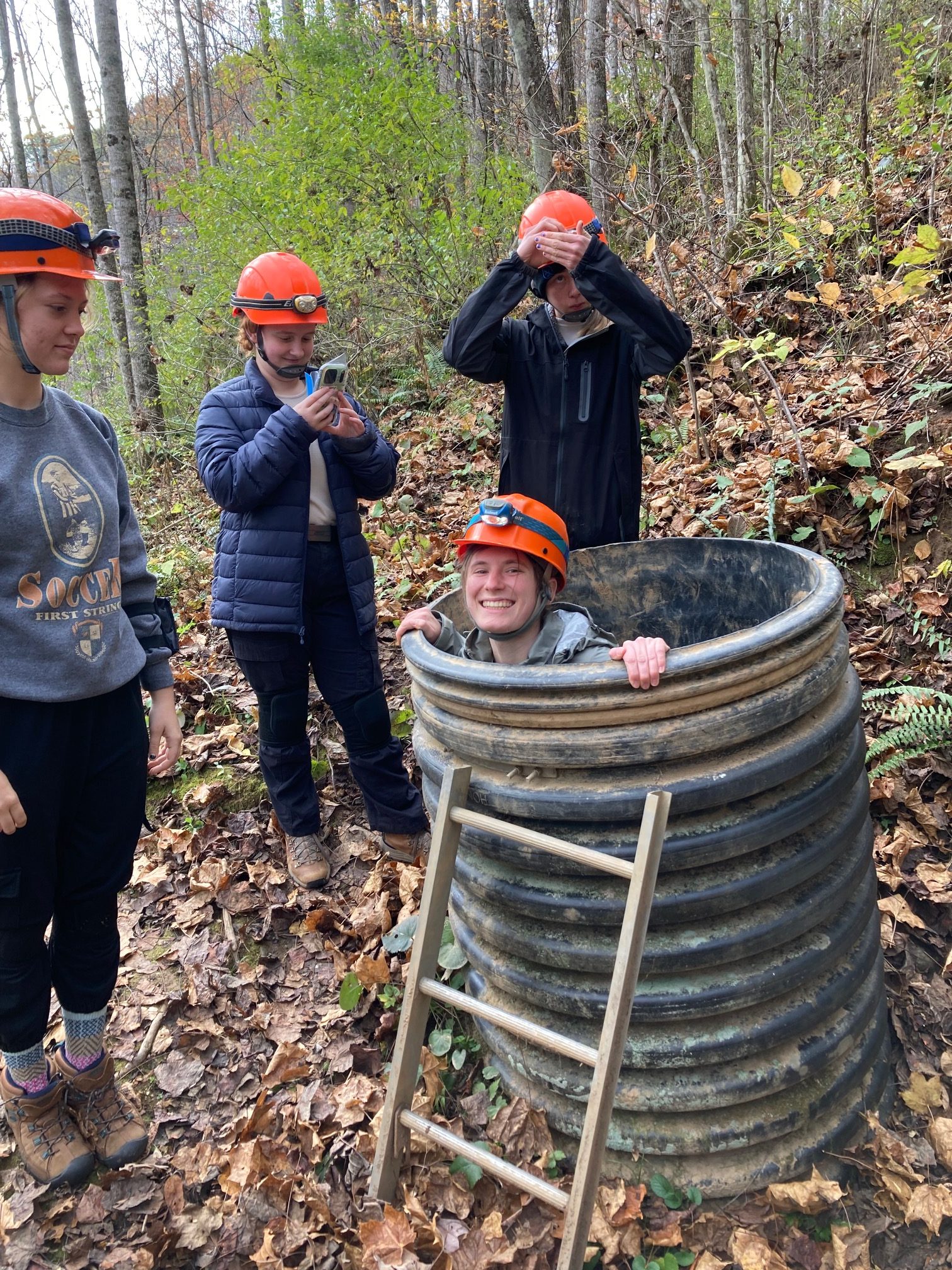
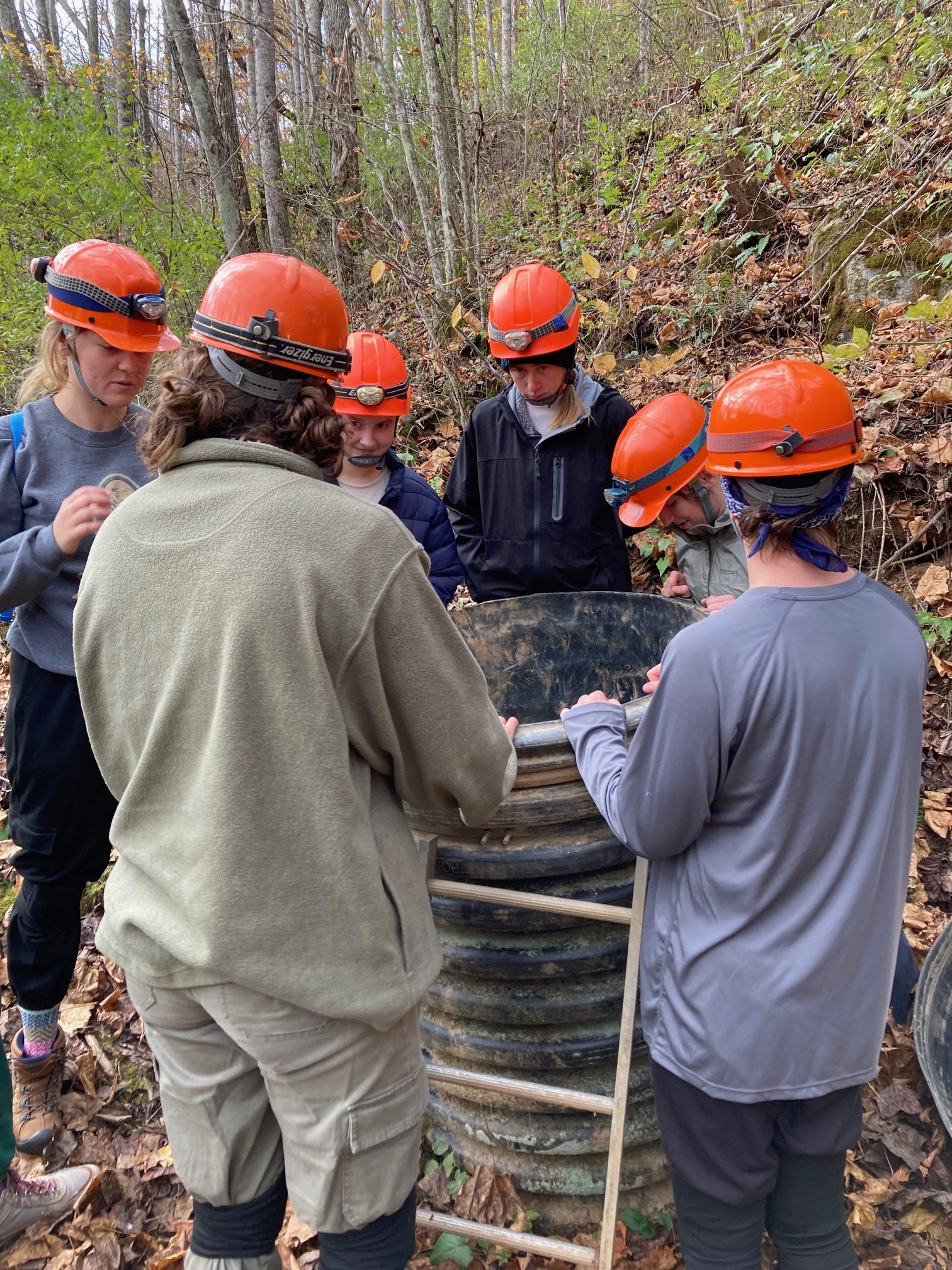
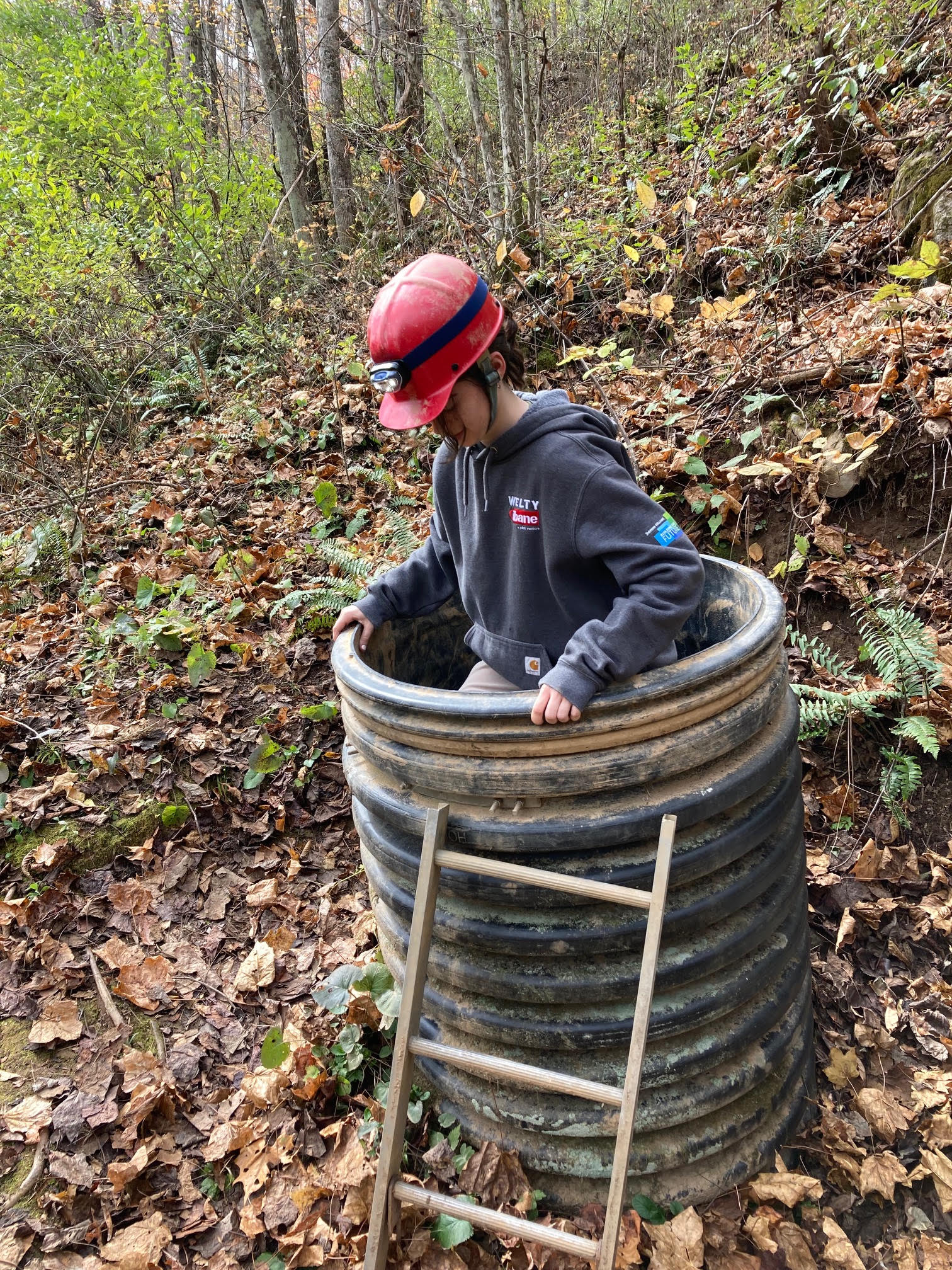
Figure 3. Cave Geology students gather around the entrance to Bore Hole Cave. Photo Credit: Dr. Lyon.
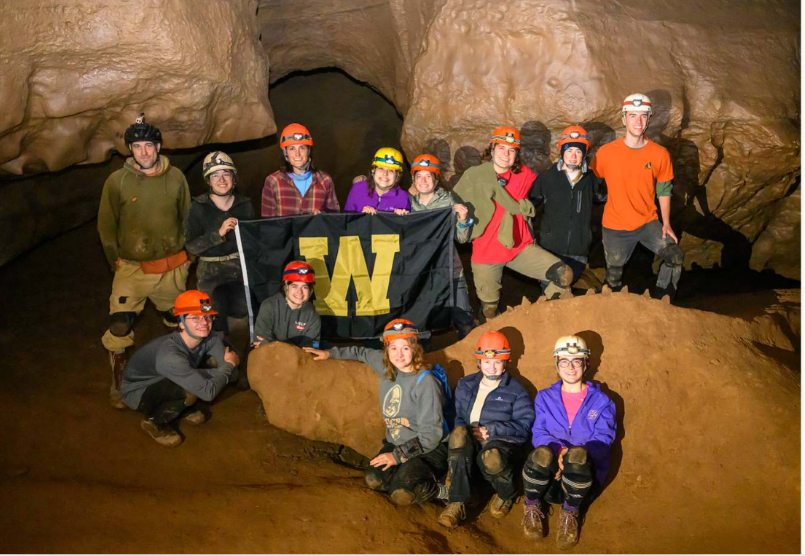
Figure 4. Cave team deep inside Boar Hole cave, posing with a mud formation shaped like a dinosaur. Photo Credit: Ben Siegel, Ohio University.
The third and final cave we visited was called Buckeye Creek Cave. Connected hydrologically to the nearby Buckeye Creek, the cave was home to a winding stream which cut happily through the surrounding rock. Where, in our last venture downward, we had made a considerable effort to avoid getting our feet wet so as not to trudge with wet socks through this otherworld down below, here at Buckeye Creek, we had no choice. However, as with most things, the first cold rush of water in our boots was the hardest, each wave after that only a loving caress encouraging us ever onward as we travelled in the path of the stream. The introduction of water was a new but welcome one as it led to the discovery of many cave-dwelling creatures. Every so often the call of a classmate would reverberate through the cave as they called others to come look at the specimen they had found. One such memorable occurrence was our encounter with a type of salamander common in aquatic environments, Gyrinophilus porphyriticus, more affectionately known as a Spring Salamander (Image 5). If its red gills on the side of its face are reminiscent of an axolotl, that is because, unlike most salamanders, axolotls retain their gills into adulthood! While they are frequently found in cave environments, they also occur outside them, making it even more serendipitous that we found this juvenile creature where we did.
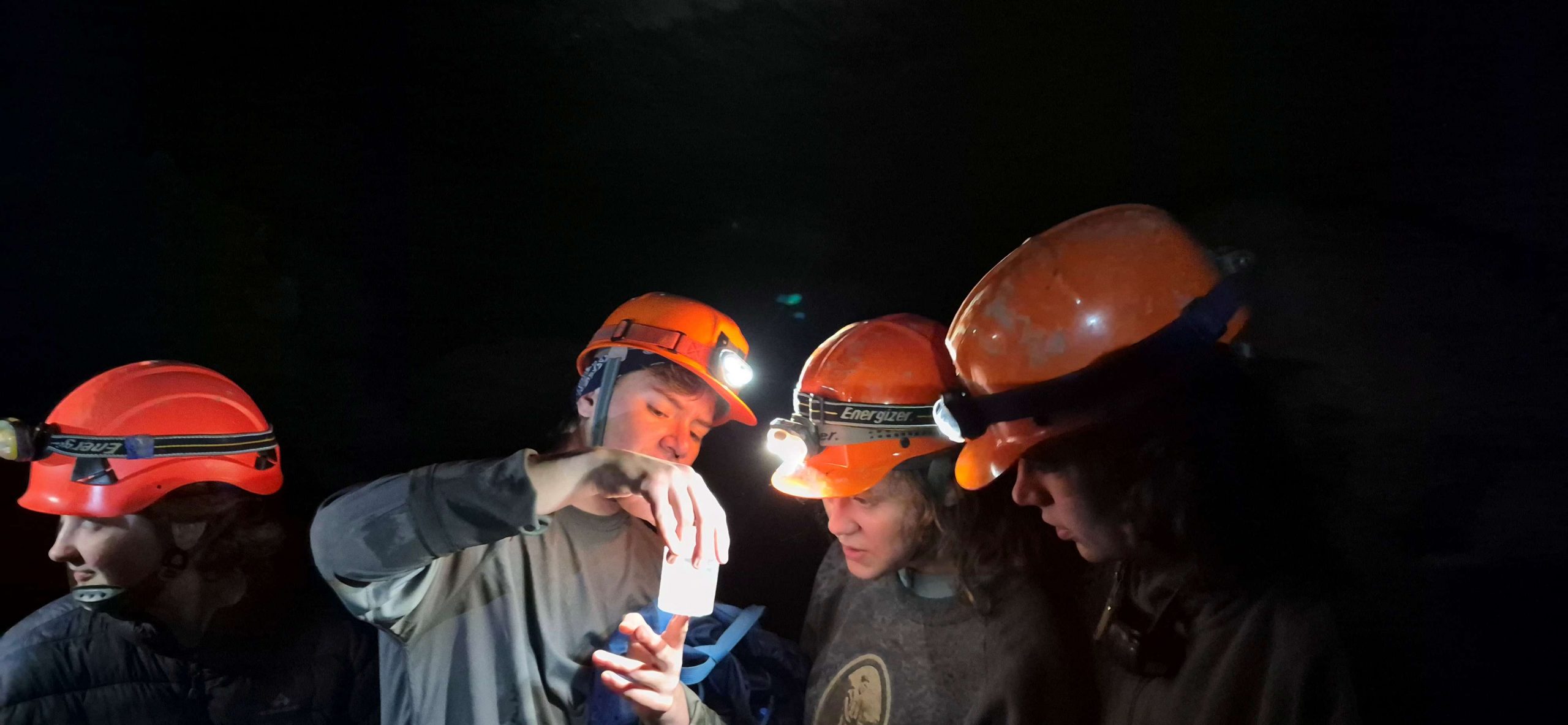
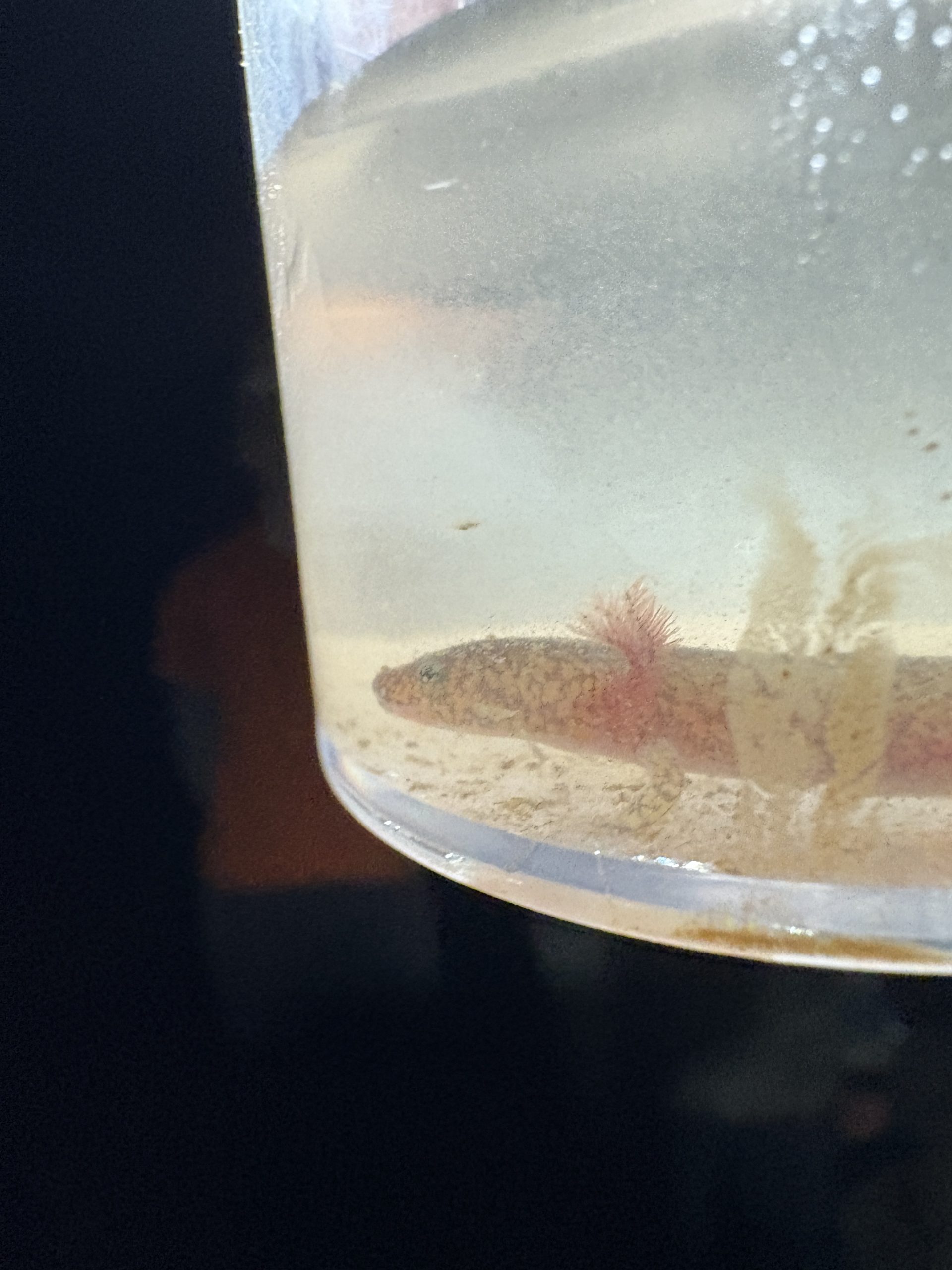
Figure 5 – Above. Students observe salamander caught inside a jar. Photo Credit: Nick.
Figure 6 – Left. Larval Spring Salamander found in Buckeye Creek Cave. Photo Credit: Anika and Anneke
Regional Geology
Deep Time:
The limestone bedrock of the caves we visited was formed over 359 million years ago during the Mississippian period, when the land that is now West Virginia was covered in warm, shallow seas. This formation is called the Greenbrier limestone, (home to the Greenbrier Karst), and consists of limestone which is interbedded with fine-grained and limey shales, and it can be up to 400 feet (120 meters) thick in some sections. Limestones are predominantly grainstones and packstones, with oolitic variants present in some formations. As the formation was marine, fossils of all kinds of Paleozoic marine fauna, such as crinoids, brachiopods, coral, and even some rare samples of early actinopterygian fish can be found within the strata and those nearby.
This region is also located in the north-central Appalachians, where a series of orogenies (mountain building events) helped form the mountain range we know (and love) today. The early periods of uplift, erosion, and down-warping formed basins that would become excellent environments for the formation of a carbonate factory. Later, the limestones deposited in this region would be uplifted and folded in the Alleganian orogeny, a late Paleozoic convergence between the African and North American plates. This event metamorphosed the southeastern core of carbonate sedimentary photoliths and folded the surrounding rocks present into the landscape present in the Greenbrier region today.1
Quaternary
The Quaternary period, spanning 2.6 million years ago to present day, is the most recent segment of time on the geological time scale and exists in the uppermost part of the Cenozoic Era. It is divided into the Pleistocene and Holocene Epochs. During this period, North America experienced major glacial-interglacial episodes. The rocks of West Virginia do not hold much record of geological activity involving the ice sheets. However, this great period of glaciation also caused changes in drainage patterns that caused deposition of lake sediments in Greenbrier Valley. In addition to lake deposits, gravel, sand, and clay were deposited in this region. After all these depositions, Buckeye Creek ran through the limestone to form the Greenbrier Cave System. Buckeye Creek can carve through the limestone because it is slightly acidic from the rainwater. As rainwater interacts with the abundance of carbon dioxide in the atmosphere, a weak carbonic acid is formed and dissolves the limestone within karst caves. The result of dissolved limestone is an increase in speleothem formation. Recent changes in climate can be associated with increased volume and velocity of rainwater.
How Caves Form:
We know that water is stored in the rocks and soil beneath the earth we stand on every day. This water is held in the water table, the level of which changes depending on the recharge and discharge of groundwater through the karst systems. Karst is the term for a system of landforms that has been sculpted by both surface and ground water. Different rock types have different levels of porosity (which influences how much water the rock can hold) and permeability (how fast water can move through the rock). These levels are not consistent throughout entire landscapes, creating areas where acidic groundwater erodes the rock. Being slightly acidic, rainwater that infiltrates into and through the soil begins to dissolve the Mississippian limestone layer. In Greenbrier County of WV, solution caves, that is, caves formed in soluble rock via the process of dissolution, are quite common.
The location at which water feeds into these caves is different. For example, water enters the Lost World Cave via a sinkhole, where the water “disappears” into the ground. Alternatively, the water feeding Buckeye Creek Cave enters the cave through a ground-level entrance. Depending on the amount of water flow, sumps can develop in the cave, filling up low lying areas of the cave with water. While we didn’t experience traversing a sump while in any of the caves, Buckeye Creek Cave is known for having a sump when the water level rises.
Limestone (the majority of what these three caves were composed of) is made of calcium carbonate (CaCO3) which forms when carbonate ions dissolved in seawater bond with calcium ions, which are likewise dissolved. As the acidic rainwater reaches the limestone, the carbonic acid (H2CO3) within a raindrop breaks the bonds between the calcium and carbonate effectively dissolving the rock. Over time it seeps through cracks in the rock that are under/at the water table and slowly dissolves the rock, forming caves. What starts as small holes in the limestone layer can turn into vast and impressive caverns full of wide winding passages and inconspicuous nooks and crannies.
CaCO3 precipitation also correlates to the pH of sea water. CO2 is in our atmosphere, and bonds with water molecules in sea water. Eventually, it goes through a series of reactions (related to Le Chatelier’s Principle) starting with CO2 gas being dissolved in ocean water and ending with CaCO3 mineral used in many marine life’s biology (shells, coral, etc.). This process can be seen in the figure below.
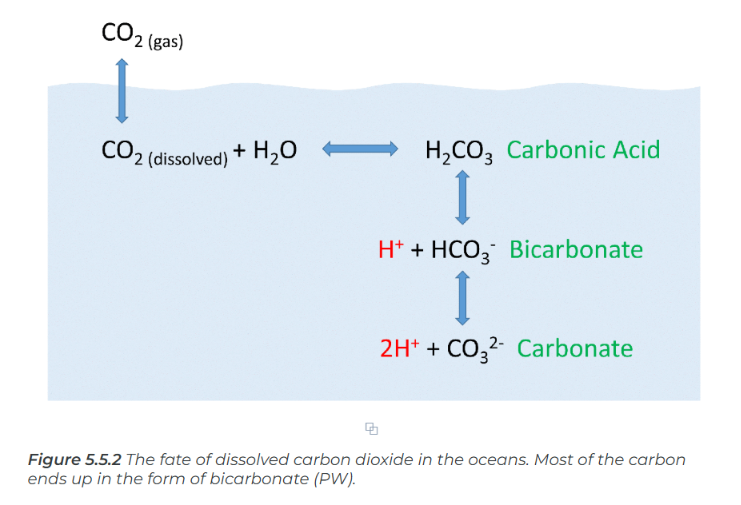
Figure 7. Dissolved carbon dioxide in the oceans. Credit: Roger Williams University, Intro to Oceanography
Once the bonds between the calcium and the carbonate are broken by the carbonic acid and the ions are dissolved into a solution, they are kept in this aqueous state by the pressure of the surrounding rock. As this solution continues its journey downward through the pore spaces within the rock and comes upon the cave opening, however, a change occurs. The pressure exerted on the solution by the rock it is traveling through is suddenly released as the solution emerges into the cave and drops to the floor. This release in pressure allows the calcium and carbonate ions to join once again and come out of solution to form a mineral called calcite.
As drops continue to coalesce on the surfaces of the cave, formations called speleothems are slowly formed of calcite deposition. Speleothems include formations such as stalactites (formations hanging down from the ceiling of the cave), stalagmites (formations building up from the floor), and drapery (stalactites that form in continuous sheets). Cave bacon is a type of drapery with layers and folds that look like bacon. As water drips from stalactites onto stalagmites below, they can slowly connect, creating a column. Many of these features can be seen in Image 8.
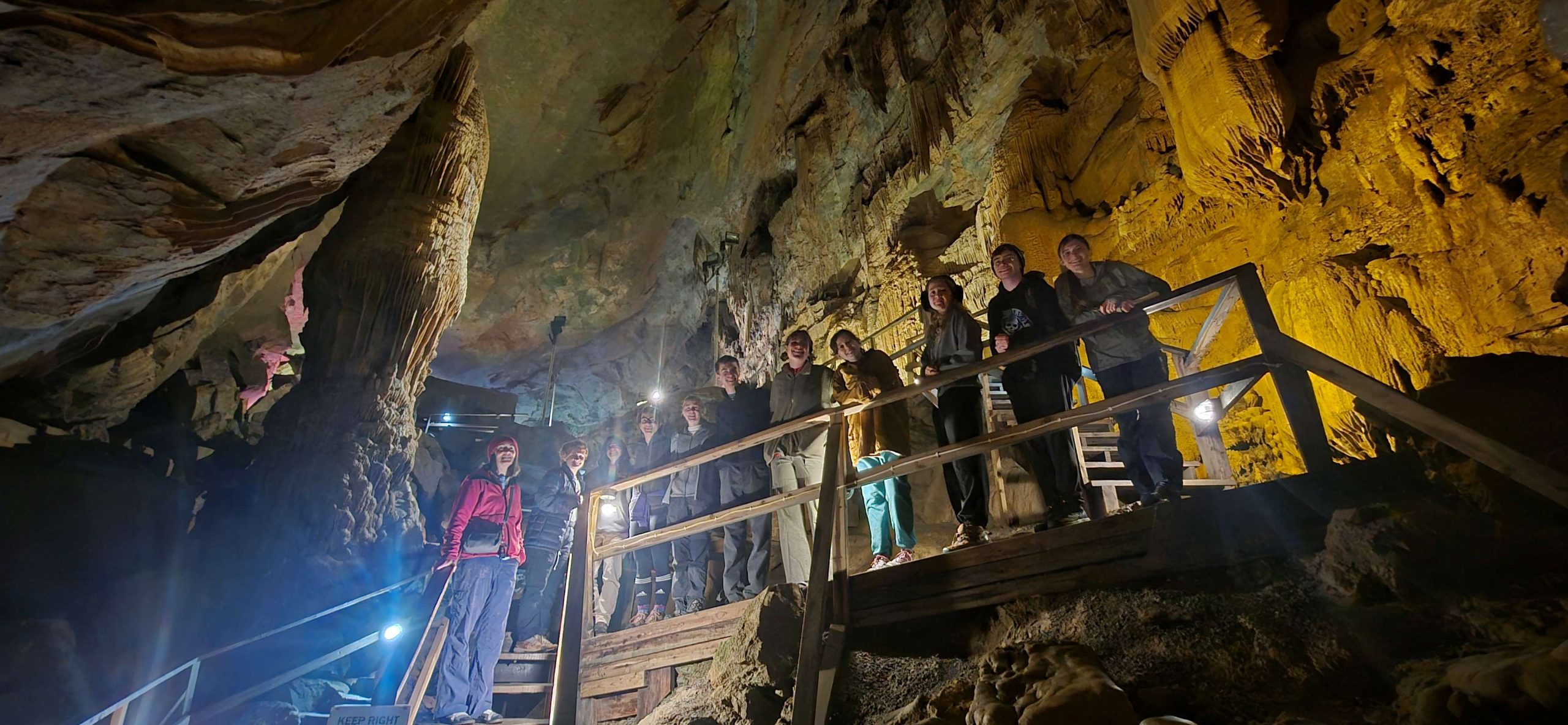
Figure 8. Cave participants are wowed by a variety of speleothems in Lost World Caverns. Photo credit: Nick.
Karst of Greenbrier Valley
The Greenbrier Karst is a segment of the Appalachian Karst in Southeastern West Virginia, encompassing most of Greenbrier, Monroe, and Pocahontas counties (see map below).
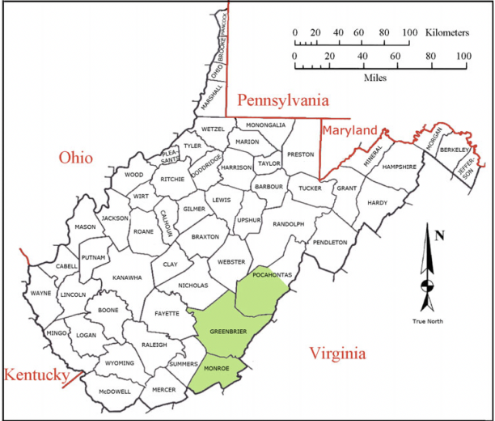
Figure 9. Greenbrier Karst Map (White, 2017)
This area is characterized as a temperate climate carbonate karst and is mostly agricultural land with forest on mountain slopes. There are more than 2,400 caves in the tri-county area, including the three our class explored, Lost World Caverns, Boar Hole Cave, and Buckeye Creek Cave. As we drove to cave sites, we observed the other features of karst topography in the surrounding landscape, including sinkholes (photo below), disappearing streams, and fractures. Sinkholes are categorized as depressions in the landscape and are either due to collapse or solution of the overlying rock.
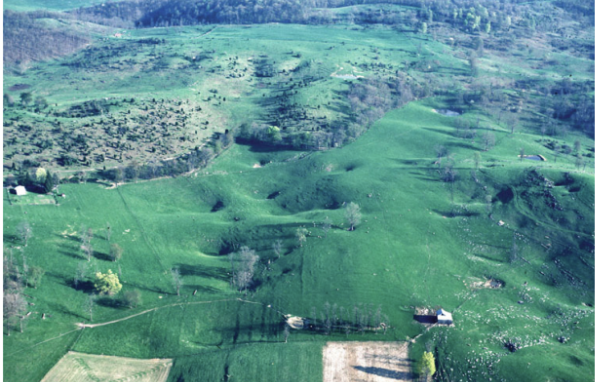
Figure 10. Sinkholes of the Greenbrier Karst, West Virginia (Virginia Department of Energy)
Disappearing streams occur in karst topography when surface water enters the groundwater system. Fractures, the cracks between karst layers, define the beginning stage of additional karst features forming; they can be weathered into larger channels influencing landscape above and below the surface (figure below).
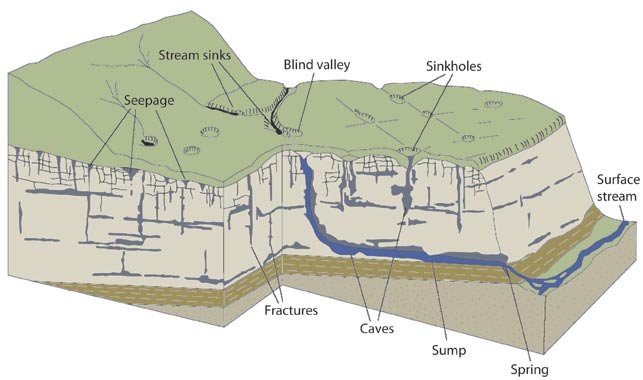
Figure 11. Karst landscape and features, including fractures, sinkholes, and disappearing streams (stream sinks) (UW Madison)
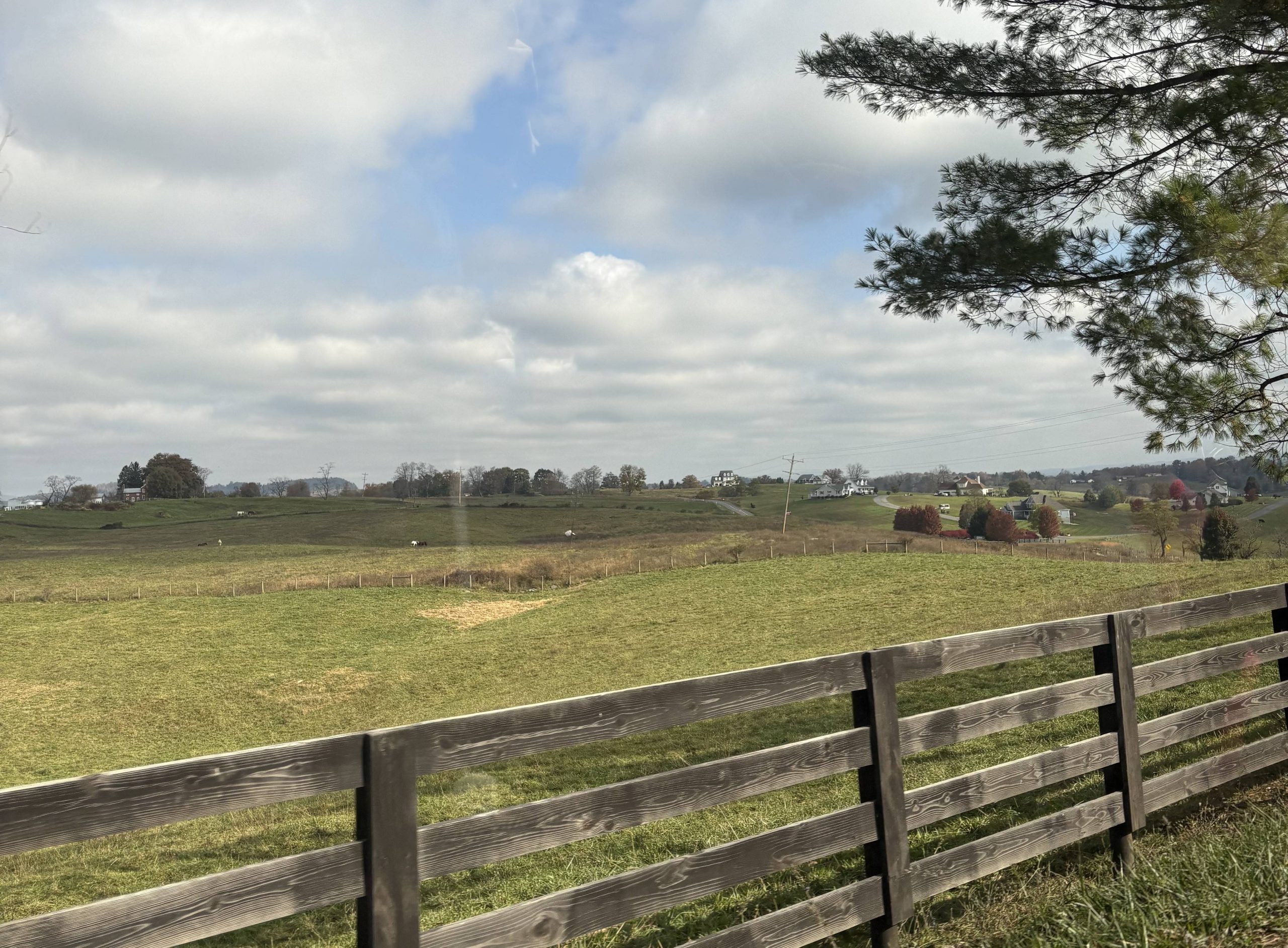
Figure 12. Karst landscape on the drive to WVACS. Note the undulating topography in the foreground and middle distance – there are many sinkholes in this area. (Michael’s photo)
Cave Ecosystems
In every ecosystem, nutrients must come from somewhere. Organisms that can produce their own nutrients are called primary producers. In most terrestrial and aquatic ecosystems, plants are the primary producers, creating nutrients by converting sunlight into glucose through photosynthesis.
Cave ecosystems also require the input of nutrients, but the lack of sunlight makes it impossible for most plants to survive. Instead, most caves rely on an input of nutrients from outside the cave. This can take the form of flash floods bringing in debris that contains organic matter, the droppings of cave-dwelling animals that leave the cave to eat, the bodies of animals that end up in the cave, or the roots of outside plants that extend into the cave (Romero, 2009). Some caves have chemosynthetic bacteria as primary producers, who are able to create energy from the oxidation of inorganic compounds (image 13) (Romero, 2009).
Bacteria, protozoans, and fungi break down the organic material and guano. Detritivorous animals then feed on those bacteria, protozoans, and fungi, carnivorous animals feed on those animals, and so on (image 13). Many cave animals—such as the cave crickets (image 14) and harvestmen (image 15) we saw—act as both predators and detritovores, eating whatever food they come across (Romero, 2009).
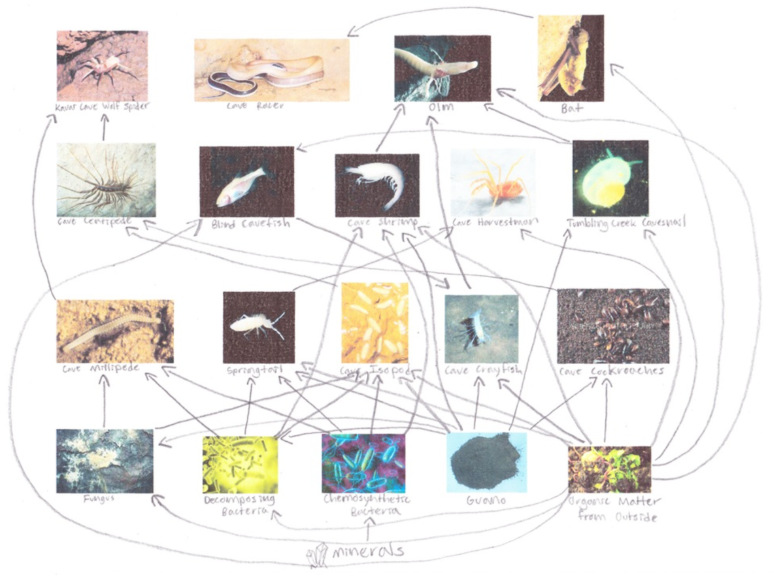
Image 13. An example of a cave food web. Arrows indicate consumption, and each “level” of the food web includes organisms that consume the “level” below it. Credit: https://caveecosystem.weebly.com/.
Cave Creatures
Despite the lack of primary producers, cave ecosystems can host a diversity of organisms. Cave environments can provide a variety of advantages, such as an environment with a stable temperature, high humidity, a place to hibernate, and protection from drying out. Some of the animals that live in caves can spend part of their time outside of the cave, facilitating the input of outside nutrients into the cave ecosystem. Other animals live exclusively in caves for their entire life cycle (Romero, 2009).
Some of these cave-residing animals have similar traits that allow them to best exploit their resources. These traits can include reduced or absent eyes, enhancement of other sensory systems, longer limbs, loss of pigment, thinner cuticle (in arthropods), polyphagy (varied diets), and a general slower pace of life (Romero, 2009).
A creature we saw frequently in all three caves were cave crickets, wingless insects of the family Rhaphidophoridae. They have reduced eyes and mainly rely on their sense of touch from their elongated antennae to avoid predation (iNaturalist).
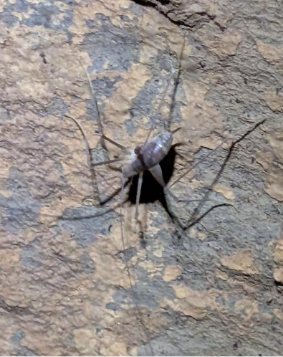
Figure 14 – left. Cave cricket on cave wall. Photo Credit: Anneke
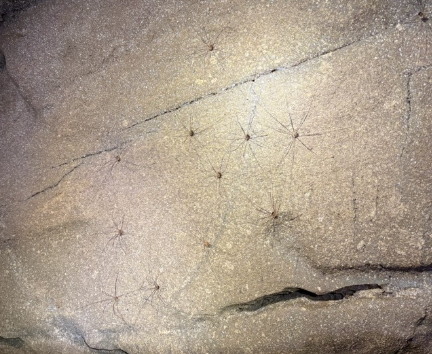
Figure 15 – Above right. Cave harvestmen (order Opiliones). Credit: Anika Knowles.
As previously mentioned, we also found a larval spring salamander through our explorations. The spring salamander is a good example of an animal that lives in caves for part of its life cycle, contributing to the nutrient cycling in the cave. Not all larval spring salamanders live in caves, but some will spend their larval stage there and leave the cave as adults (iNaturalist). The cave salamander (Eurycea lucifuga) is another cave-dwelling salamander that is common in the region. It is bright orange with black spots (Image 16). While it frequently lives in caves, as its name suggests, it also occurs in forested habitats above ground.
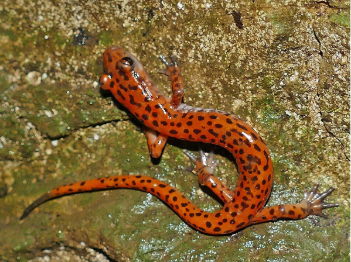
Figure 16. – left. Cave Salamander. Species common to caves in the area. Photo Credit: (“Cave Salamander Eurycea lucifuga “)
We thank the generous donors to the Earth Sciences department field trip fund for making this incredible experience possible. We also thank the faculty and staff of Earth Sciences department for supporting experiential learning opportunities like this one!
References Cited:
“Cave Salamander Eurycea lucifuga” Phylogeny Project, https://phenology.mwparc.org/species/eurycea_lucifuga (Accessed November 2026)
“5.5 Dissolved Gases: Carbon Dioxide, Ph, and Ocean Acidification – Introduction to Oceanography.” Roger Williams University Textbooks, rwu.pressbooks.pub/webboceanography/chapter/5-5-dissolved-gases-carbon-dioxide-ph-and-ocean-acidification/.
iNaturalist. https://www.inaturalist.org. (Accessed November 2026).
n.a., n.d., Cave Ecosystems: https://caveecosystem.weebly.com/ (Accessed November 2026).
Romero, A., 2009, Cave Biology: New York, Cambridge University Press, 291 p.
Springer, G.S., Rowe, H.D., Hardt, B., Cocina, F.G., Edwards, R.L., Cheng, H, 2009, Climate Driven Changes in River Channel Morphology and Base Level During the Holocene and Late Pleistocene of Southeastern West Virginia, Journal of Cave and Karst Studies, v.71, no.2, p. 121–129.
White, W.B., 2018, The Greenbrier Karst, in White, W.B. ed., Caves and Karst of the Greenbrier Valley in West Virginia, Cham, Springer International Publishing, p. 1–7, doi:10.1007/978-3-319-65801-8_1.