The wonder of natural history museums

TALLINN, ESTONIA–Scientific museums preserve specimens and information from generations of researchers, collectors and students. The interiors of a typical paleontological museum contains windowless rooms filled almost to the ceiling with cabinets, each with dozens of drawers containing carefully labeled and cataloged specimens. Because information grows rapidly in science, the most important information on those labels is not the identity of the fossils but where they were found. The names and even systematic categories often change over the years as we learn new characteristics of particular groups, but the location information will always be critical for the value of the specimen for future researchers.

Today we visited the Institute of Geology at the Tallinn University of Technology. We were hosted by Dr. Helje Pärnaste, a paleontologist who specializes in Ordovician trilobites. She generously spent the day with us going through the collections. Using one of the best electronic cataloging systems we have ever seen, she was able to take us to drawers containing specimens from our study localities. We were able to add to our faunal lists and see better preserved fossils which will help in our future identifications. We concentrated on crinoids, of course, and were able to calibrate what we found which was truly new and see many other examples.
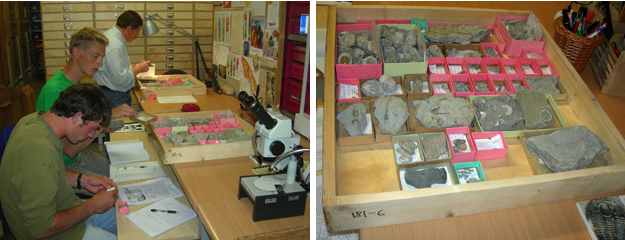
The Estonia Geology Research crew examining specimens in the Institute of Geology collections (left); a typical museum drawer (right).
The Estonia Geology Research crew examining specimens in the Institute of Geology collections (left); a typical museum drawer (right).

Much of our work involves finding specimens from our study locations and making quick and simple photographs for later reference.

Much of our work involves finding specimens from our study locations and making quick and simple photographs for later reference.

Again another scientific colleague we did not know before this trip helped us immensely and has become a friend. It is a remarkable universal fellowship. I hope we are able to return many such favors back in the United States.
Posted in Uncategorized | Tagged , , , , , | 2 Comments

A full geological circle

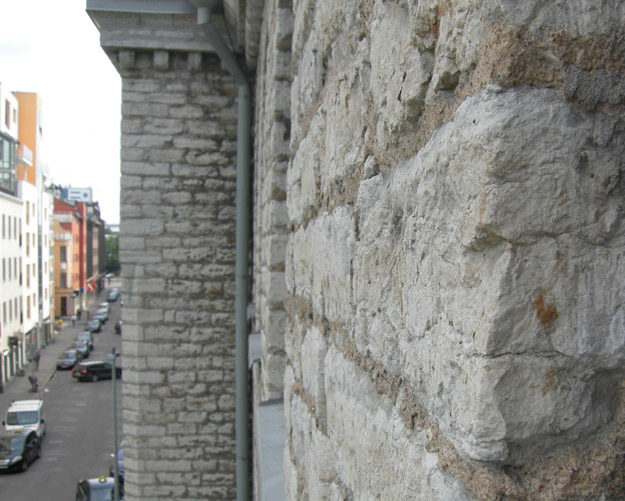
View from a room in the St. Barbara Hotel, downtown Tallinn, Estonia.

View from my room in the St. Barbara Hotel, downtown Tallinn, Estonia (N59.431802°, E24.743355°).

The Wooster Geology Estonia team is now safely in Tallinn preparing for our visit to the paleontological collections in the university museum tomorrow. For me a private joy is that our hotel building is made of Ordovician limestone, the very same stone that I studied a month ago in Russia.

Posted in Uncategorized | Tagged , , , | Leave a comment

The Wild Rhyolite Chase

The Woo-Crew has been working feverishly on their Iceland I.S. projects. Rob and Todd have been climbing the northern end of Vatnsdalsfjall for days, searching for zeolites. The last day was spooky as the thick fog cover came in and out with the wind direction, making it impossible to see at one moment and clear blue skies the next. Rob and Todd accomplished so much that they have been able to help Yexary, a Syracuse geology major, in her field area.

Yexary, Todd, and Rob mapping gabbro by the shore in Skagastrond.

Yexary, Todd, and Rob pausing to pose while mapping gabbro by the shore in Skagastrond.

Not only does the Iceland crew excel in Mineralogy and Petrology, but also in Invertebrate Paleontology (much like the Estonia group). We’ll see your unaltered hard parts and raise you an zeolite-filled olivine basalt!

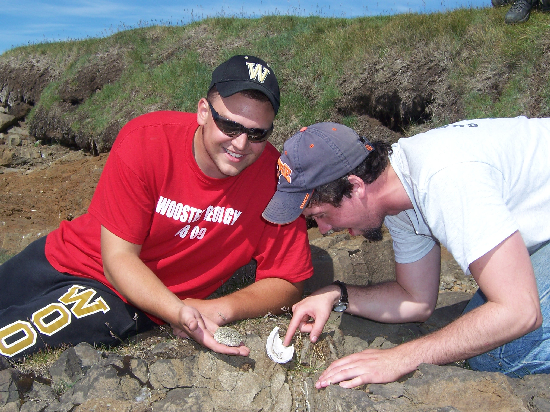
Todd and Rob in the fossil-crouching position on the Skagi shore.

Todd and Rob in the fossil-crouching position on the Skagi shore.

The same day that they hunted fossils, Rob and Todd saved a baby duck that was struggling in a net on the shore. They are genuine heroes.

Adam, meanwhile, is on the hunt for the elusive rhyolite. After some early success, he has run into basalt where rhyolite has been mapped. Unfortunately, all of the rhyolite is mapped at the top of the mountains, so Adam has made several trips to the top just for the fun of it.

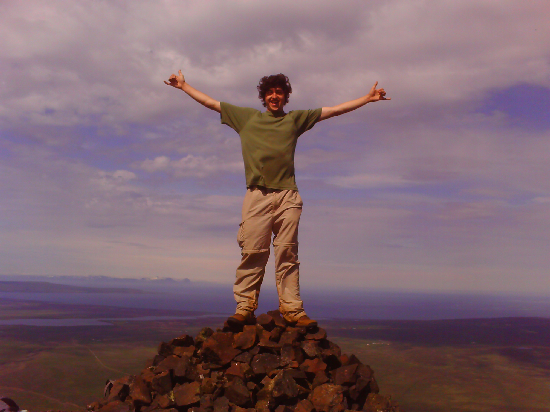
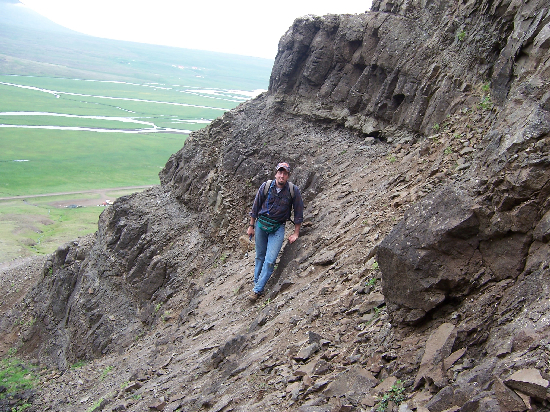
Adam at the top of Vatnsdalsfjall.

Adam at the top of Svinadalsfjall.

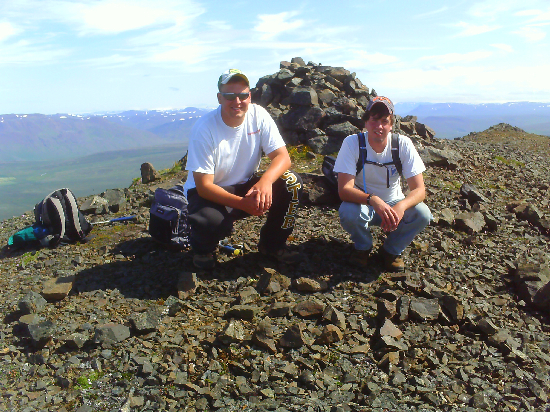
At the top of Svinadalsfjall, Adam, Rob, and Todd found a word spelled out in rocks: L-i-e-t-u-v-a. We don’t know what it means, but we decided to spell U-S-A in rocks right next to it.

Rob and Todd claim a mountain for the USA.

Rob and Todd claim a mountain for the USA.

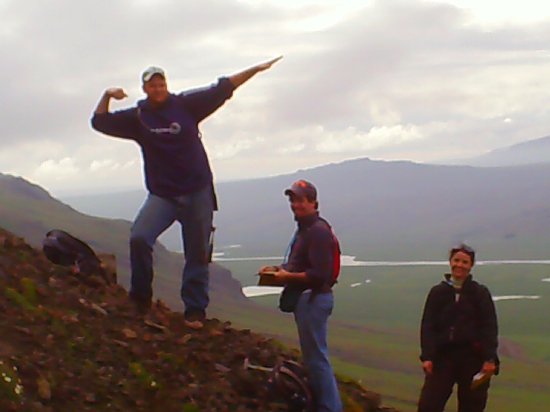
Todd strikes a pose on the way up Vatnsdalsfjall.

Todd strikes a pose on the way up Vatnsdalsfjall.

Posted in Uncategorized | Tagged , , , | 2 Comments

Estonian Independent Study fieldwork completed!

KURESSAARE, SAAREMAA, ESTONIA–Today in a cold drizzle we measured the last section and bagged the last sample for our field projects. Tomorrow we leave the beautiful island of Saaremaa and drive to Tallinn. The next day we will study fossils in the University of Tallinn collections to complete our survey of the Silurian communities preserved in this part of the Baltic.

Rob McConnell is sorting out the paleoecology and paleoenvironments of the upper Mustjala and lower Ninase Members of the Jaani Formation (Wenlock) at three sites on the northern coast of Saaremaa. He has some very cool stromatoporoids, corals and bryozoans which are sometimes complexly intergrown and are almost always bored with long, thin holes.

Wonderfully symmetrical and large stromatoporoid (a kind of fossil sponge) preserved in the Undva Cliff, northwestern Saaremaa coast.  The surrounding blue-gray sediment is a calcarous clay with other smaller fossils such as brachiopods and bryozoans.  The stromatoporoid itself is a community with endosymbiotic corals and worms.  (Mustjala Member, Jaani Formation, Wenlock).

Wonderfully symmetrical and large stromatoporoid (a kind of fossil sponge) preserved in the Undva Cliff, northwestern Saaremaa coast. The surrounding blue-gray sediment is a calcarous clay with other smaller fossils such as brachiopods and bryozoans. The stromatoporoid itself is a community with endosymbiotic corals and worms. (Mustjala Member, Jaani Formation, Wenlock).

Palmer Shonk has a single locality on the Sõrve Peninsula of southwestern Saaremaa with an extraordinary accumulation of crinoids in both growth positions (as extensive holdfasts) and as storm-tossed skeletal debris. These rocks and fossils are part of the Aigu Beds (Kaugatuma Stage, Pridoli). We think that there were low mounds of calcareous mud colonized by numerous species of crinoids, bryozoans and stromatoporoids which were occasionally swept by strong currents and buried in coarse sand and gravel made almost entirely of crinoid bits. Palmer will work out the ecological structure of those original communities and then the environmental history which led to these thick storm deposits.

Crinoid holdfast seen sideways in the Aigu Beds, Kaugatuma Stage, Pridoli.  This structure is like the tap root of a tree.  It penetrated the sediment, tapering downwards, and produced lateral branches (radices) which held the crinoid in place in a relatively energetic marine environment.  Unlike a tree root system, this crinoid holdfast did not take up nutrients for the organism.  Crinoids are animals which filter the seawater for food with a head and arms at the opposite end of the stalk.

Crinoid holdfast seen sideways in the Aigu Beds, Kaugatuma Stage, Pridoli. This structure is like the tap root of a tree. It penetrated the sediment, tapering downwards, and produced lateral branches (radices) which held the crinoid in place in a relatively energetic marine environment. Unlike a tree root system, this crinoid holdfast did not take up nutrients for the organism. Crinoids are animals which filter the seawater for food with a head and arms at the opposite end of the stalk.

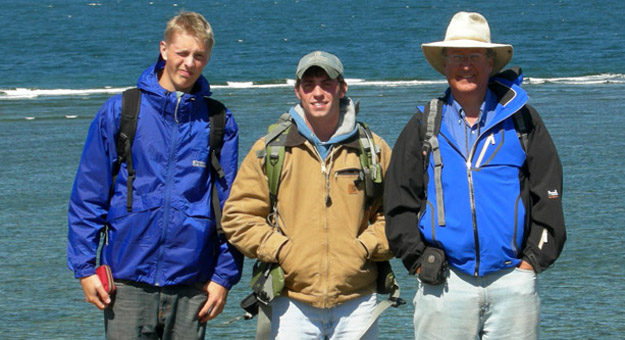
The Wooster 2009 Estonia Geological Research Team.  Photograph kindly taken by our colleague Bill Ausich.

The Wooster 2009 Estonia Geological Research Team. Photograph kindly taken by our colleague Bill Ausich.

Posted in Uncategorized | Tagged , | Leave a comment

Some fieldwork actually improved by rain

UNDVA CLIFF, SAAREMAA, ESTONIA–I’ve never had anything good to say about rain during geological fieldwork, but our colleague Bill Ausich from Ohio State University insisted that it makes echinoderm fossils stand out better against the rock matrix. Turns out he’s right.

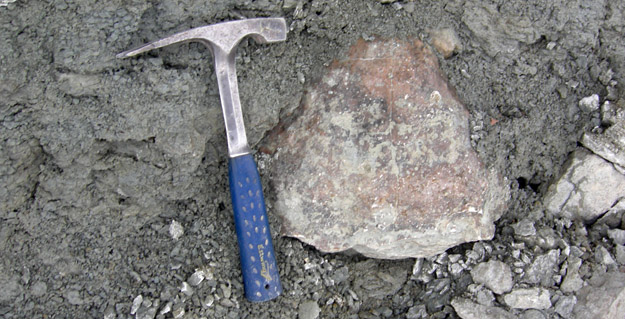
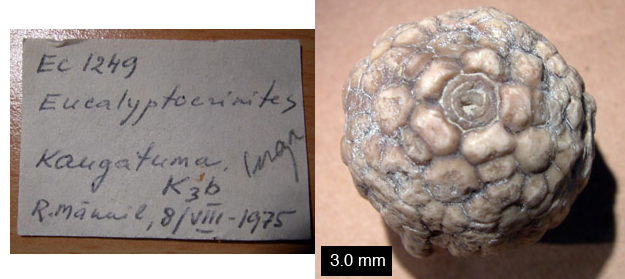
Two calices of the eucalpytocrinid crinoids at the Undva Cliff locality.  When wet the pure calcite of their skeletons contrasts brilliantly with the surrounding dark rock matrix.

Two beautiful calices of the eucalpytocrinid crinoids at the Undva Cliff locality on Saaremaa. When wet the pure calcite of their skeletons contrasts brilliantly with the surrounding dark rock matrix.

Posted in Uncategorized | Tagged , , | Leave a comment

The Beauty of the Estonian Countryside

PANGA PANK, SAAREMAA, ESTONIA–One of the primary joys of geology is the privilege of working outside, especially in wild areas. Walking through green forests or desert wadis or up steep volcanic mountainsides or along rocky coastlines gives us the natural context for our research. We are small parts of that monumental human enterprise to understand the Earth and the life upon it.

Saaremaa is a treasure of wild places, even though it has been settled for centuries. The photographs below come from the Panga Cliff Nature Reserve which includes one of our coastal localities.

The Panga Cliff (left) and deep forest floor moss on a trail along its top (right).

The Panga Cliff (left) and deep forest floor moss on a trail along its top (right).

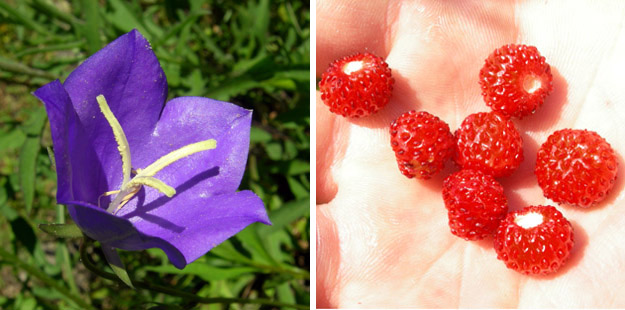
A common purple flower we see often (left) and wild strawberries which we pick and eat to and from our outcrops.

A common purple flower we see often (left) and delicious wild strawberries which we pick and eat as we walk to and from our outcrops.

Posted in Uncategorized | Tagged | 1 Comment

Never brag about your field weather

Practically Icelandic out there on the northern Estonian coast this morning.

Practically Icelandic out there on the northern Estonian coast this morning.

Posted in Uncategorized | Tagged | Leave a comment

Wooster Geologists Invade Skagi Peninsula

We’re on the Skagi Peninsula now and internet access is a little more random. We started field work on Rob’s and Adam’s projects this week. Rob found some awesome zeolites – too many to name – and a lot of altered basalt (my poor babies!). Adam ran into some trouble early on because many of the rhyolites appear highly altered, but has managed to find some pretty decent samples that he can use for geochemical analyses.

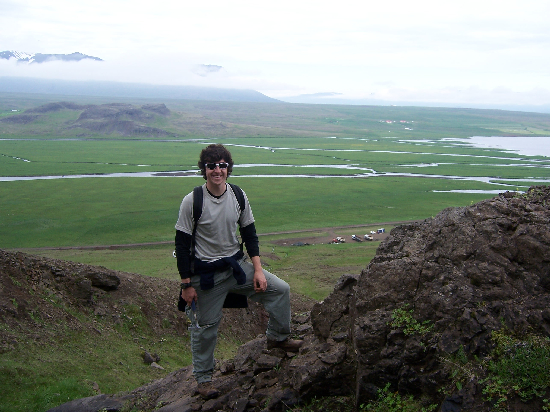
Rob poses while searching for zeolites in sunny Iceland (not really sunny).

Rob poses while searching for zeolites in sunny Iceland (ha ha Estonia Group).

Adam conquers Vatnsdalsfjall on his way to the top to sample rhyolites.

Adam conquers Vatnsdalsfjall on his way to the top to sample rhyolites.

We’re living in a house with 12 people – sounds like a reality show (The Geology World or Big Brother: Geo-Style). Meagen is in a room with 4 girls – it looks like their clothes exploded. Todd, Rob, and Adam are sharing a room – it smells…refreshing(?). They have swum in the arctic ocean EVERY DAY since we arrived. They are CRAZY!

We’re going to be here until July 14. Sadly, we’ll be missing the Hunavaka, a local celebration with colorful balloons and music. Still, every day is a celebration when you’re doing geology!

Posted in Uncategorized | Tagged , , , , | Leave a comment

A Second Project Emerges on the Glorious Fourth of July

KAUGATUMA, SAAREMAA, ESTONIA–It is always an important moment for a Wooster geology research team when it identifies its final student independent study project. Today Palmer Shonk found his. There is a remarkable exposure of a high-energy deposit in the Aigu Beds (Kaugatuma Stage, Upper Silurian) on the Sõrve Peninsula of southwestern Saaremaa island. These rocks have spectacular crinoid materials, including elaborate holdfasts, along with stromatoporoids, bryozoans and brachiopods. The sediments still retain their original dune bedding forms showing the high energy conditions under which they were deposited.

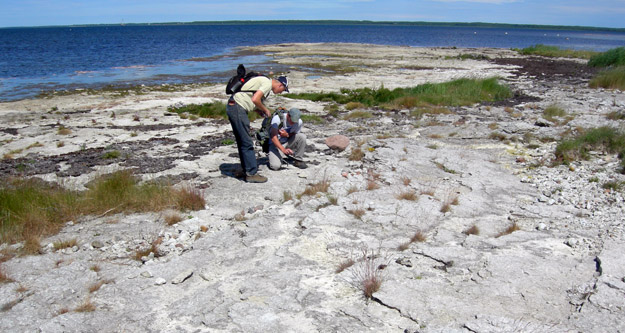
Palmer and Rob at the Kaugatuma locality.  I probably shouldn't point out again the spectacular weather.  That would be like bragging.

Palmer and Rob at the Kaugatuma locality (N58.12409°, E22.19375°). I probably shouldn't point out again the spectacular weather. That would be like bragging.

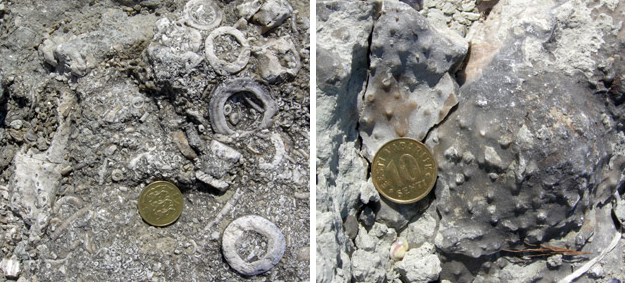
Crinoid fragments (left) and well-preserved stromatoporoids (right) at the Kaugatuma locality.

Crinoid fragments (left) and well-preserved stromatoporoids (right) at the Kaugatuma locality.

Palmer’s job will be to understand the original organisms and the environments in which they lived and died (a paleocommunity study) as well as the means by which the remains were redistributed and preserved (a taphonomy study). It is exciting material which will make an excellent project.

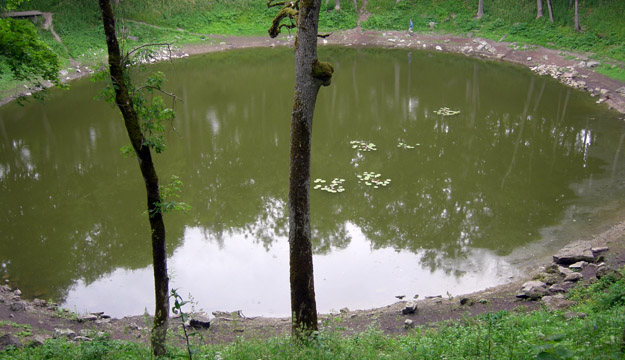
At the end of the day we said good-bye to our generous and thoughtful Estonian hosts Olev and Ingrid Vinn. We are on our own now in Estonia, but they’ve trained us well. They left us at the marvelous Kaali Meteorite Craters, estimated to be about 7500 years old.

The main Kalli meteorite crater.  On the far side of the pond you may see a spot of blue.  That is Rob McConnell performing his job as a scale very well.

The main Kaali meteorite crater. On the far side of the pond you may see a spot of blue. That is Rob McConnell performing his job as a scale very well.

Posted in Uncategorized | Tagged , , | Leave a comment

Heavy Soviet Footprints Remain

TAGAMOISA PENINSULA, SAAREMAA, ESTONIA–The Soviet Union forcibly occupied Estonia in 1940-41, it was briefly replaced by German invaders from 1941 until 1944, and Soviet occupation resumed in 1944 until Estonian independence in 1991.  Tens of thousands of Estonians were deported to Siberia and Kazakhstan.  Tens of thousands more were forcibly conscripted into the Red Army in World War II (only 30% returned home), and thousands were executed.  It is a wonder of history that this small country survived such Soviet oppression and then flourished so quickly when it liberated itself less than two decades ago.

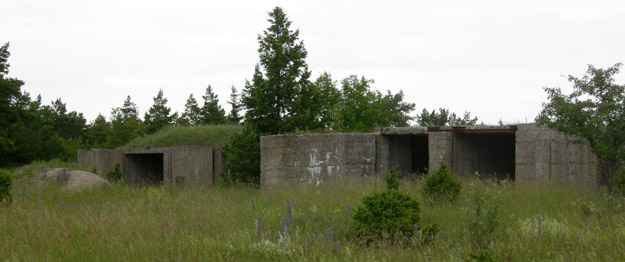
The Soviets turned coastal Estonia into a vast fortified area, closing long coastlines and declaring all the islands as restricted “border zones”.  Estonians could not even visit most of their own northern shores and islands.  Abandoned Soviet concrete bunkers and other military facilities are still very common along the coasts and in the interior.

Soviet bunkers which once housed anti-aircraft missile batteries near Suuriku Cliff, northern Saaremaa, Estonia.

Soviet bunkers which once housed anti-aircraft missile batteries near Suuriku Cliff, northern Saaremaa, Estonia.

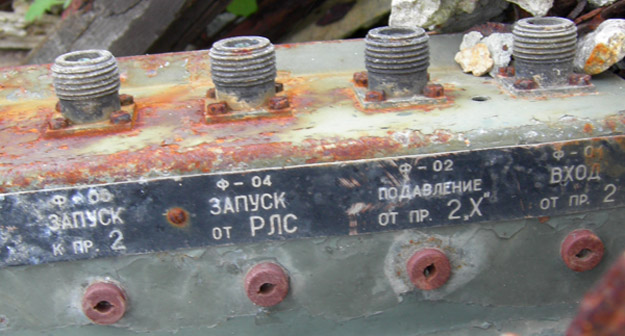
Abandoned Soviet electronics gear at the Suuriku base.

Abandoned Soviet electronics gear at the Suuriku base.

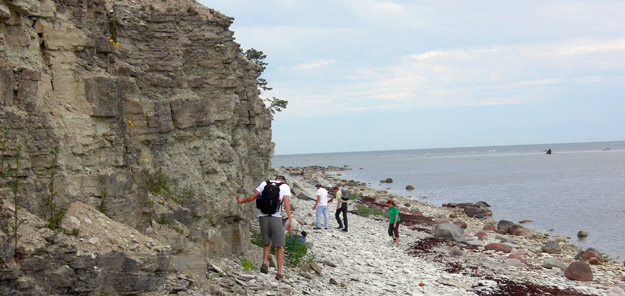
Today by Estonian law, all land within 300 meters of a coastline has guaranteed public access.  Vast amounts of territory were liberated when the Soviets finally evacuated all their troops in 1994.  As scientists we intersect this tragic and ultimately inspiring history when we visit these once forbidden coastlines.  We look at rocks and fossils which were untouched by geologists for over half a century.  It is a celebration to bring information from these wonderful regions out into free scientific dialogue again.

Suuriku Cliff formed of Lower Silurian limestones and shales (N58.50681°, E22.00334°).  This coastline has been available to geologists for less than 20 years.

Suuriku Cliff formed of Lower Silurian limestones and shales (N58.50681°, E22.00334°). This coastline has been available to geologists for less than 20 years.

Posted in Uncategorized | Tagged | Leave a comment