Processing the Lake Core (and Tree Cores)

Earlier posts from the Climate Change class showed the students coring trees and a lake for the various analysis described below. The goals are to examine climate in Ohio since the last Ice Age as recorded in lake sediments and to determine how various tree species respond to changes in temperature and moisture.
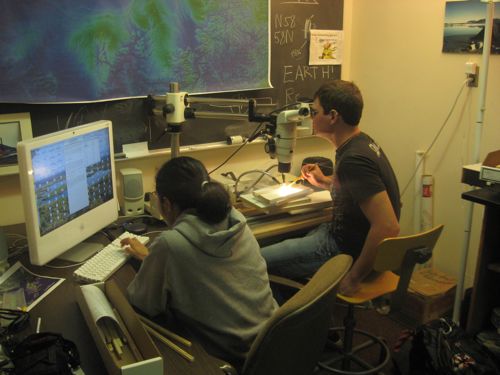
Kelly and Adrian finish up the European Larch tree-ring chronology. The larch trees were sampled at the Secrest Arboretum in Wooster.
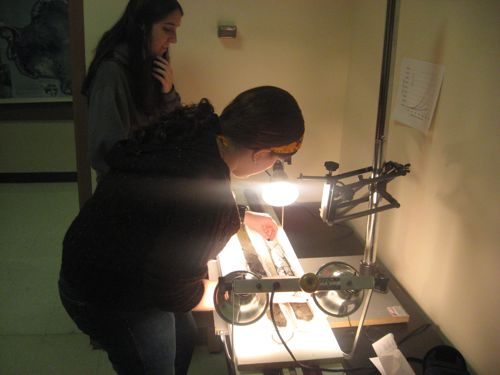

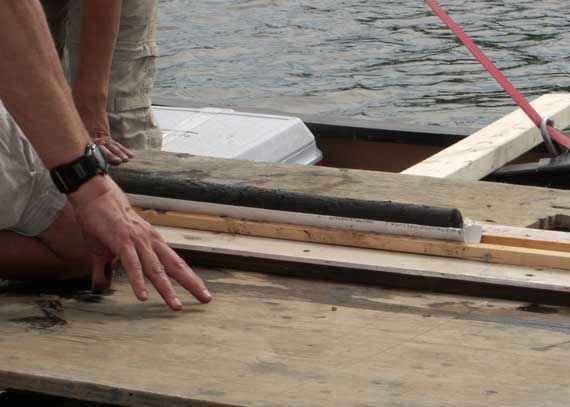
Roz and Houston photographed the A and B core in their entirety - over 25 meters of mud.  Lower down in the post are three of their photos showing the variability in the sediment core.
Roz and Houston photographed the A and B sediment core taken from Long Lake located just south of Wooster. These core is over 14 meters of mud. Lower down in the post are three of their photos showing the variability in the sediment core.
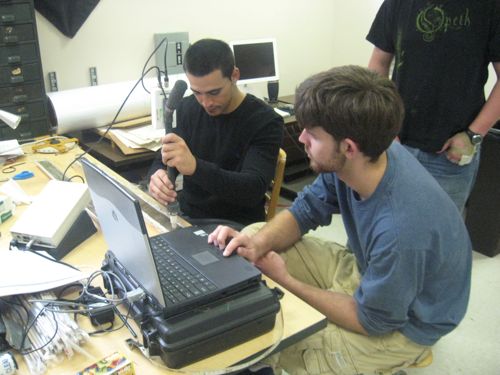
masusc
Travis and Adonis collect magnetic susceptibility data on each of the thrusts
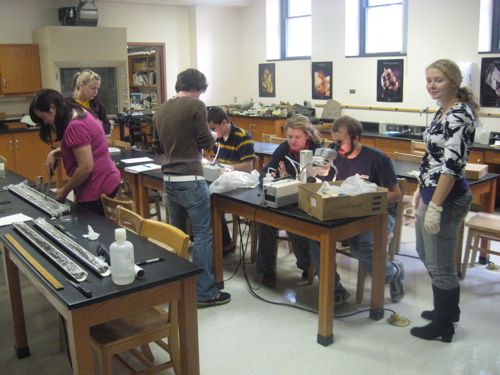
interdisc
This interdisciplinary team of English, Archaeology, History and Geology majors pick through the mud to locate organics for radiocarbon and to identify some of the flora and fauna in the mud such as seeds, charcoal, chironomids and fly wings
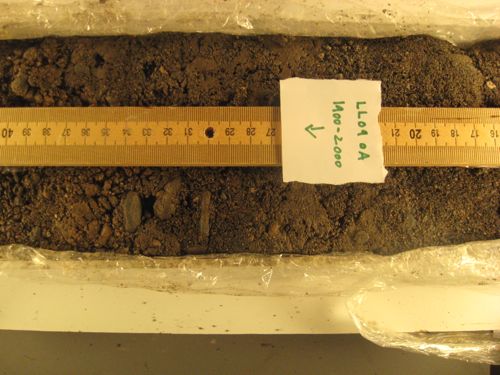
The is the base of the core - Late Glacial sands and gravel - at this horizon, Lindsey and Amanda  removed a stick that has been sent out for radiocarbon analysis.
The is the base of the core – Late Glacial sands and gravel, Lindsey and Amanda removed a stick from this interval that has been sent out for radiocarbon analysis. A date here will give a good estimate of when the region near Long Lake was deglaciated.
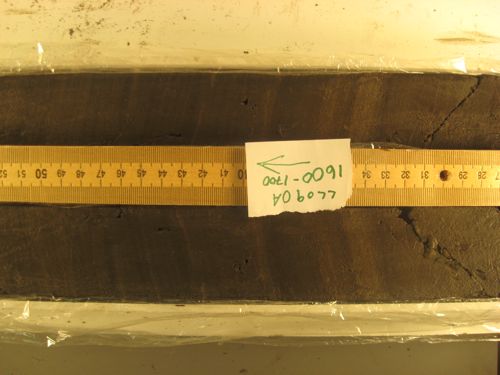
These laminated sediments represent the glacial-interglacial transition, which includes the glacial-Bolling-Allerod and Younger Dryas-Holocene transitions.
These laminated sediments represent the glacial-interglacial interval, which includes the Glacial-Bolling-Allerod and Younger Dryas-Holocene transitions.
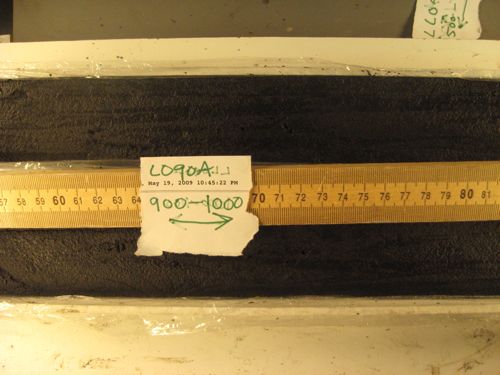
The upper portions of the cre are primarily back, organic-rich muds with occasional loess layers - are these abrupt climate changes? The class is working on sorting all that out.
The upper portions of the core are primarily back, organic-rich muds with occasional loess layers – are these abrupt climate changes? The class is working on sorting all that out.
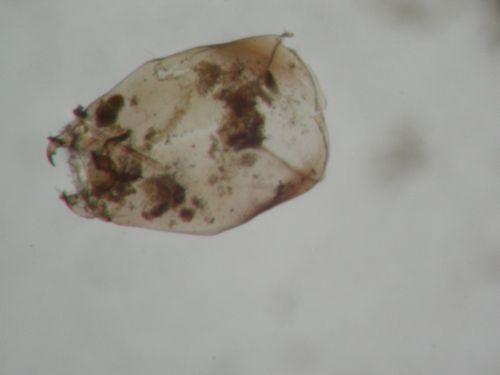
Rob and Bridgett picked this chironomid ffrom the 7th meter down in the core.
Rob and Bridgett picked this chironomid from the 7th meter down in the core.
Posted in Uncategorized | Tagged | 2 Comments

Newark Earthworks

Dr. Pollock is teaching a First Year Seminar on the Collapse of Civilization and on Saturday, she and her students visited the Newark Earthworks. The earthworks consist of geometric earthen mounds that were built by the Hopewell people between 100 BC and 500 AD. At the museum, we learned that mounds served as a ceremonial, spiritual site. When asked about the collapse of the Hopewell, our guide, Jim, replied that we don’t really know what caused their demise. He listed several possibilities: disease, war, and migration. In our FYS, we’re exploring all of these and more.

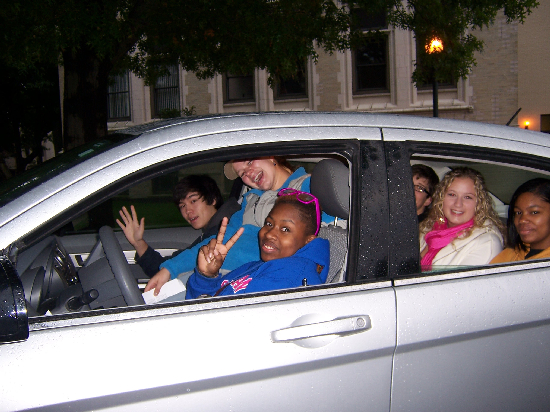
Students piled into one car while waiting leave early on Saturday morning. They eventually squeezed 8 bodies into this vehicle. Talk about a tightly-knit group!

Students piled into one car while waiting leave early on Saturday morning. They eventually squeezed 8 bodies into this vehicle. Talk about a tightly-knit group!

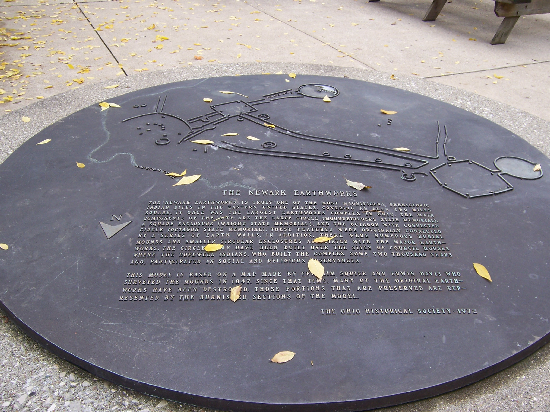
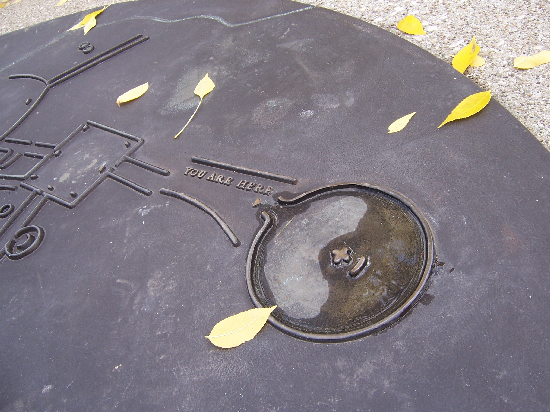
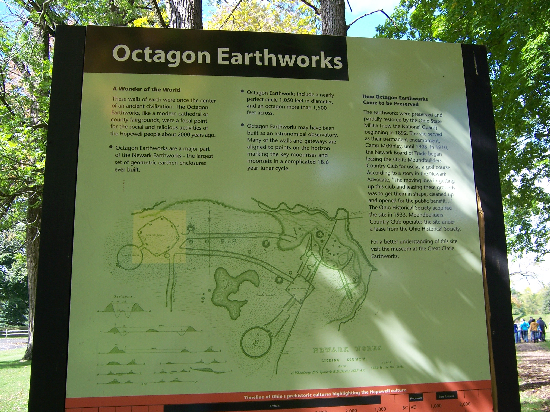
The plaque outside of the museum shows an overview of the Newark Earthworks.

The plaque outside of the museum shows an overview of the Newark Earthworks.

After visiting the museum, we toured the Great Circle and the Eagle Mound.

After visiting the museum, we toured the Great Circle and the Eagle Mound.

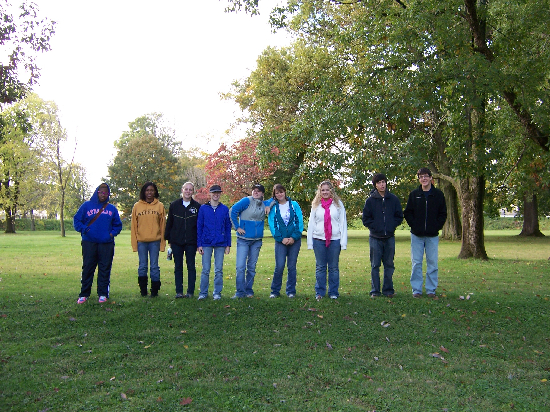
Our group is lined up on one of the small semi-circle mounds inside of the Great Circle, behind the Eagle Mound.

Our group is lined up on one of the small semi-circle mounds inside of the Great Circle, behind the Eagle Mound. From left to right: Laura Haldane, Whitney Sims, Alex Harmony, Adrienne James, Megan Innis (TA), Chrissy Duchane, Jackie O'Dell, Derick Evans, and Stipo Josipovic.

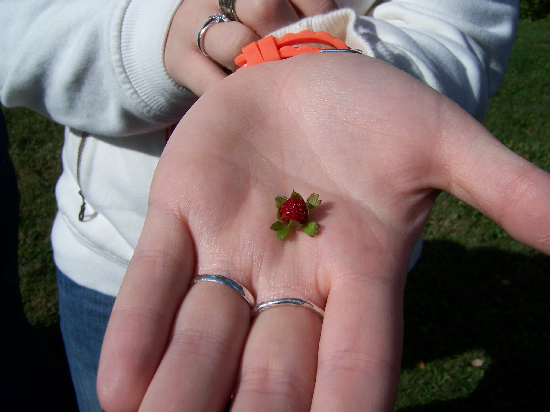
Fortunately, we had warm, sunny weather. Nature agreed with our mood, and provided a display of bright red, wild berries growing in the grass in the Great Circle.

Fortunately, we had warm, sunny weather. Nature agreed with our mood, and provided a display of bright red, wild berries growing in the grass in the Great Circle.

After lunch, we visited the Octagon Earthworks. Although a private golf course currently sits within the Octagon, we were able to see the mounds from a viewing platform.

After lunch, we visited the Octagon Earthworks. Although a private golf course currently sits within the Octagon, we were able to see the mounds from a viewing platform.

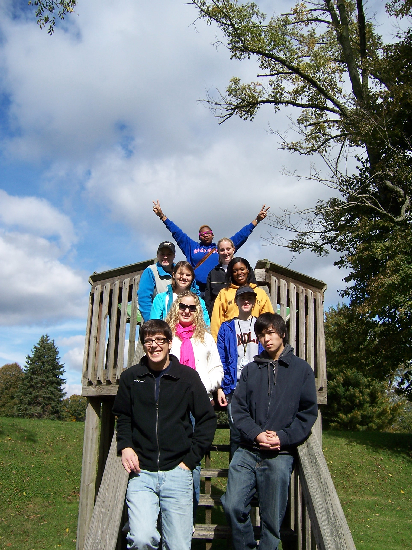
Our group poses on the Octagon viewing platform. (Note the fabulous weather!). The mounds that link the Octagon to the circle are in the background.

Our group poses on the Octagon viewing platform. (Note the fabulous weather!). The mounds that link the Octagon to the circle are in the background.

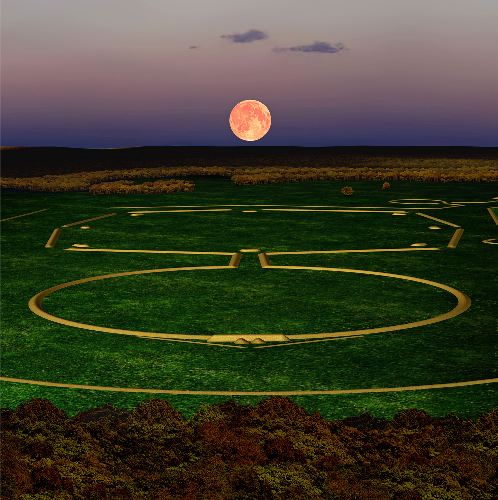
Digital image showing the Newark Moonrise. The northernmost moonrise occurs every 18.6 years and lies directly along a line extending from the observatory mound, across the Circle, through the link, and across the Octagon. Lines drawn in other directions across the earthworks align with other moon phases. Digital image by CERHAS University of Cincinnati, courtesy of Cleveland Museum of Natural History.

Digital image showing the Newark Moonrise. The northernmost moonrise occurs every 18.6 years and lies directly along a line extending from the observatory mound, across the Circle, through the link, and across the Octagon. Lines drawn in other directions across the earthworks align with other moon phases. Digital image by CERHAS University of Cincinnati, courtesy of Cleveland Museum of Natural History.

Posted in Uncategorized | Tagged , , | 1 Comment

Wooster Geologists Start a New School Year

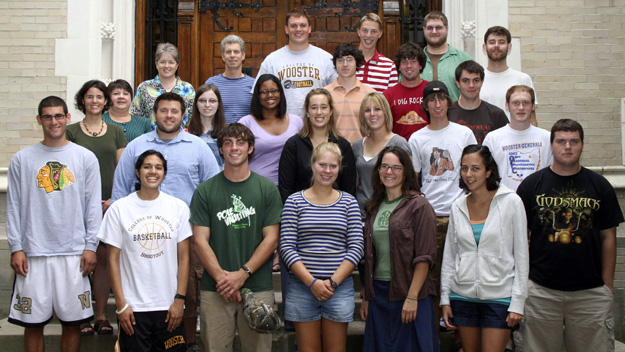
WOOSTER, OHIO–We started this blog with an image of the 2008-2009 Geology Club members, and it is already time to introduce the 2009-2010 Wooster Geology Club —

geoclub2009-10

A happy, enthusiastic and eager crew they are! We are looking forward to a new year of exploration and discovery, and we hope to post many new adventures, academic and otherwise, on these pages.

Posted in Uncategorized | Tagged | 3 Comments

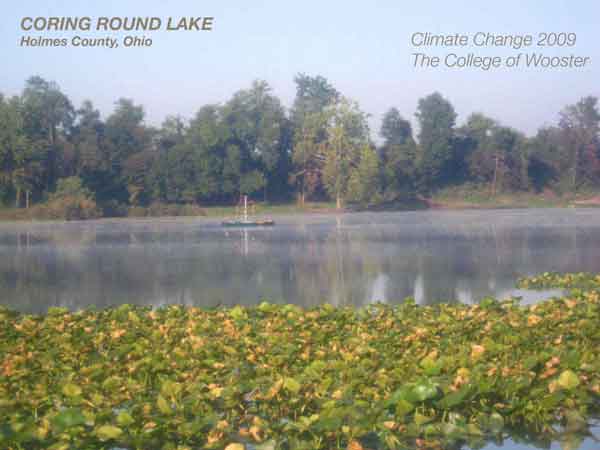
Coring Round Lake – A Record of Post Glacial Change

Dr. Tom Lowell and tow University of Cincinnati graduate students Estaben and Bill were kind enough to make the trip to Long Lake to help the Climate Change class extract two long (14 meter) sediment cores from the middle of the lake.

Dr. Tom Lowell and two University of Cincinnati graduate students, Esteban and Bill, were kind enough to make the trip to Long Lake to help the Wooster Climate Change class extract two long (14 meter) sediment cores from the middle of the lake.

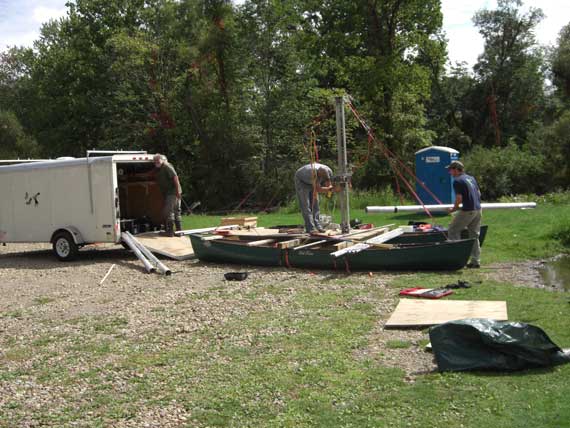
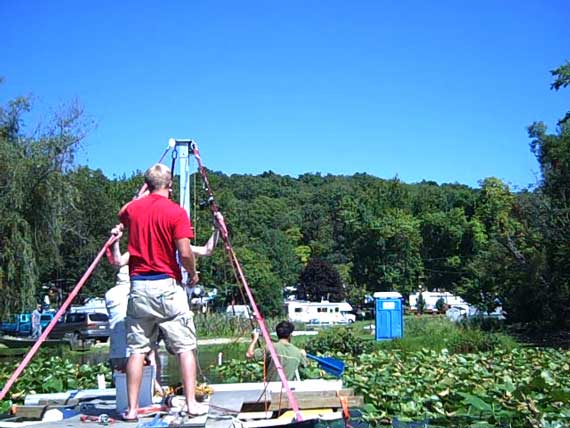
The first step was to build the raft. Dr. Lowell (aka "the core boss") is in the trailer. Bill and Rob assemble the parts and pieces.

The first step was to build the raft. Dr. Lowell (aka "the core boss") is in the trailer. Bill and Rob assemble the parts and pieces.

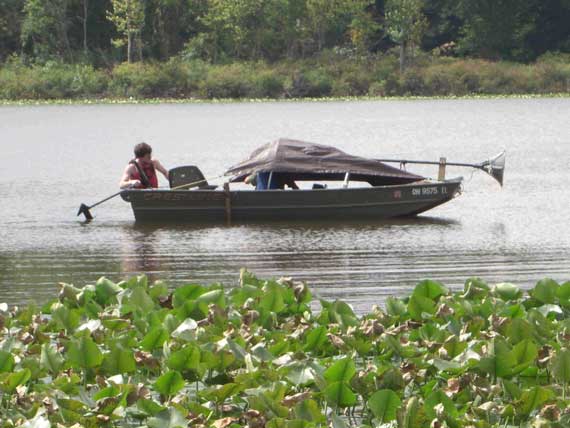
Terry Workman (Archaeology major and course TA) drives the geophysical craft. Under the tarp os Esteban who is colecting bathymetric and seismic data. Based on these data a core site was chosen.

Terry Workman (our course TA) drives the geophysical craft. Under the tarp is Esteban who is collecting bathymetric and seismic data. Based on these data a core site was chosen.

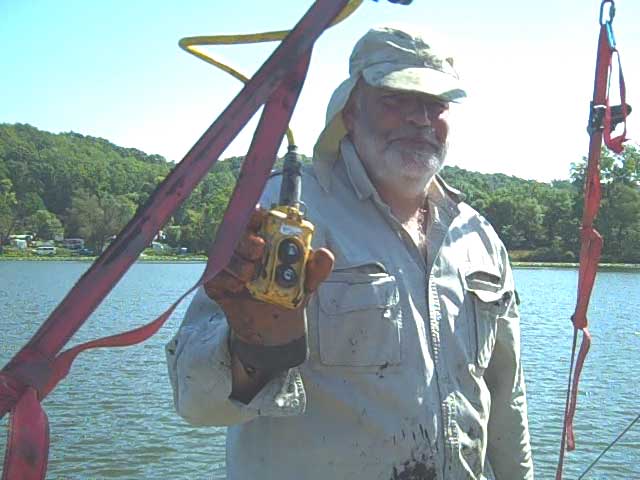
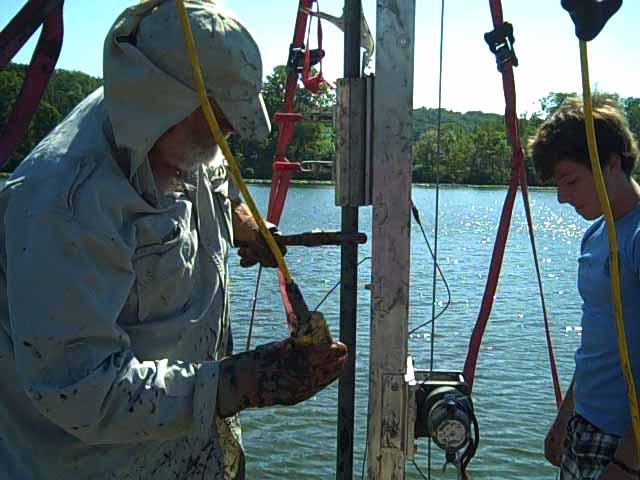
The core boss gives us a short course on the operation of the coring platform. Dr. Lowell has custom-built this rig and he points out the automated coring system. A hydraulic system drives the Livingstone corer into and out of the mud.

The core boss gives us a short course on the operation of the coring platform. Dr. Lowell has custom-built this rig and he points out the automated coring system. A hydraulic system drives the Livingstone corer into and out of the mud.

Well into the Holocene - Esteban wraps up another meter of lacustrine sediment.

Well into the Holocene - Esteban wraps up another meter of lacustrine sediment.

Tom and Terry work the platform sending the piston corer down for another meter.

Tom and Terry work the platform sending the piston corer down for another meter.

The crew rows to shore. The class will now obtain organic material for radiocarbon dating and then the work begins analyzing a suite of parameters in the cores. Class members Lindsey and Amanda located a stick at the base of the core that has been sent for a radiocarbon age and should give us an estimate of the timing of deglaciation in the region. Will Hansen (red short) wil be using the upper part of the core together with our other collections from Round. O'Dell and Browns Lake for his Independent Study.

The crew rows to shore. The class will now obtain organic material for radiocarbon dating and then the work begins analyzing a suite of parameters in the cores. Class members Lindsey and Amanda located a stick at the base of the core, this has been sent for a radiocarbon age and should give us an estimate of the timing of deglaciation in the region. Will Hansen (red shirt) will be using the upper part of the core together with our other collections from Round, O'Dell and Browns Lake for his Independent Study.

Posted in Uncategorized | Tagged | 4 Comments

Climate Change Class at Secrest Arboretum

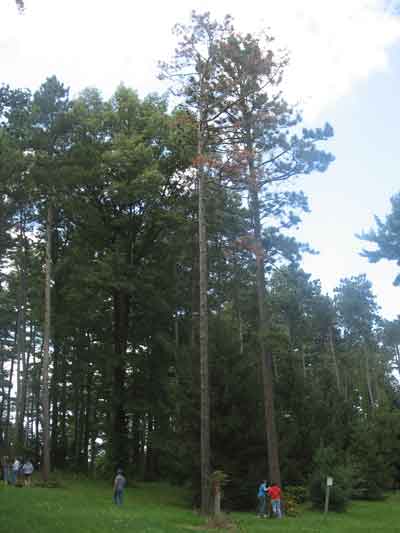
Adrian (Philosophy) and Kelly (Geology) core a European Larch for an ecological response study using tree-rings

Adrian (Philosophy) and Kelly (Geology) core a European Larch for an ecological response study using tree-rings. The class will compare how various trees are responding to climate variability over the last 100 years or so. The site is the Secrest Arboretum of Ohio State University's OARDC. We thank Ken Cochran, Director of the facility for permission to do this study.

Chesea and Adonic core a Norway Spruce

Chesea (Archaeology) and Adonis (Political Science) core a Norway Spruce

Houston and Roz sneak up on a Pondersosa Pine and obtain a core

Houston (Religious Studies) and Roz (Archaeology) sneak up on a Pondersosa Pine and obtain a core

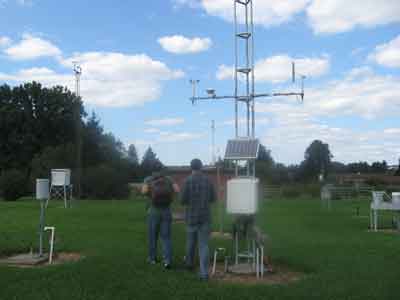
Travis and Adrian at the OARDC Meteorolgical Station. After the class develops tree-ring chronologies they will compare the ring-width series to the long (>100 year) record of monthly temperature and precipitation records from this site.

Travis and Adrian at the OARDC Meteorological Station. After the class develops tree-ring chronologies they will compare the ring-width series to the long (>100 year) record of monthly temperature and precipitation records from this site.

Posted in Uncategorized | Tagged | 2 Comments

Mineralogy-Structure Field Trip to Pennsylvania

Last weekend, Dr. Judge’s and Dr. Pollock’s Structure and Mineralogy classes took a field trip to central Pennsylvania. It rained on Saturday, but that didn’t stop us from having a great time. We saw the most amazing pencil structures in the Reedsville Shale.

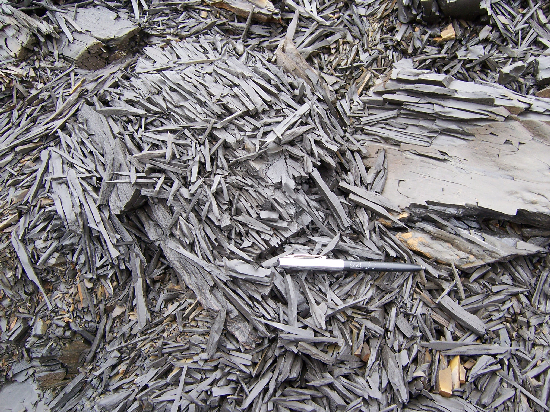
The intersection of cleavage and bedding create "pencils."

The intersection of cleavage and bedding in the Reedsville Shale creates "pencils."

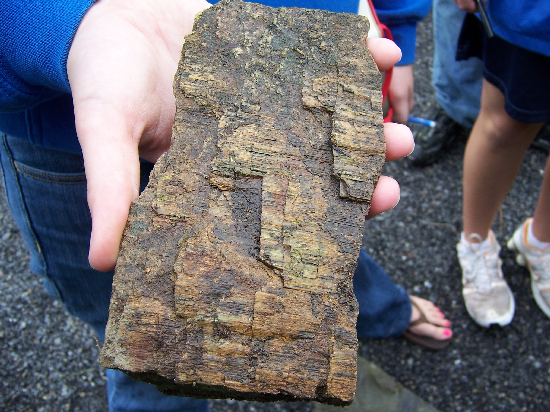
In the Bald Eagle Formation just a short drive down the road, we found textbook examples of slickenfibres. Slickenfibres are elongated minerals that grow along a fault plane parallel to the direction of motion.

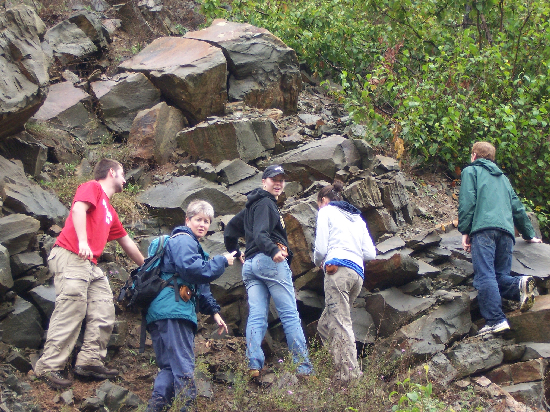
Colin Mennett, Dr. Shelley Judge, Megan Innis, Becky Alcorn, and Andrew Retzler excited about slicken-fibers along a fault surface in the Bald Eagle Formation.

Colin Mennett, Dr. Shelley Judge, Megan Innis, Becky Alcorn, and Andrew Retzler are excited about slickenfibres along a fault surface in the Bald Eagle Formation.

Close-up view of the slicken-fibres.

Close-up view of the slicken-fibres.

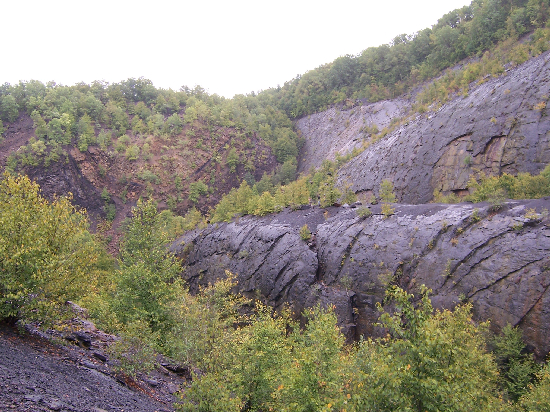
Next, we went to the Bear Valley Strip Mine. The beautifully exposed folds and giant iron concretions are simply breathtaking!

Bear Valley Strip Mine. Notice the person in the yellow jacket (center of the picture) for scale.

Bear Valley Strip Mine. Notice the person in the black jacket (center of the picture) for scale.

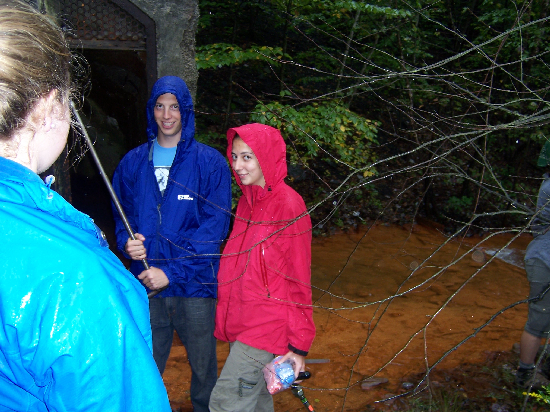
Finally, we stopped to sample some (very orange) acid mine drainage at a nearby pump slope.

Palmer Shonk and Becky Alcorn standing beside a river full of "yellow boy," an iron hydroxide phase that is precipitating from acid mine drainage.

Palmer Shonk and Becky Alcorn standing beside a river full of "yellow boy," an iron hydroxide phase that is precipitating from acid mine drainage.

Become a fan of the College of Wooster Geology Department page on Facebook and see more photos from this trip!

Posted in Uncategorized | Tagged , , , , , | 2 Comments

Wooster Geologist = NPR Star

Tree rings, Lake Erie, and climate change are the topics of a recent NPR interview with Wooster’s own Greg Wiles. Greg and his research group have been making headlines for their study that suggests natural climate variability plays a role in controlling changes in Lake Erie’s level. Stay tuned for more developments from Wooster’s Tree Ring Lab!

From the Guardian, May 14, 2009 issue.

From the Guardian, May 14, 2009 issue.

Posted in Uncategorized | Tagged , , , | Leave a comment

End of Wooster Israeli Fieldwork — For Now

MITZPE RAMON, ISRAEL–After today’s work near Makhtesh Ramon, our fieldwork is over for this season.  This evening I pack up our collections in my luggage, have a last dinner with Yoav and his family in their desert home, and then get some sleep before a very early departure tomorrow morning.  I am looking forward to returning soon with Wooster Independent Study students to continue our work in the Mesozoic rocks of southern Israel.

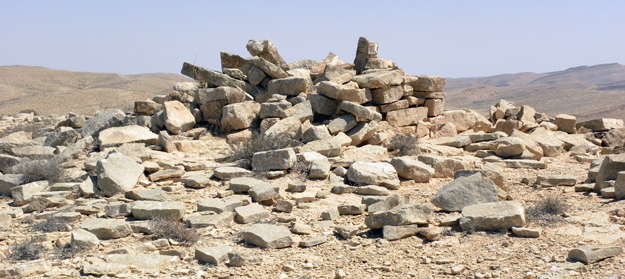
A Bronze Age tumulus (rock-covered grave) at the top of a hill north of Makhtesh Ramon.

A Bronze Age tumulus (rock-covered grave) at the top of a hill north of Makhtesh Ramon.

Posted in Uncategorized | Tagged , , | Leave a comment

A Bit of Vertebrate Paleontology

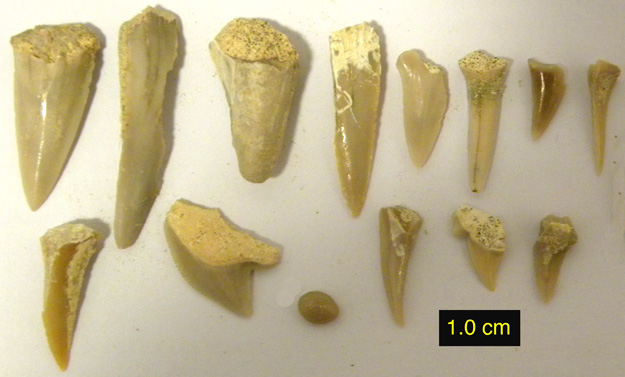
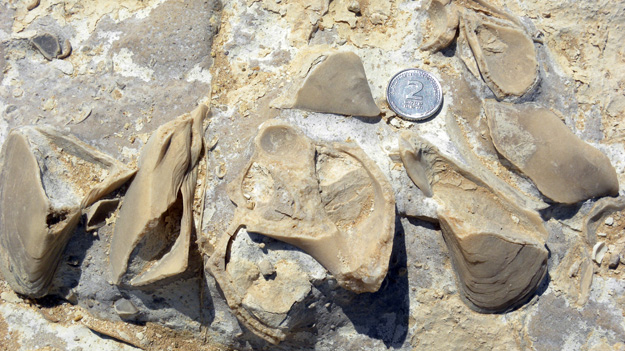
MAKHTESH RAMON, ISRAEL–On my last day of fieldwork Yoav took me to some wonderfully complex exposures of Cretaceous and Tertiary rocks just north of Makhtesh Ramon. They tell a story of the origins of the Makhtesh anticlinal structure, especially the date it appeared and whether it was ever exposed as an island before its center was eroded away. Part of the debate comes down to the depth at which certain Santonian (Cretaceous) sediments were deposited. These sediments contain oysters and exquisite shark’s teeth. We collected a nice set (see below) which I will attempt to identify to see if we can use what we may know about these sharks to determine the depth of deposition.

Cretaceous shark teeth collected from just north of Makhtesh Ramon (N30.56235°, E34.64876°).

Cretaceous shark teeth collected from just north of Makhtesh Ramon (N30.56235°, E34.64876°).

Posted in Uncategorized | Tagged , , , | 1 Comment

Wading in the Jurassic Sea

Another indication of how shallow the seas were in the Middle Jurassic of southern Israel.  This bedding plane in the Matmor Formation of Makhtesh Gadol has a gastropod (snail) fossil in the center of the image surrounded by angular shells of fossil mytilids (clams commonly called mussels today).  In life the mytilids had attached to the gastropod and each other by fine yet strong byssal thread produced by a special gland.  This kind of relationship is very common in tidal pools and other shallow areas where wave action is strong.

Another indication of how shallow the seas were in the Middle Jurassic of southern Israel. This bedding plane in the Matmor Formation of Makhtesh Gadol has a gastropod (snail) fossil in the center of the image surrounded by angular shells of fossil mytilids (clams commonly called mussels today). In life the mytilids had attached to the gastropod and each other by fine yet strong byssal thread produced by a special gland. This kind of relationship is very common in tidal pools and other shallow areas where wave action is strong.

Posted in Uncategorized | Tagged , , , | Leave a comment