


Coring a lake usually involves… a lake. In this case, Dr. Eva Lyon and colleagues from Ohio University are studying Paleolake Buckeye, which probably last had water in the late Pleistocene, over 15 thousand years ago. To study the paleolake, Lyon and colleagues have been collecting sediment cores from what was once the bottom of a lake in eastern West Virginia. In late summer 2024 and 2025, Lyon and Nick Wiesenberg traveled to WV, Livingston corer in tow, to retrieve these cores.
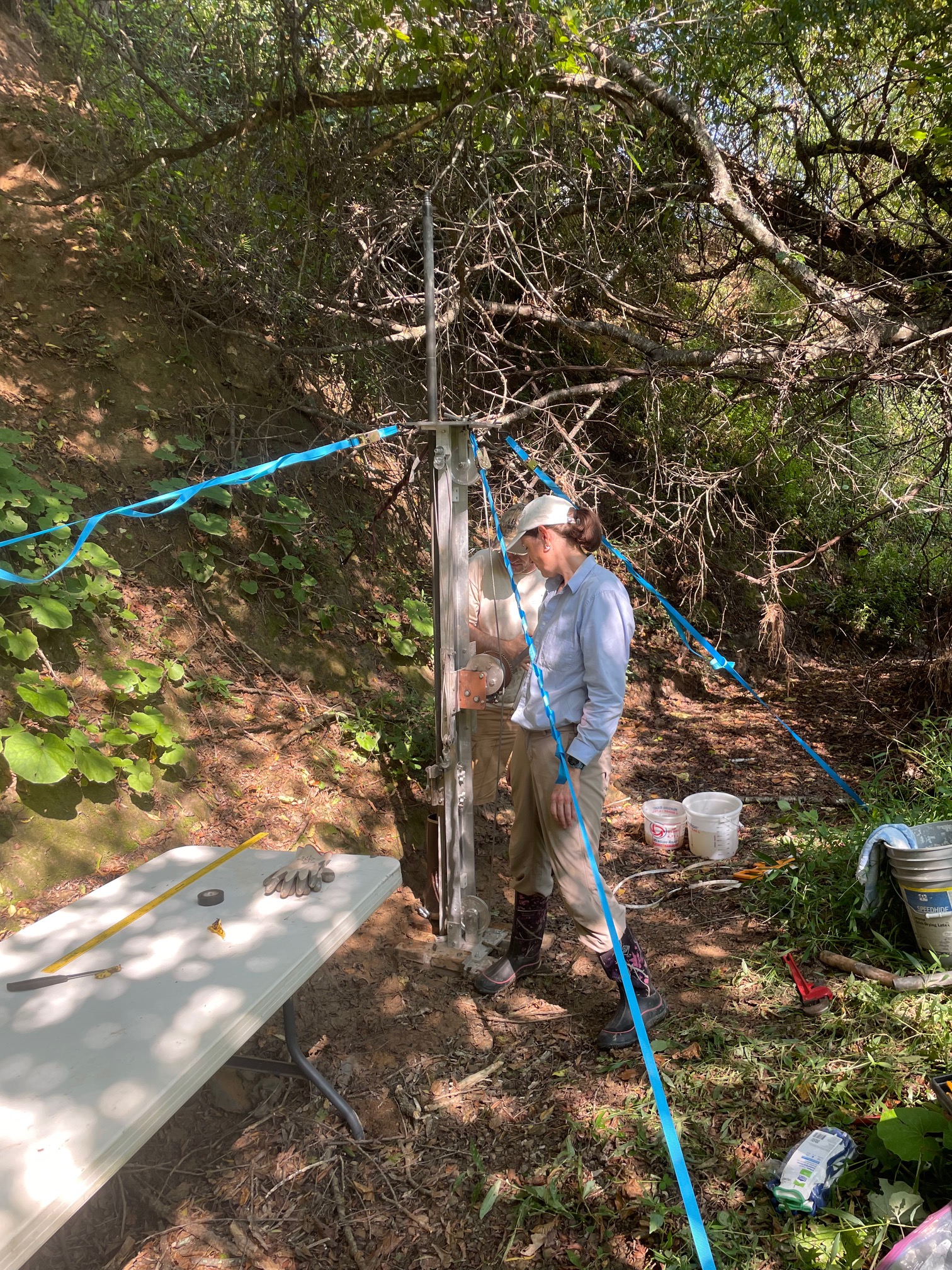
The 2024 campaign, pictured above, was much more successful. Although the stream channel we cored in was dry at the time, a small stream usually trickles through, thoroughly saturating the sediments below our feet. We pulled out over three meters of core, the bottom of which we determined to be over 28,000 years old!
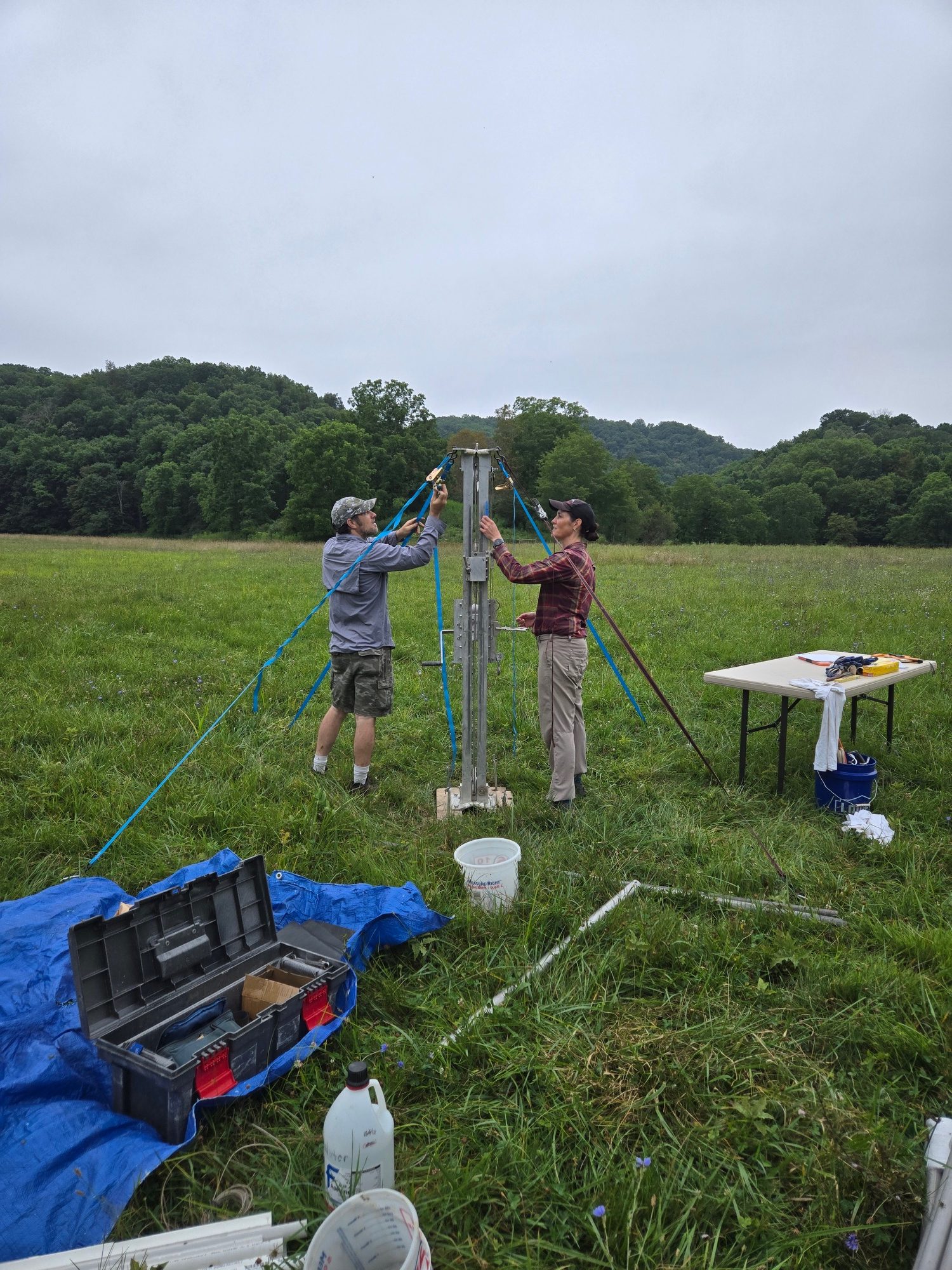
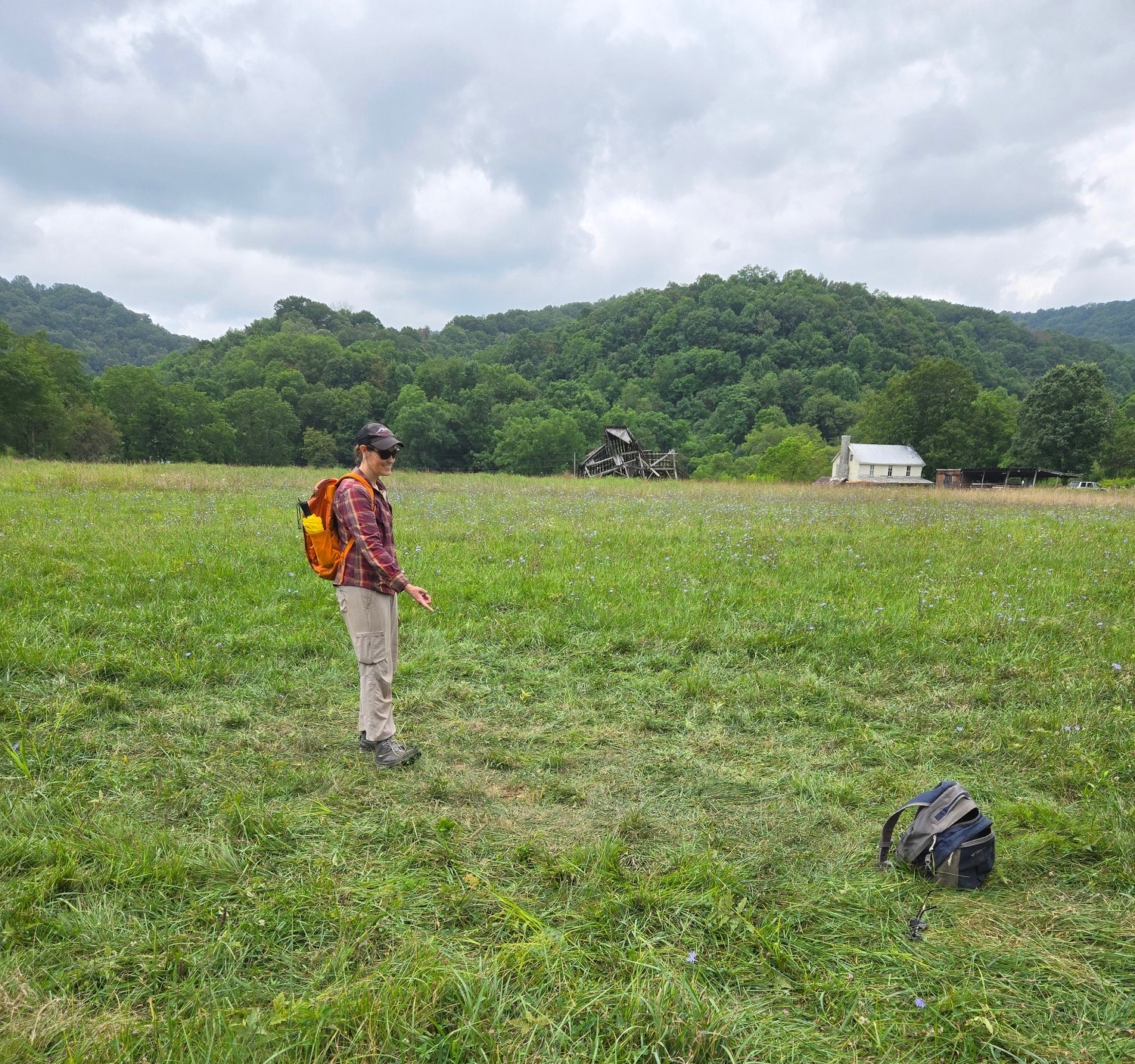
This summer, we tried a different spot, near what we determined to be the middle of the lake, Unfortunately, decades of mowing and cattle grazing, coupled with much less infiltration and saturation made this a much more resistant substrate for coring. We came up empty.
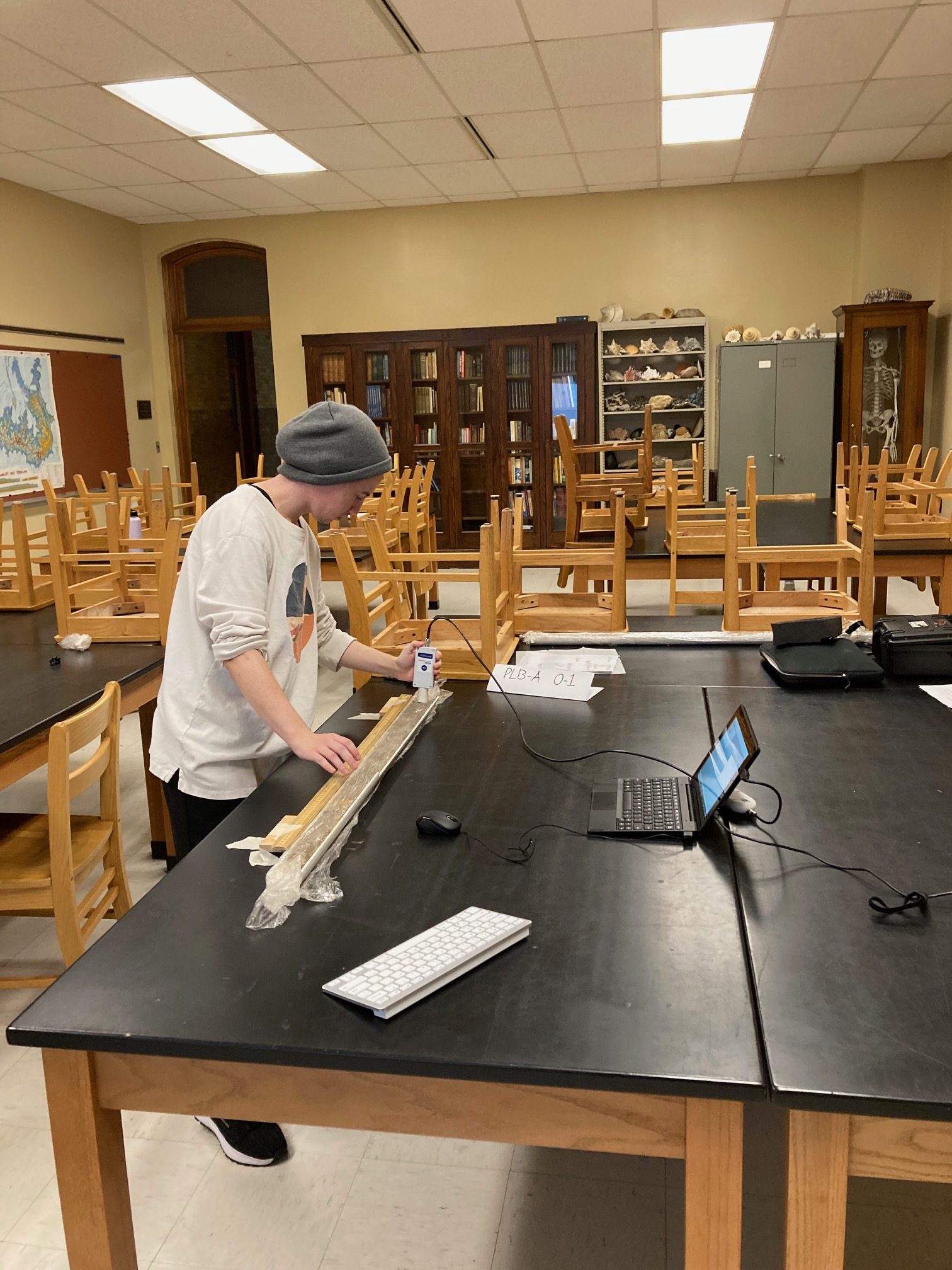
The cores retrieved in 2024 were analyzed this summer by a number of COW undergrad student researchers. Pictured above is Damien Gately operating the magnetic susceptibility probe on the core. This instrument provides an estimate of the relative amounts of iron-bearing minerals in a sample. This measure is often related to grain size, so we can also use it to help us track changes in grain size throughout a core.
There will be much more work to come on this record of late Pleistocene climate and environmental change – stay tuned!