


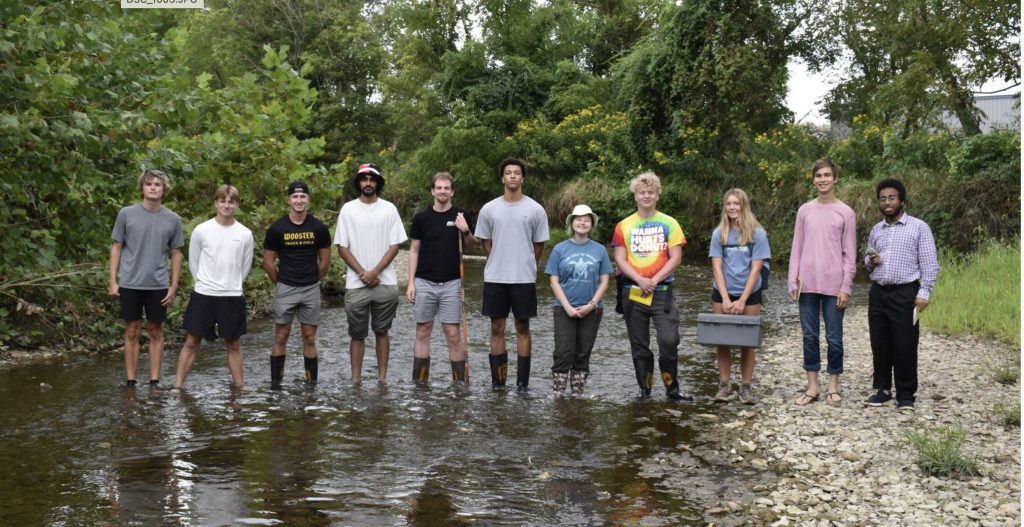
The HYDRO25 Macroinvertebrate team.
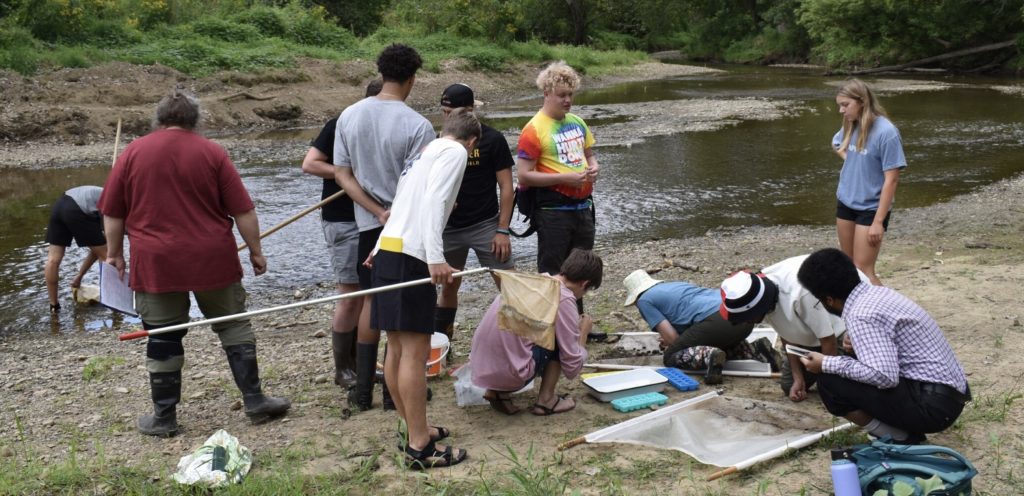 Guest bloggers: Phillipp Drappatz and Elliot Miller, the Hydrology class at the College of Wooster performed a macroinvertebrate survey on 8/25/25 on Apple Creek in Wooster. The first lab of the semester was a trip to Grosjean Park in Wooster. The class was joined by and guided by macroinvertebrate expert Carry Elvie from the CFAES who is also the director of the Bug Zoo. Apple Creek unusually for Ohio is a freestone trout stream under the stewardship of the Clear Fork River chapter of Trout Unlimited, which has been performing surveys since 2012. The purpose of this fieldtrip was to add on the current Trout Unlimited record and to gain insight into the health of the stream based on the assemblage of macroinvertebrates.
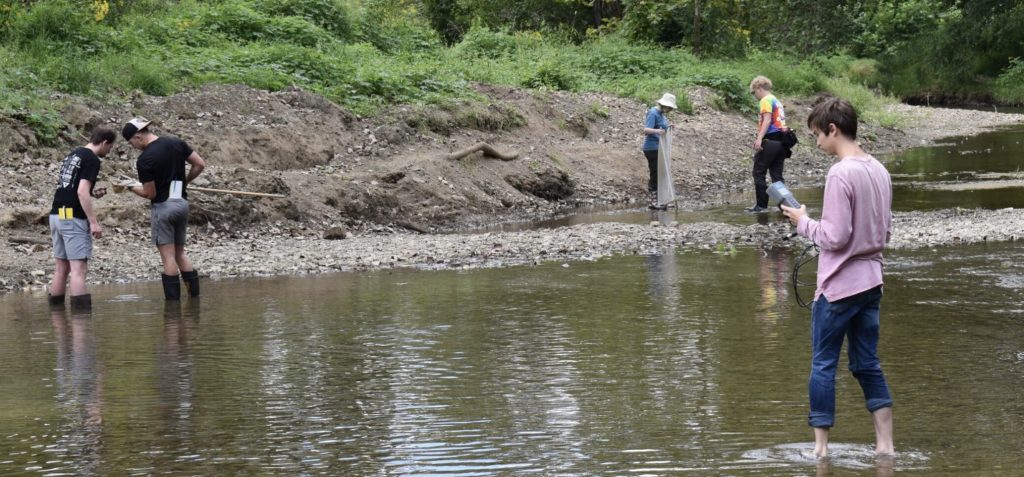
Students using D-nets and kick nets to sample. Aaron in the foreground takes water temperatures and geochemical measurements. Note in the background the stream has been recently modified in an ogoing stream restoration project.
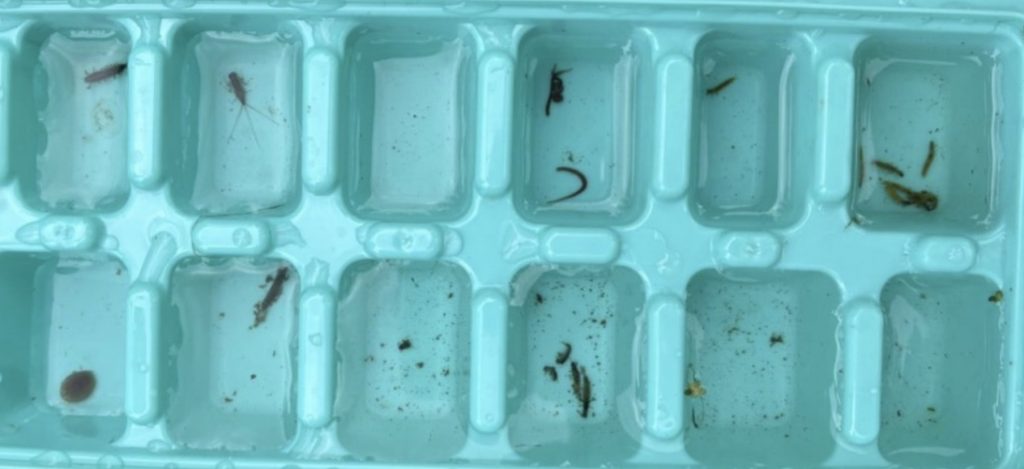
In the tray above we can see a variety of macroinvertebrates separated into groups. On the top row left to right are caddis fly larvae, another different species of caddis fly larvae and a water penny. On the bottom row left to right are yet again another species of caddis larvae, more caddis larvae, annelid worms/leeches, a mayfly larva, and a different species of mayfly larvae.
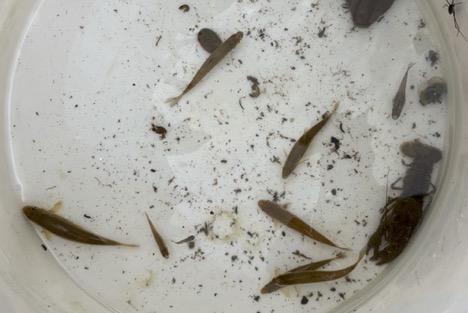
Pictured above is a bycatch of small fish including shiners, stoneroller minnows, and mosquito fish. Macroinvertebrates pictured include a crayfish, a snail and a water slider climbing up the side
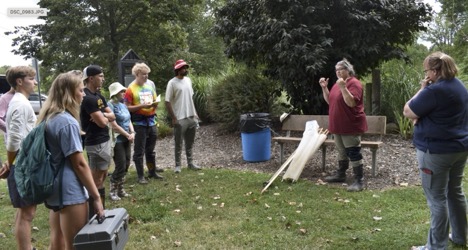
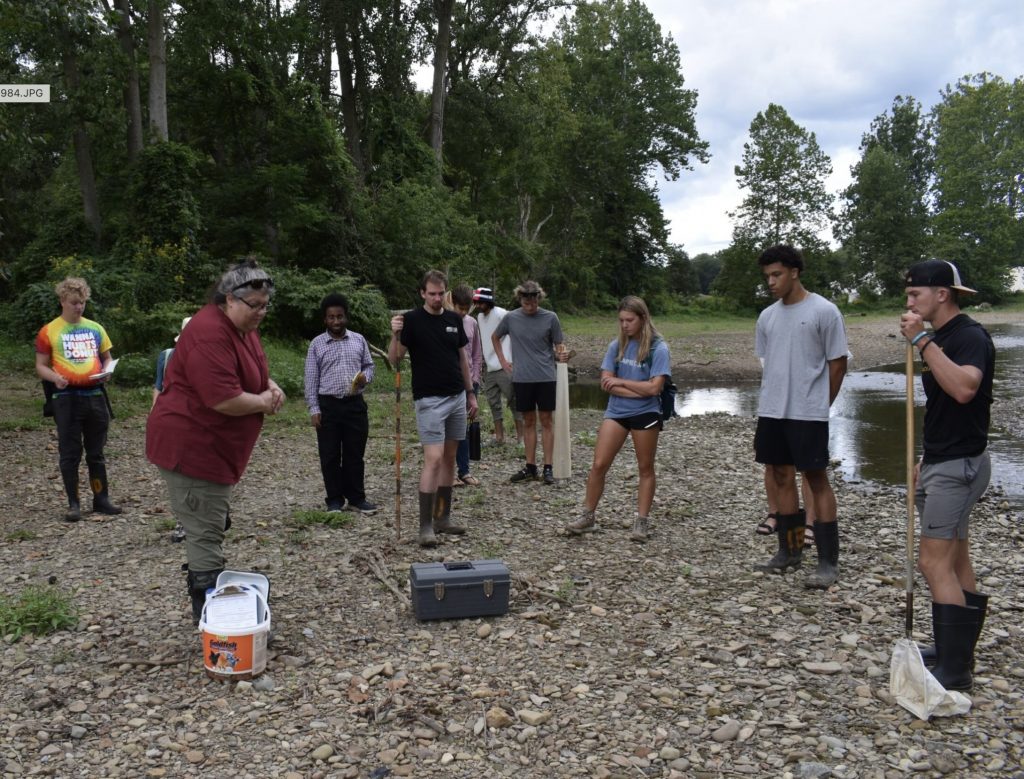
Carrie gave the group a debrief and we headed back to the lab to summarize the data and write the report.
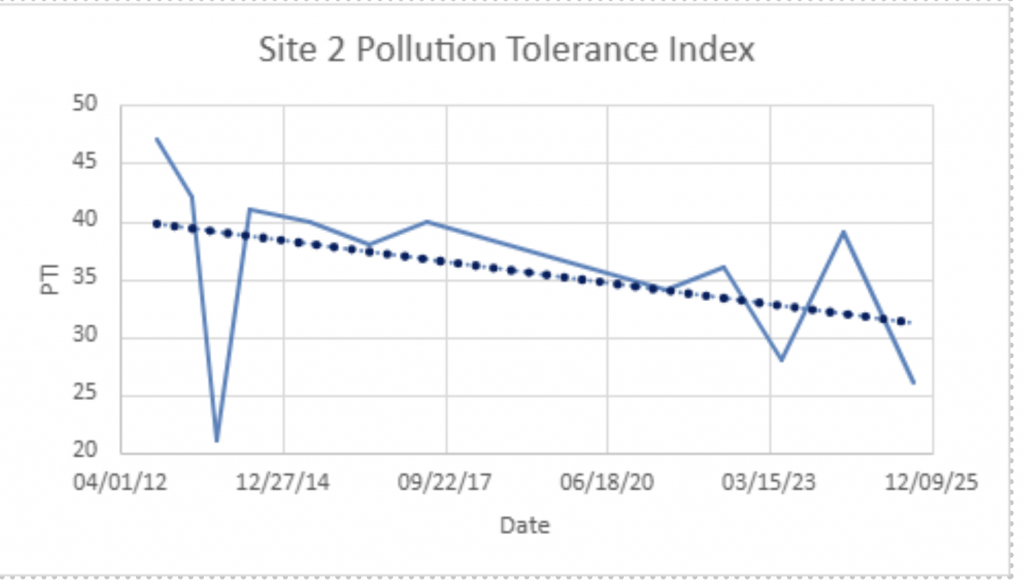

The upshot of the data is the pollution tolerance index at two sites in Apple Creek shows high water quality. This measure is based on the occurrence of the various species mentioned above. The ratings of the mid 20s is an excellent rating in terms of water quality and we have discussed the possible impact the stream restoration and early fall sampling. Note that there is a decline in the curves above at both sites and this will be closely watched as future surveys are done.