


Guest Bloggers SEAK2025: On our final day in Angoon, half of the team took a boat across the bay to Hood Bay Mountain, where our goal was to find suitable mountain hemlocks to add to our chronology. Mountain hemlocks typically start to occur in this region around 2000’, so with no trail to follow, getting up there was quite the bushwhack!
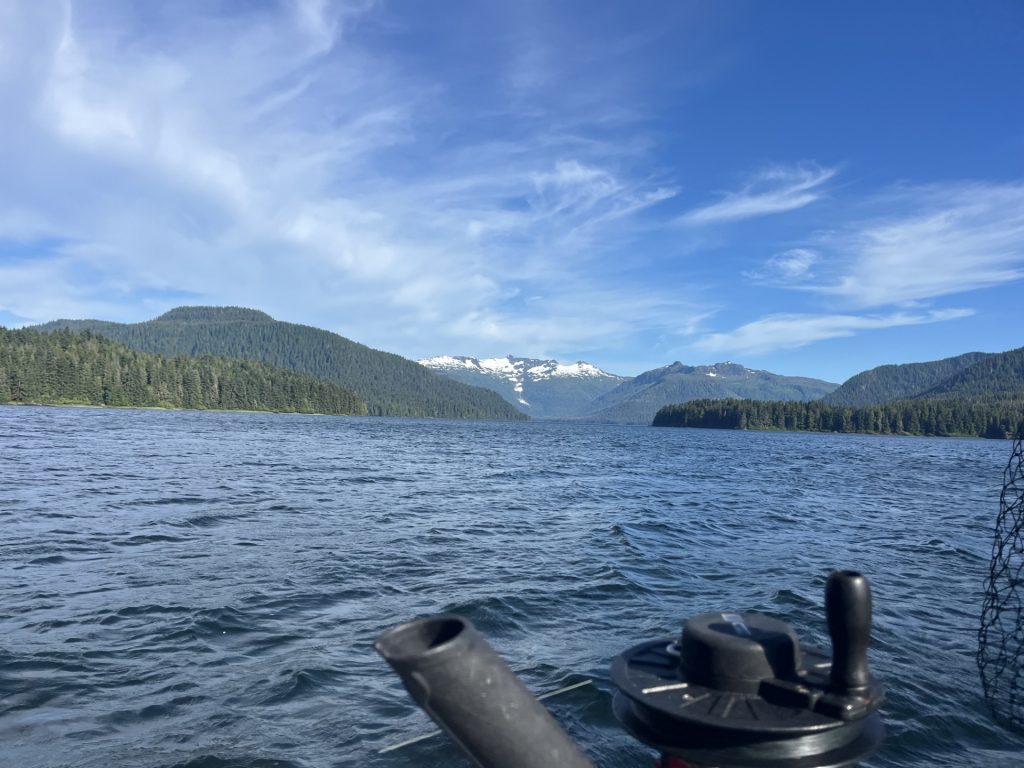
The view across the bay on the boat ride
The climb up Hood Bay began right at sea level, where we were dropped on the shore of the bay. From there, we began hiking up an old, flagged game trail, which frequently proved to be quite difficult. In southeast Alaska, dense understory makes hiking without a maintained trail quite the endeavor. A common spiked plant called Devil’s Club was our frequent enemy! We continued to climb through Sitka Spruce and Western Hemlock, until after 2300 ft of climbing, we reached mountain hemlocks.

Mountain hemlocks on Hood Bay Mountain, at ~2,300 ft
Before lunch, we continued up past the mountain hemlocks to gain the ridge, and get a view of the bay and surrounding mountains. After another 700 feet of elevation, we reached the ridge and were rewarded with a stunning view. We broke for lunch, and then descended back to the mountain hemlock stands for some coring.
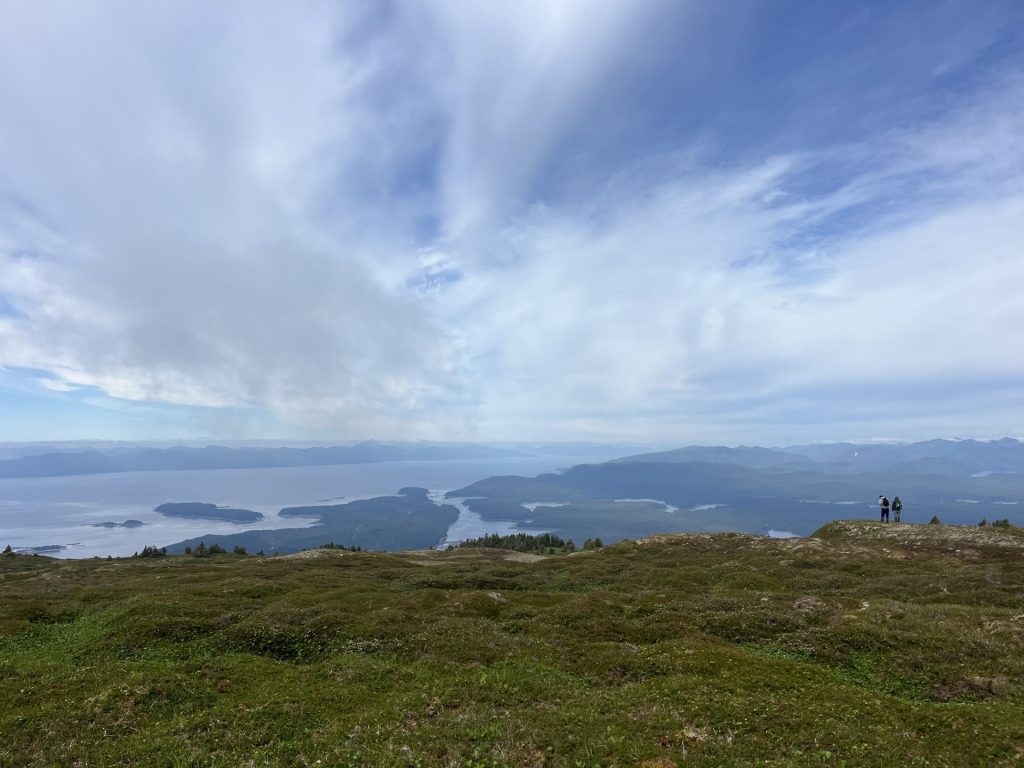
Looking north from the ridge
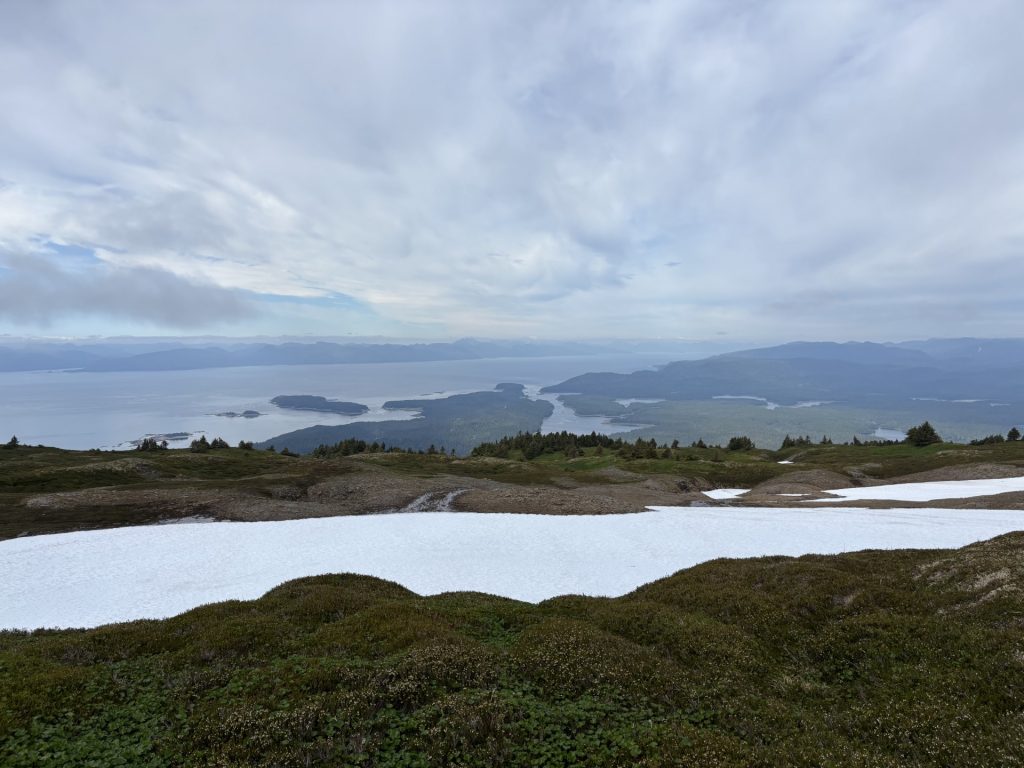
Looking south across the bay
After taking cores at our chosen stand of mountain hemlocks, we encountered an exciting site: culturally modified trees! Culturally modified trees, or CMT’s, are trees that have been modified in the past by native people, in various ways. They often leave scars on the trees, and we can date them by taking two cores from the tree (one from within the scar and one outside of it). CMT’s are an exciting and interesting bonus of doing fieldwork in Alaska!
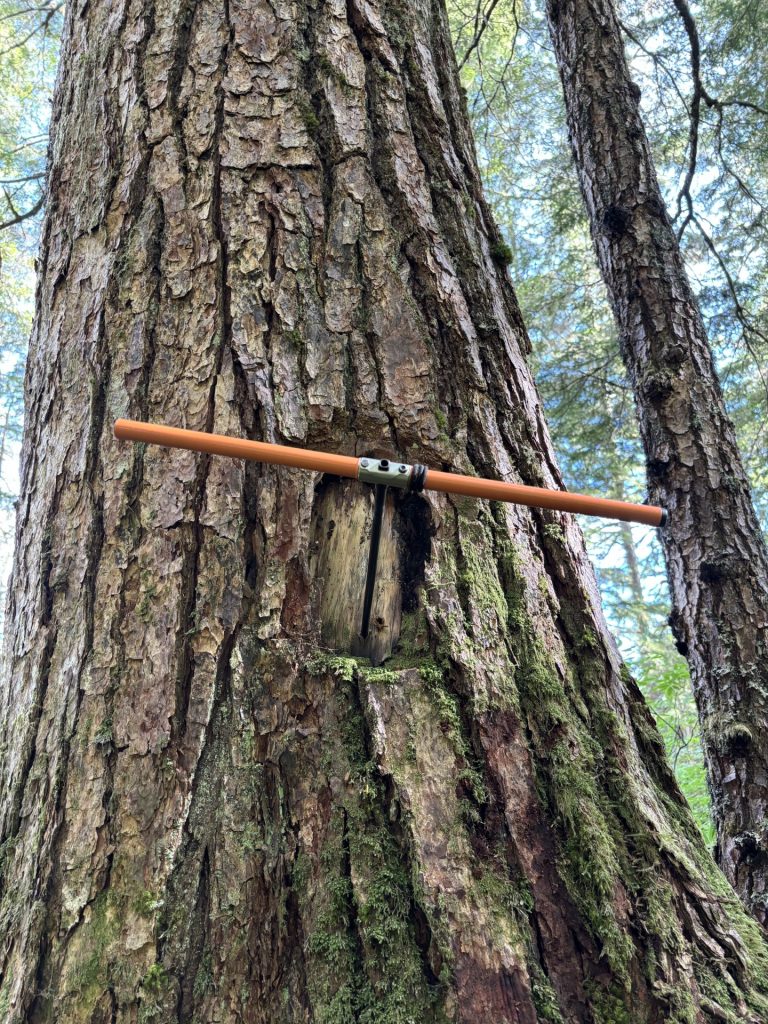
Taking a core on a CMT
Our task was made significantly easier thanks to help from some of our friends at the Alaska Youth Stewards (AYS), who know the area very well. They helped us navigate to our site, and cored trees with us when we got there. Our experience in Alaska was improved significantly through our experiences with AYS. We were able to show them our research projects and some dendrochronological field methods, and we learned much about Angoon and the surrounding area in return!
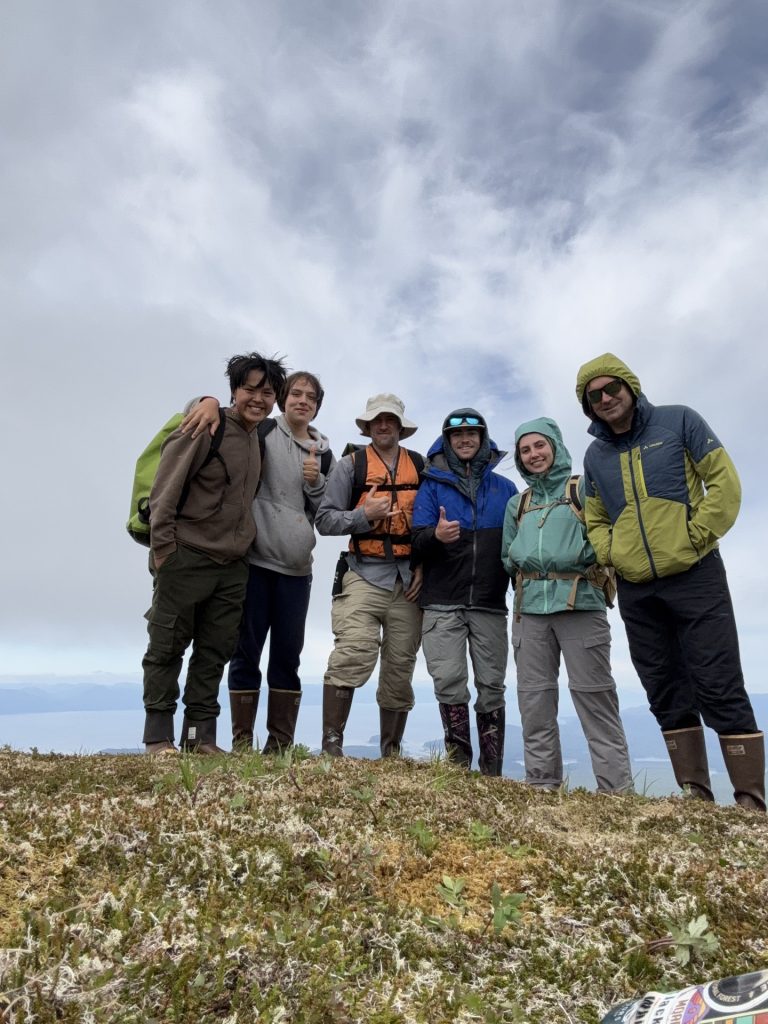
The team at the top of Hood Bay Mountain
This day was a perfect illustration of the challenges and realities of doing fieldwork in a remote location. The terrain, weather, and logistics often prove to be some of the most difficult parts of a fieldwork campaign. Thanks to the team’s perseverance and a tremendous amount of help from AYS, we were able to get the cores that we needed.
The work of Keck SEAK25 is funded by the Keck Geology Consortium and the National Science Foundation.